White-rumped Vulture: The Diclofenac Crisis and Recovery
Once a familiar scavenger across South Asia, the white-rumped vulture became a warning about the hidden costs of veterinary drugs.
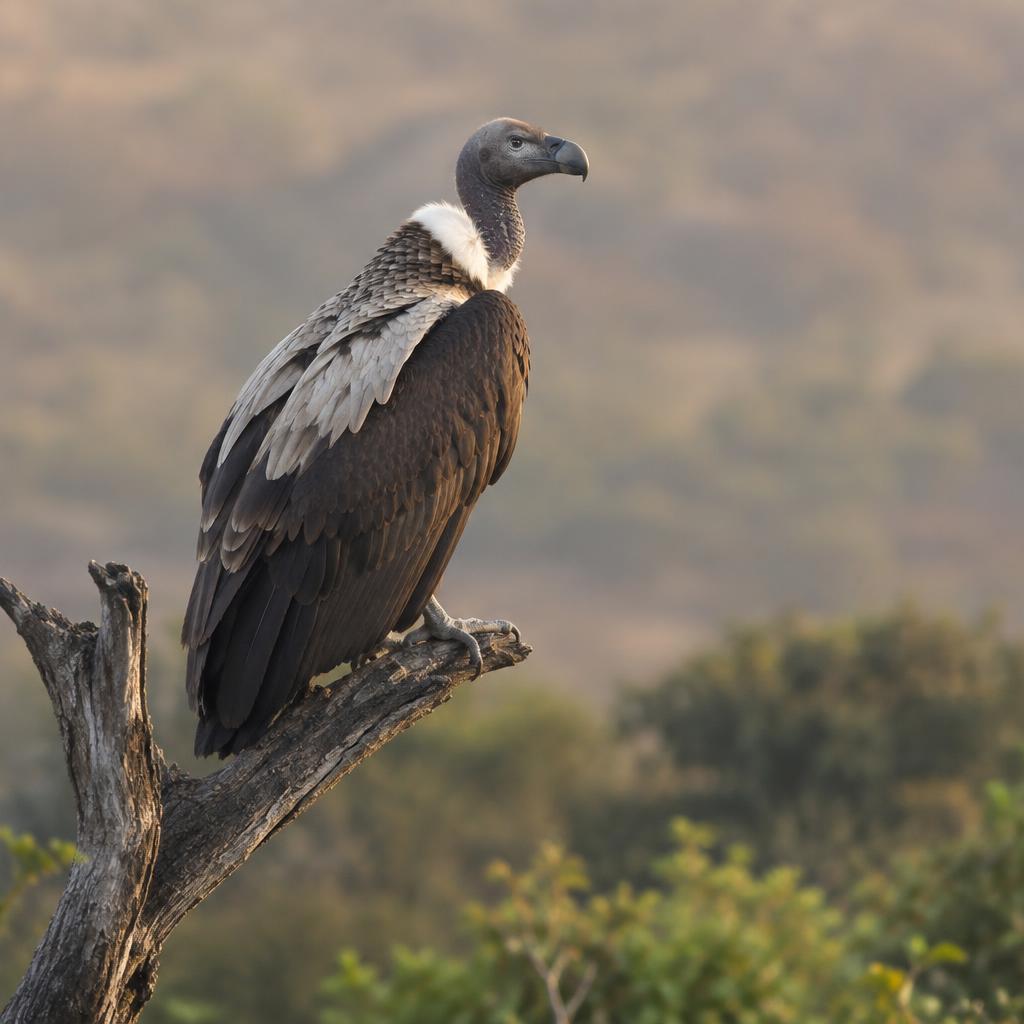
| Scientific name | Gyps bengalensis |
|---|---|
| Length | 75–93 cm |
| Range | South Asia, with remnant populations farther east |
| Population | Severely depleted; estimates vary by survey and region |
| IUCN status | Critically Endangered |
| Diet | Carrion, especially large mammal carcasses |
| Breeding | Usually one egg per nesting attempt |
When the Common Bird Disappeared
At a South Asian carcass dump, a crowd of vultures once meant that the clean-up crew had arrived. White-rumped vultures packed trees, circled above towns, and dropped onto dead cattle in noisy groups. Gyps bengalensis was widely described as the world’s most abundant large raptor. Its success rested partly on a close link with people and their livestock.
Then familiar roosts fell silent. The collapse began in the 1990s, and repeat surveys in India eventually measured a decline of about 99.9% between the early 1990s and 2007. That figure describes a surveyed national trend, not a precise census of every bird worldwide. Even so, its meaning is stark: almost the whole population vanished within a few generations.
The white-rumped vulture is now Critically Endangered. Its story links field science, farm medicine, and public health. It also shows why saving a scavenger means looking well beyond the nest tree to the source of its next meal.
Recognising a White-rumped Vulture
An adult is a dark, broad-winged vulture with a pale neck ruff and a white lower back. That white rump gives the species its English name. In flight, pale underwing coverts contrast with the dark flight feathers. Look for the combination of a compact body, broad wings, and short tail rather than relying on one patch of colour.
Young birds are browner and lack the crisp adult pattern. They can be harder to separate from other Gyps vultures, especially at long range or in harsh light. A good field view should include the back, underwing, and head. Photographs taken without approaching the bird can help confirm an uncertain record later.
Adults measure roughly 75–93 centimetres in length. They use rising warm air to gain height, then glide between feeding areas with little flapping. A bird circling over a village may be searching a much larger landscape than the patch of ground directly beneath it. This wide search makes scattered sources of poison hard to avoid.
A Scavenger of Farms, Towns, and Tall Trees
The species once ranged widely across the Indian subcontinent and into parts of Southeast Asia. Today its distribution is far more broken. India, Nepal, Pakistan, and Bangladesh remain central to recovery efforts, while eastern remnants face their own local pressures. A range map can hide huge gaps between surviving groups, so presence should not be confused with abundance.
White-rumped vultures often nest in tall trees near open feeding country. Pairs build large stick nests and usually lay one egg. Both parents share care. A lost breeding adult therefore costs more than one bird: its partner may fail to raise the chick, and the vacant place may remain unfilled.
This slow pace shapes conservation. A species that produces few young cannot replace heavy adult losses quickly. Protecting nest trees helps, but tree protection alone cannot rescue a colony fed on unsafe carcasses. The surrounding farms, veterinary shops, and livestock disposal sites are part of the breeding habitat in every practical sense.
How Diclofenac Turned Food into Poison
Diclofenac is a non-steroidal anti-inflammatory drug used to treat pain and inflammation. When livestock receive it shortly before death, residues can remain in their tissues. Vultures feeding on those carcasses may take in a lethal dose. A medicine intended to ease suffering in one animal thus became a hidden threat to another.
In their landmark 2004 Nature paper, J. Lindsay Oaks and colleagues linked diclofenac residues to kidney failure in white-rumped vultures in Pakistan. Experimental exposure, including feeding tissue from treated livestock, reproduced the damage. Sick birds developed visceral gout, in which uric acid deposits coat internal organs. The evidence identified a cause that nest counts alone could never reveal.
The finding explained how birds could die across a vast region without obvious habitat loss. A communal meal could expose several vultures at once, and repeated small risks became disastrous for a long-lived species. [1](https://www.nature.com/articles/nature02317) The lesson was direct: abundant food does not help if a small share of that food is toxic.
The 2006 Ban and the Need for Safe Drugs
India banned veterinary diclofenac in 2006, with Nepal and Pakistan also acting that year. Bangladesh followed later. These decisions marked a turning point, but a legal ban did not remove every bottle from every shop. Human formulations could still be diverted to livestock, and enforcement had to reach markets far from national offices.
Meloxicam offered a practical alternative. Safety tests supported its use as a vulture-safe veterinary drug at relevant exposures, allowing farmers to treat sick animals without accepting the same risk to scavengers. Promoting an affordable substitute mattered as much as warning people about the banned product. Farmers still needed effective pain relief for their cattle and buffalo.
Nor does a different drug name guarantee safety. Several other anti-inflammatory medicines have proved harmful to vultures, so replacements need evidence rather than guesswork. Pharmacy surveys, carcass sampling, and tests of suspect deaths remain essential. [2](https://save-vultures.org/milestones/) Recovery depends on what reaches a feeding bird, not simply on what a regulation says should be available.
SAVE, Safe Zones, and Breeding Centres
SAVE stands for Saving Asia’s Vultures from Extinction. Its partners link research, policy, captive breeding, and work with local communities. Vulture Safe Zones put that approach into practice across large landscapes. Teams work with veterinary staff, medicine sellers, farmers, and officials to reduce toxic drug use around surviving birds and possible release sites.
A safe zone is not a fence that keeps a vulture inside. Birds can travel well beyond a feeding station. Managers must check medicine supplies, monitor nests, investigate deaths, and test whether food is safe across the wider area. Clean supplementary food can help, but one safe meal does not cancel the risk from the next contaminated carcass.
Breeding centres provide a further safeguard. Pinjore in Haryana became an early hub, with other centres supporting the programme. They maintain insurance populations and produce birds for release when conditions allow. Success means more than opening an aviary: released birds must survive, find partners, and eventually raise young in a landscape that can sustain them.
The Cost of Losing Nature’s Clean-up Crew
Vultures remove large amounts of carrion quickly. When their numbers crashed, livestock remains could persist longer or become available to other scavengers. Feral dogs were among the animals able to exploit that food. More dogs near people can mean more bites and greater concern about rabies, a disease with severe human costs.
The chain needs careful wording. Dog numbers, rabies transmission, waste management, and access to treatment have many drivers. Not every dog increase can be blamed on vulture loss, and estimates of the health cost depend on assumptions. Still, the collapse exposed a real service that had been easy to overlook while the birds were common.
Carcass disposal also carries cultural and financial costs. Communities may need other ways to handle remains when scavengers disappear. Protecting vultures is therefore not just an appeal to admire a rare bird. It helps preserve a natural process that links livestock care, cleaner surroundings, and the health of people sharing the same countryside.
Keep the Food Chain Safe
The white-rumped vulture’s future will not be secured by a single ban or breeding season. Long-lived birds need many years of low mortality before depleted colonies can grow. A few more nests are welcome, but they should not be mistaken for a return to former abundance. The species remains Critically Endangered, and each surviving adult matters.
For visitors, useful support starts with restraint. Watch nests from a distance, avoid crowding feeding birds, and share sensitive locations only with trusted monitoring teams. Never leave a carcass as an informal feeding experiment. Its treatment history may be unknown, and drawing birds to unsafe food can cause harm.
For communities and supporters, the strongest actions are practical: back trusted conservation groups, support tested veterinary alternatives, and encourage proper reporting of suspected poisoning. A vulture-safe landscape is built through many small decisions made before a bird arrives. Support SAVE partners and local monitoring teams so the next generation can know this scavenger as a living neighbour, not an absence.
Key takeaways
- Diclofenac in livestock carcasses caused catastrophic mortality in Gyps vultures.
- India’s white-rumped vulture population fell by about 99.9% between the early 1990s and 2007.
- The 2006 veterinary bans were essential, but enforcement and safe substitutes remain vital.
- Breeding programmes need safe landscapes before released birds can thrive.
Frequently asked questions
Why did white-rumped vultures decline?
Diclofenac residues in treated livestock killed feeding vultures through kidney failure. This was the main driver of the catastrophic South Asian collapse.
Is diclofenac still a threat after the ban?
Yes. Illegal veterinary use and diversion of human formulations can expose birds. Other veterinary drugs also require safety checks.
Is meloxicam safe for vultures?
Meloxicam has passed vulture safety testing at relevant exposures and is promoted as a safer veterinary alternative. Veterinary treatment should follow professional advice.
What is a Vulture Safe Zone?
It is a managed landscape where partners reduce toxic drug use, monitor vultures and carcasses, and work with farmers and veterinary services.
Are white-rumped vultures dangerous to people?
They primarily eat carrion and do not hunt people. Give feeding birds space and follow normal hygiene around animal remains.
References
Related reading
Great Indian Bustard: The Desert Giant Losing the Sky
The Great Indian Bustard once ranged across half a continent. Today, fewer than 150 survive, and powerlines across the Thar Desert are killing them faster than they breed.
Bearded Vulture: The Bone-Eating Lammergeier of the High Peaks
The Bearded Vulture is the only bird on Earth that lives almost entirely on bone. Its story reaches from Himalayan cliffs to the reborn colonies of the Alps.