White-bellied Heron: The Himalayan River Ghost
The White-bellied Heron is one of the world's most endangered large birds — a giant of Himalayan rivers now down to fewer than 60 mature adults.
| Scientific name | Ardea insignis |
|---|---|
| Length | 127 cm |
| Range | Bhutan, NE India, N Myanmar |
| Habitat | Fast, clear Himalayan rivers |
| Population | < 60 mature adults |
| IUCN status | Critically Endangered |
A giant on the brink
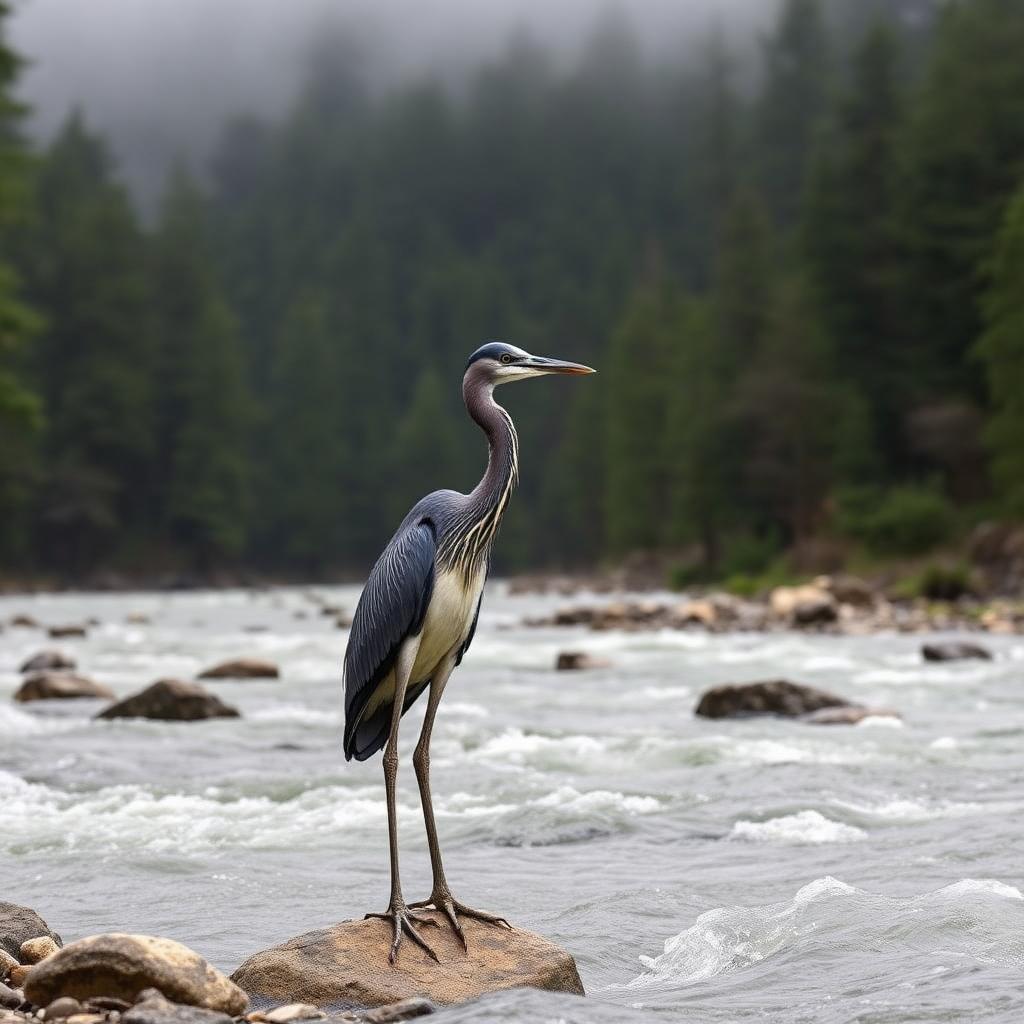
The White-bellied Heron (Ardea insignis) is the second-largest heron in the world, standing well over a metre tall. It is also one of the rarest large birds on Earth, with recent estimates suggesting fewer than 60 mature adults remain in the wild.
Its life is bound to fast, clear rivers running down out of the eastern Himalayas — a habitat that is disappearing quickly.
What it looks like
Adults are dark grey overall with a striking white belly, long slender neck and a heavy, dagger-like bill. A silvery-white plume trails from the back of the head.
In flight it looks huge, slow and deliberate, like an ash-grey pterosaur gliding low over the water.
Where it survives
The species is now confined to isolated river systems in Bhutan, north-east India (mainly Arunachal Pradesh, Assam and parts of West Bengal) and northern Myanmar. Bhutan holds the best-studied wild population, concentrated along rivers such as the Punatsangchhu.
Historically the range extended into Nepal and Bangladesh, where it is now considered extinct or nearly so.
Diet and hunting
White-bellied Herons hunt fish, frogs and large aquatic insects along rocky, fast-flowing river stretches. They typically stand motionless on a boulder or shingle bank and strike downward with the bill.
They require clear water and a steady supply of medium-sized fish, both of which are quickly lost when a river is dammed or silted.
Nesting
Nests are built high in tall trees, often on steep valley sides overlooking a river. Only a handful of active nests are known each year across the entire global range.
Pairs are believed to be strongly territorial and to reuse the same nesting area over multiple seasons.
Why numbers are so low
The main threats are hydropower development, which changes river flow and floods breeding valleys; habitat degradation from sand mining and pollution; and disturbance at breeding sites from logging and infrastructure.
Because the total population is so small, even the loss of a few adults each year is enough to drive the species closer to extinction.
Conservation response
The Royal Society for Protection of Nature (RSPN) in Bhutan runs a long-term monitoring and nest-guarding programme, and has established a captive breeding centre to safeguard genetic diversity.
In India, groups like Aaranyak and government agencies survey rivers, engage local communities and push for river-basin planning that keeps at least some stretches of habitat intact.
Ethical viewing
Because the total population is so tiny, casual birding pressure can genuinely harm the species. Any visit should go through recognised local conservation organisations, keep well back from birds, and skip nesting sites entirely unless invited by researchers.
A species with almost no margin
The White-bellied Heron is one of those species where every single bird counts. Its future depends on decisions being made now about which Himalayan rivers get dammed, which valleys get roads and which stretches stay wild. Support RSPN, follow ethical viewing rules and share the story — silence is not neutral for a species this rare.
Key takeaways
- The White-bellied Heron is the world's second-largest heron.
- It is Critically Endangered with fewer than 60 mature adults left.
- Bhutan holds the best-studied surviving population.
- Hydropower and habitat loss are its biggest threats.
- Ethical viewing and river-basin protection are essential.
Frequently asked questions
How many White-bellied Herons are left?
Recent surveys estimate fewer than 60 mature adults in the wild across Bhutan, India and Myanmar.
Where is the best country to try to see one?
Bhutan, especially around the Punatsangchhu river valley, with a licensed guide and RSPN coordination.
Why does it need such clear rivers?
It hunts by sight, and needs undisturbed shallow riffles with medium-sized fish. Silt, dams and pollution destroy that habitat.
Is it bred in captivity?
A small conservation breeding centre in Bhutan is being developed by RSPN as an insurance population.
Is it the same as other grey herons?
No. Ardea insignis is a separate species, larger and darker than the widespread Grey Heron, with a distinctive white belly.
What can I do from abroad?
Donate to RSPN in Bhutan or organisations like Aaranyak in India, and support campaigns that oppose destructive dam projects in critical habitat.
References
Related reading
Madagascar Fish Eagle: Africa's Rarest Raptor
With fewer than 250 breeding pairs left, the Madagascar Fish Eagle is one of the most range-restricted eagles in the world. Here is why it matters and what is being done.
Whooping Crane: North America's Tallest Comeback
The Whooping Crane went from 21 birds to more than 800 in eighty years. Here is how — and why the species is still not out of danger.