Stresemann's Bristlefront: On the Edge in Brazil's Atlantic Forest
A ground-dwelling tapaculo from Brazil's Atlantic Forest has become a test of how much conservation can do when almost no birds remain.
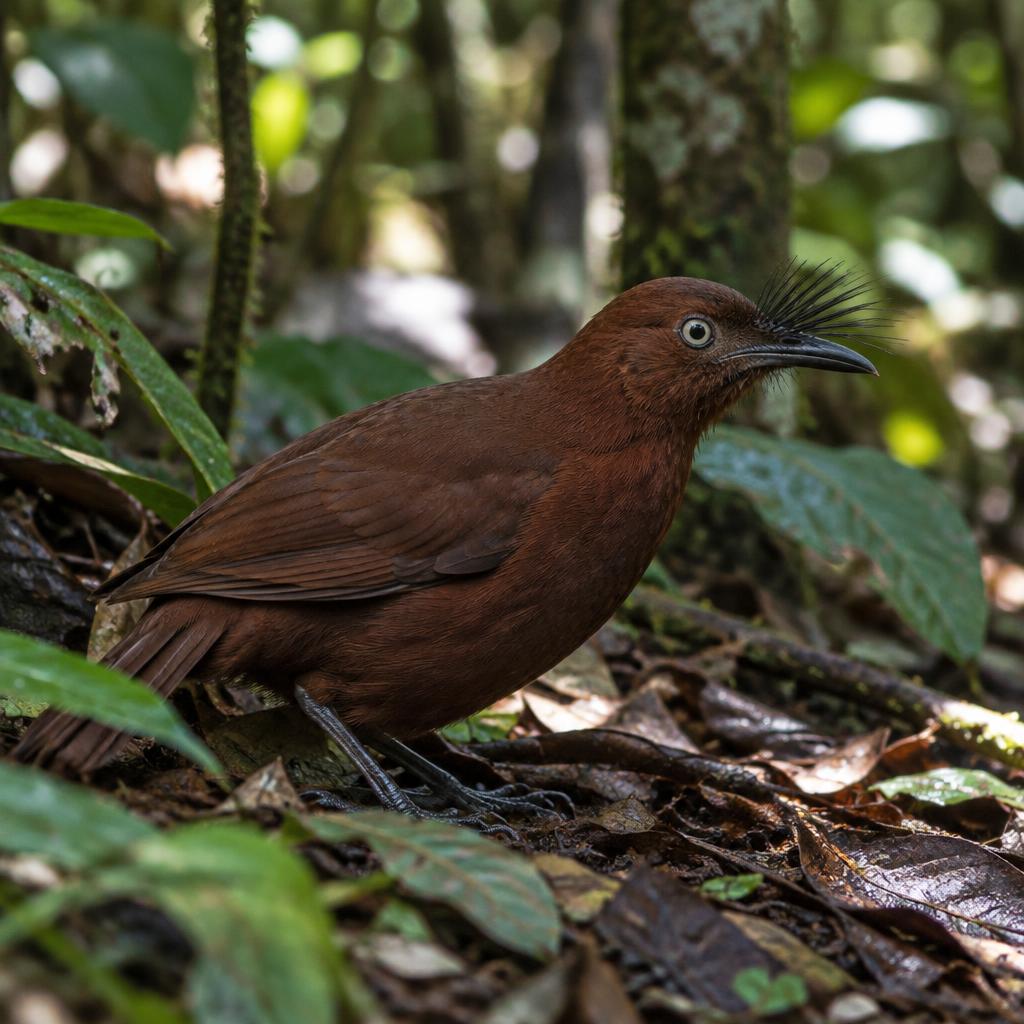
| Scientific name | Merulaxis stresemanni |
|---|---|
| Length | About 20 cm |
| Range | Atlantic Forest, Bahia and Minas Gerais, Brazil |
| Population | Extremely uncertain; reports below 15; assessment 1–49 mature individuals |
| IUCN status | Critically Endangered |
| Family | Rhinocryptidae (tapaculos) |
| Key reserve | Mata do Passarinho |
A bird measured in sightings
In Brazil's Atlantic Forest, the fate of a species can rest on a strip of damp woodland between farms. Stresemann's bristlefront, Merulaxis stresemanni, is a tapaculo that spends much of its life close to the ground. It is hard to see, harder to count, and among the world's most threatened birds.
Its story is often reduced to a striking number: fewer than 15 birds. That phrase captures the scale of the crisis, but it is not a fresh census. Conservation reports have described a population of around 15, followed by records of just one known female. The number still alive is uncertain.
That distinction matters. A lone sighting does not prove that only one bird exists, and a hopeful search does not prove that others survive. Protecting the remaining forest is essential while researchers try to resolve that gap. There is no safe margin for delay.
A tapaculo built for the forest floor
Stresemann's bristlefront belongs to Rhinocryptidae, the tapaculo family. These birds are famous for moving through thick cover with far more ease than a human observer can. At roughly 20 centimeters long, this species is a substantial tapaculo, with a long tail and conspicuous stiff feathers above the bill.
Those forehead bristles give the bird its English name. Males are mostly dark slate, while females have warmer brown and cinnamon tones. In poor light, color alone can mislead. Shape, voice, location, and clear documentation all matter when assessing a possible record of such a rare species.
Its ground-level habits help explain why surveys are difficult. Dense stems, leaf litter, and shaded banks can conceal a bird at close range. Yet secrecy should not become an excuse to assume a hidden population is safe. Repeated searches, documented calls, and careful checks of habitat offer stronger evidence than a forest that simply looks promising.
From an 1830s specimen to the 1995 rediscovery
The species entered the scientific record through a specimen collected near Salvador, Bahia, in the 1830s. It was formally described much later, in 1960. A second historical specimen came from near Ilhéus in 1945. These scattered records left huge gaps in knowledge of its range and habits.
In 1995, a bird was photographed and sound-recorded near Una, Bahia. That rediscovery gave researchers evidence of a living species rather than a story confined to museum drawers. It also showed how little was known about the surviving Atlantic Forest fauna in scattered remnants.
Later discoveries near the Bahia–Minas Gerais border shifted conservation work toward the area now associated with Mata do Passarinho. These records should not be read as proof of a broad, healthy distribution. They mark isolated points in a badly damaged landscape. Each point helped guide fieldwork, but the long intervals between records made population trends exceptionally hard to measure.
Why the Bahia–Minas Gerais forest matters
Stresemann's bristlefront is endemic to Brazil's Atlantic Forest. Historical records come from Bahia, while recent conservation attention has focused on the border region with northeastern Minas Gerais. Here, humid forest in sheltered valleys persists within a landscape shaped by cattle pasture, crops, roads, and small settlements.
For a bird that works through dense vegetation near the ground, losing a valley's understory is not a minor change. Clearing removes feeding cover and breaks the damp, shaded conditions of the forest floor. Even where trees remain, damaged edges can become hotter, drier, and more exposed to fire.
A patch of forest is therefore more than a mark on a map. Its condition, links to nearby patches, and protection from disturbance all affect its value. Keeping mature forest intact is the first priority. Restoring nearby land can strengthen that protection, but new growth cannot instantly replace the structure of a long-established forest.
Fewer than 15 birds: reading the numbers carefully
The bristlefront is classified as Critically Endangered by the IUCN. BirdLife's 2021 assessment places its population in the broad band of 1–49 mature individuals. That assessment range and reports of fewer than 15 birds describe different kinds of evidence; neither should be presented as an exact count made today.
In December 2018, researchers documented a female after months of searches without success. American Bird Conservancy reported that she was the only individual then known. [1](https://abcbirds.org/news/worlds-rarest-bird-sighted-in-brazil/) The record renewed hope, but also showed how close the species might be to extinction.
A count of known birds is not automatically the full population. Some may escape detection, while others may have died between surveys. Nor does finding one female establish that a breeding pair remains. Conservation planning must hold both possibilities in view: undiscovered survivors may exist, and the surviving population may be too small to recover without urgent help.
Mata do Passarinho: protecting the last known habitat
Fundação Biodiversitas established Mata do Passarinho Reserve in 2007 with support from American Bird Conservancy and other partners. Its name means Songbird Forest. The reserve protects Atlantic Forest habitat in the very region where recent bristlefront records have concentrated, alongside habitat for other threatened birds.
Protection has had to follow the evidence beyond an original boundary. The female documented in 2018 was found on private land outside the reserve. In 2021, ABC announced that more than 500 acres of additional forest, including her last-known habitat, would be added through a land donation to Biodiversitas. [2](https://abcbirds.org/news/stresemanns-bristlefront-get-additional-habitat-protection/)
That expansion illustrates a practical lesson: a reserve map must respond to where wildlife actually lives. Ownership is only the start. Staff, fire prevention, habitat care, and relationships with neighboring landholders keep protection effective. These less visible tasks are central to the bristlefront's prospects, even when no new photograph reaches the public.
Habitat loss, fire, and the danger of tiny numbers
Forest clearance for agriculture and cattle ranching has reduced and split the bristlefront's habitat. Logging and degradation can weaken what remains. Fire is especially dangerous where dry pasture borders small forest fragments: a single event can damage much of the habitat available to an already tiny population.
Fires in 2016 were a serious setback in the species' remaining landscape. The later rediscovery did not erase that damage. It underlined the need to prevent repeated burns, protect moist forest interiors, and reduce risks at reserve edges before another dry spell puts the same ground under pressure.
Small populations also face risks that habitat maps cannot show. Birds may fail to find mates, breeding attempts may fail, and chance losses can remove a large share of the survivors. These are general concerns for very rare wildlife, not measured diagnoses for every remaining bristlefront. They explain why waiting for perfect information can be dangerous.
What useful conservation looks like
The first task is to retain every credible piece of occupied habitat. The next is to search carefully, using experienced teams and methods that can be repeated. Clear records of dates, effort, calls, and locations make results useful, including searches that do not detect the bird.
Survey work must avoid adding pressure to a species with so little room for error. Repeated playback by visitors, trampling through dense understory, and public sharing of sensitive locations can all create needless disturbance. Follow reserve rules and leave targeted searches to teams working with the relevant conservation authorities.
Long-term support should also reach the people who manage the land. Patrols, fire response, restoration, and cooperation with neighboring farms all require steady funding. A dramatic rediscovery may attract attention for a week; reliable protection must last through quiet years. Support for Biodiversitas and ABC's habitat work is more useful than treating the bird as a trophy sighting.
Keep the forest standing while the search continues
Stresemann's bristlefront is not simply a bird that vanished and returned. It is a species whose thin record runs through two centuries of forest loss. An 1830s specimen, a 1995 rediscovery, and later records near Mata do Passarinho each reveal survival at a particular moment, not a secure future.
The strongest response combines humility with action. Be precise about population figures, distinguish confirmed records from hopes, and recognize the limits of a brief sighting. At the same time, protect habitat before every uncertainty is settled. Forest kept safe today can shelter survivors that no one has yet found.
The wider Atlantic Forest benefits from that work as well. A reserve maintained for one elusive tapaculo also protects a living community of plants and animals. Help keep that community intact: support verified habitat protection, share well-sourced information, and back the teams caring for Mata do Passarinho.
Key takeaways
- The species is a Critically Endangered tapaculo endemic to Brazil's Atlantic Forest.
- A specimen dates to the 1830s; the living bird was rediscovered in 1995.
- Reports of fewer than 15 birds are not a current exact census.
- Biodiversitas and ABC support protection at Mata do Passarinho.
- Habitat protection, fire prevention, and careful surveys remain essential.
Frequently asked questions
Is Stresemann's bristlefront extinct?
It is classified as Critically Endangered, not Extinct. Its surviving population is highly uncertain; absence from a search does not prove extinction.
Where does it live?
Its known range lies in Brazil's Atlantic Forest, with recent records concentrated near the Bahia–Minas Gerais border.
How many birds remain?
Reports have described fewer than 15 birds, and later only one known female. BirdLife's 2021 assessment uses 1–49 mature individuals; none is an exact present-day census.
When was it rediscovered?
A bird was photographed and recorded near Una, Bahia, in 1995, following decades with no confirmed living records.
Who protects its habitat?
Fundação Biodiversitas manages Mata do Passarinho, with support from American Bird Conservancy and other partners.
References
Related reading
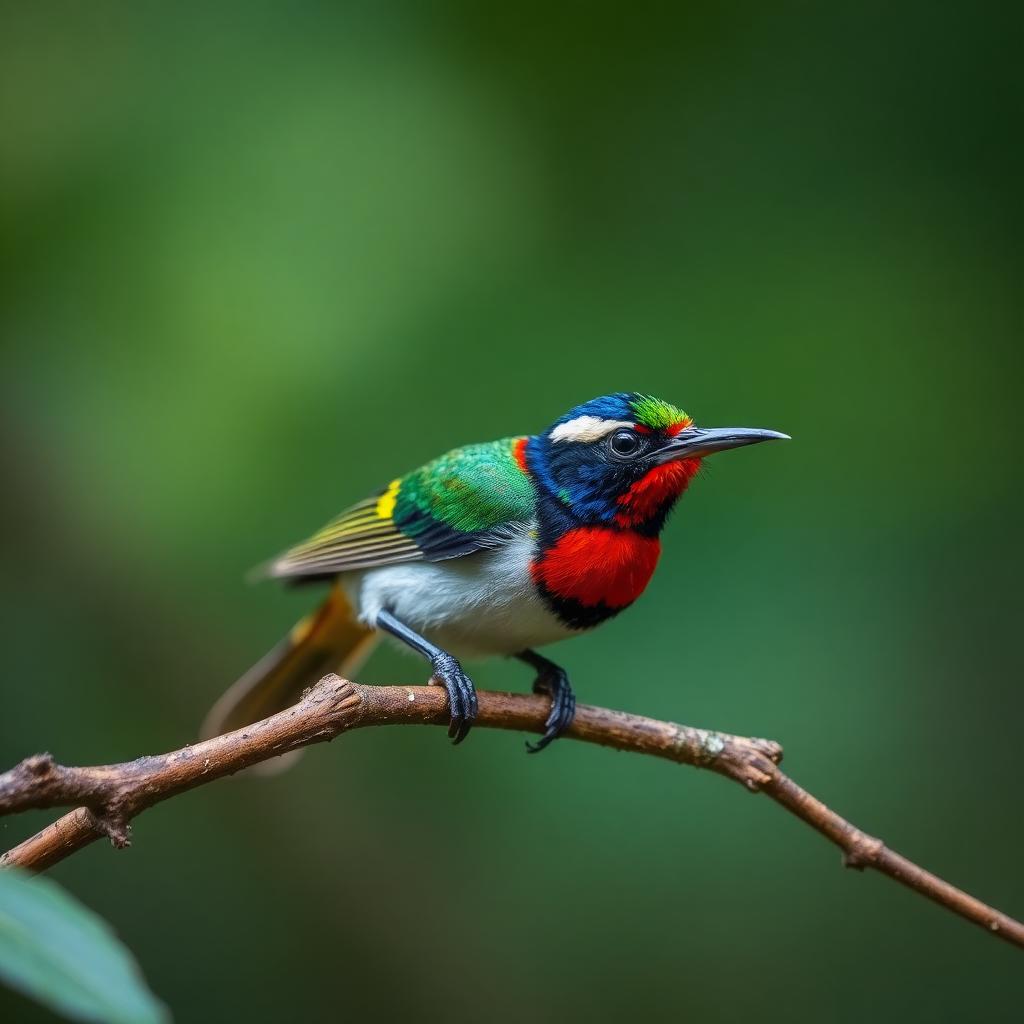
Cebu Flowerpecker: The Bird That Came Back From the Dead
For most of the twentieth century, the Cebu Flowerpecker was considered extinct. Its rediscovery in 1992 changed how we think about small, forgotten forests.
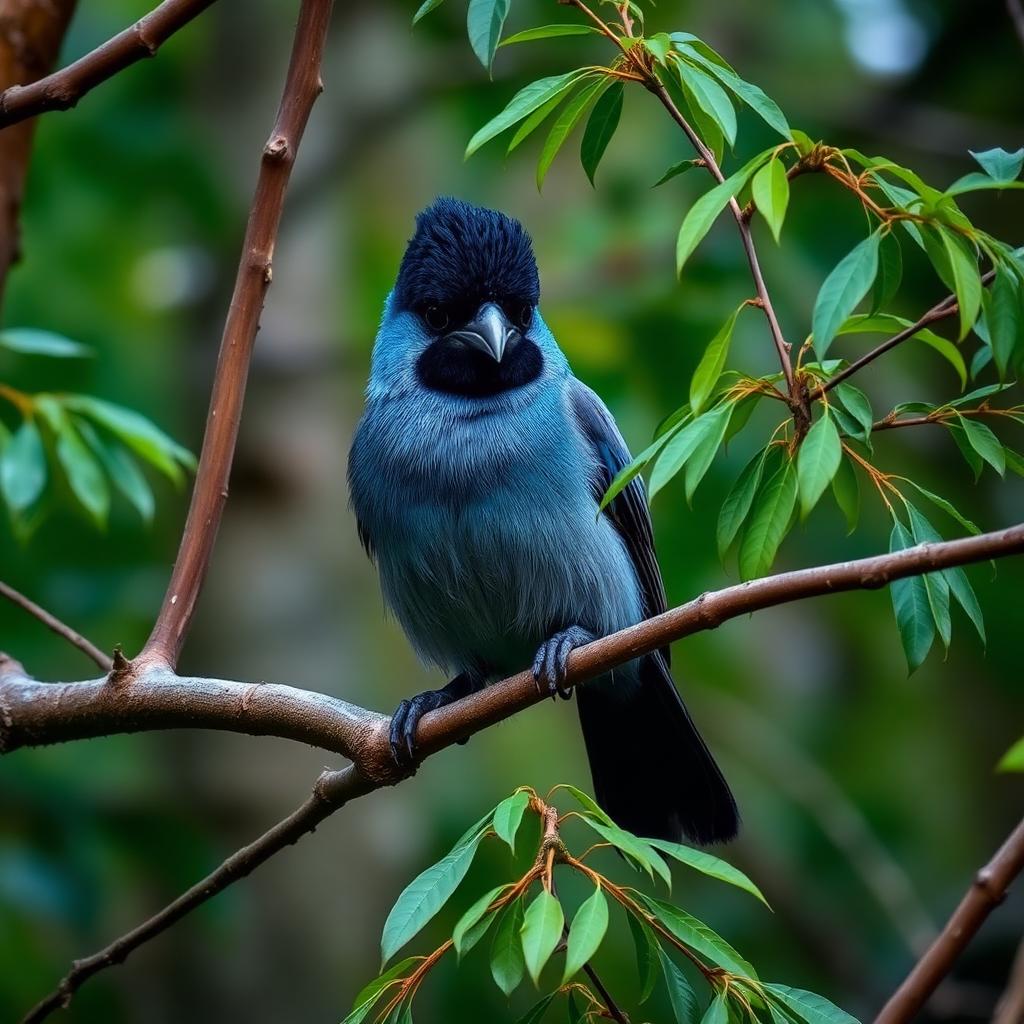
North Island Kōkako: The Blue-Wattled Forest Singer
The North Island Kōkako is a slow, gliding forest songbird whose long, organ-like dawn calls once defined New Zealand's mature podocarp forests.