Southern Cassowary: The Rainforest Guardian of Northern Australia
The Southern Cassowary is a flightless, dinosaur-like bird that quietly keeps the Wet Tropics rainforest alive — and it is running out of room.
| Scientific name | Casuarius casuarius |
|---|---|
| Height | 1.5 – 2 m |
| Weight | Up to 76 kg (females larger) |
| Range | Northern Queensland, New Guinea, Seram |
| Diet | Fallen rainforest fruit; some fungi, insects, small vertebrates |
| IUCN status | Least Concern (Endangered in Australia) |
A living link to the dinosaurs
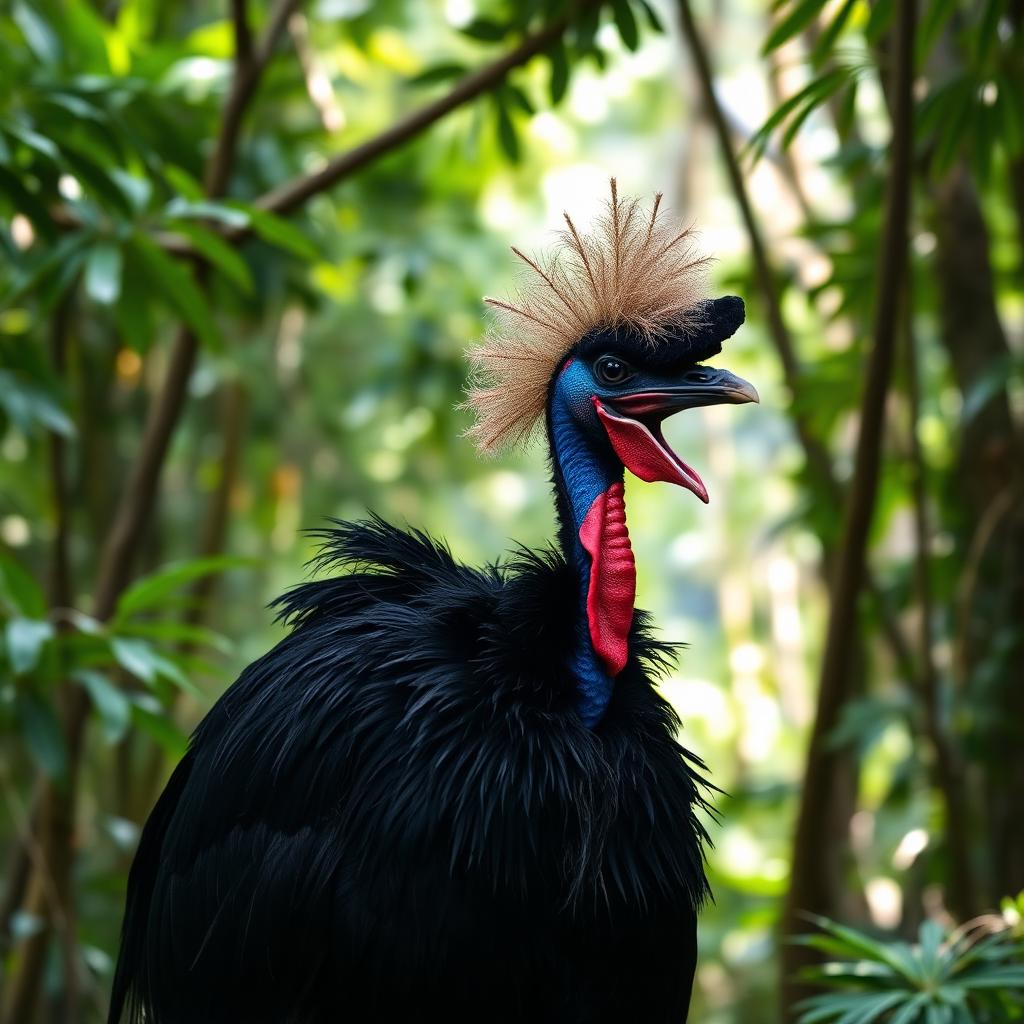
The Southern Cassowary (Casuarius casuarius) is a large flightless bird that stalks the rainforests of northern Queensland, New Guinea and the island of Seram. Standing up to two metres tall, glossy black, with a bright blue neck and a tall bony casque, it looks like something that stepped out of the Cretaceous.
In Australia, it is not just an icon. It is one of the keystones of the entire Wet Tropics ecosystem.
A shrinking Australian range
The Australian population is restricted to fragments of tropical rainforest between Cooktown and Townsville, with strongholds around the Daintree, Mission Beach and the Atherton Tablelands. Best estimates put the total at around 4,000 mature birds in Australia.
Under Australian federal law, the Southern Cassowary is listed as Endangered in the Wet Tropics population, even though it is Least Concern globally thanks to larger populations in New Guinea.
Casque, claws and calls
The most obvious feature is the casque — a keratin-covered crest on the head. It probably helps thermoregulate, may amplify calls, and offers some protection when the bird pushes through dense undergrowth.
Each foot carries three toes. The inner one bears a dagger-shaped claw up to 12 cm long. Cassowaries also communicate with deep, infrasonic booms below the range of most human hearing, allowing them to keep tabs on rivals across dense forest.
The gardener of the Wet Tropics
Southern Cassowaries eat fallen rainforest fruit and swallow it whole. Their long gut passes seeds through undamaged and deposits them, in a package of fertiliser, far from the parent tree.
Studies in the Wet Tropics show cassowaries disperse the seeds of more than 150 plant species. For many of those species — including some with very large seeds — no other animal in the forest can do the same job.
Why the forest needs them
Remove Southern Cassowaries from the Wet Tropics and the composition of the forest changes. Big-seeded trees fail to regenerate at scale. Over decades, the rainforest becomes less diverse and less resilient.
This is why conservation biologists describe the species as an ecological engineer, not just a rare animal. Protecting cassowaries is the cheapest way to protect the forest itself.
Are cassowaries dangerous?
Yes — but not in the way tabloids imply. Serious attacks on humans are rare. Almost all documented incidents involve birds that have been fed by people and now associate humans with food.
The safe rules are simple:
Rules for sharing the forest
Never feed a cassowary or leave food where one can reach it. Slow down on rainforest roads, especially near Mission Beach and the Daintree. Give any bird plenty of space. If a cassowary approaches, back away calmly, keep something solid — a tree, a car, a backpack — between you and the bird, and do not run.
Respected in this way, cassowaries almost always ignore people.
What is pushing them backwards
The main pressures on the Australian population are habitat loss, road strikes, dog attacks and cyclone damage to fruiting forest. Cyclones such as Larry (2006) and Yasi (2011) destroyed large patches of habitat around Mission Beach and left cassowaries starving and forced onto roads.
Climate change is intensifying tropical cyclones and altering fruiting seasons, both of which stack the odds against slow-breeding species like this one.
What is being done
Queensland has protected large blocks of cassowary habitat within the Wet Tropics World Heritage Area. Local groups run road-strike hotspot signage, dog-control programs, wildlife corridors and post-cyclone supplementary feeding.
The most durable protection is at the landscape scale: keeping rainforest patches connected so cassowaries can move between them without crossing roads or cleared farmland.
Protect the bird, keep the forest
The Southern Cassowary is spectacular in its own right. But its real importance is quieter: it is the animal that keeps planting the next generation of rainforest. If you ever meet one on a forest track in Far North Queensland, give it space, watch, and remember that you are looking at the gardener of an entire ecosystem.
Key takeaways
- The Southern Cassowary is the largest native land animal in Australia.
- It disperses the seeds of more than 150 rainforest plant species.
- The Australian population is federally listed as Endangered.
- Almost all attacks on people involve birds that have been fed by humans.
- Habitat loss, road strikes and cyclones are the main long-term threats.
Frequently asked questions
How tall does a Southern Cassowary grow?
Adults commonly stand 1.5 to 2 metres tall. Females are consistently larger and heavier than males, sometimes reaching 76 kg.
Can cassowaries fly?
No. Like emus, ostriches and kiwis, cassowaries are flightless ratites. Their wings are reduced to a few coarse quills.
Have cassowaries killed people?
Recorded human fatalities are extremely rare. Nearly every serious injury has involved cornered or hand-fed birds — not chance encounters in the forest.
What do cassowaries eat?
Primarily fallen rainforest fruit. They also take fungi, insects, small vertebrates and carrion when available.
Where can I safely see a Southern Cassowary?
The Daintree Rainforest, Mission Beach, and parts of the Atherton Tablelands in Far North Queensland offer the best chances. Always view from a safe distance.
Who incubates the eggs?
The male alone. Females lay a clutch and move on; the male incubates for about 50 days and then raises the chicks for up to nine months.
References
Related reading
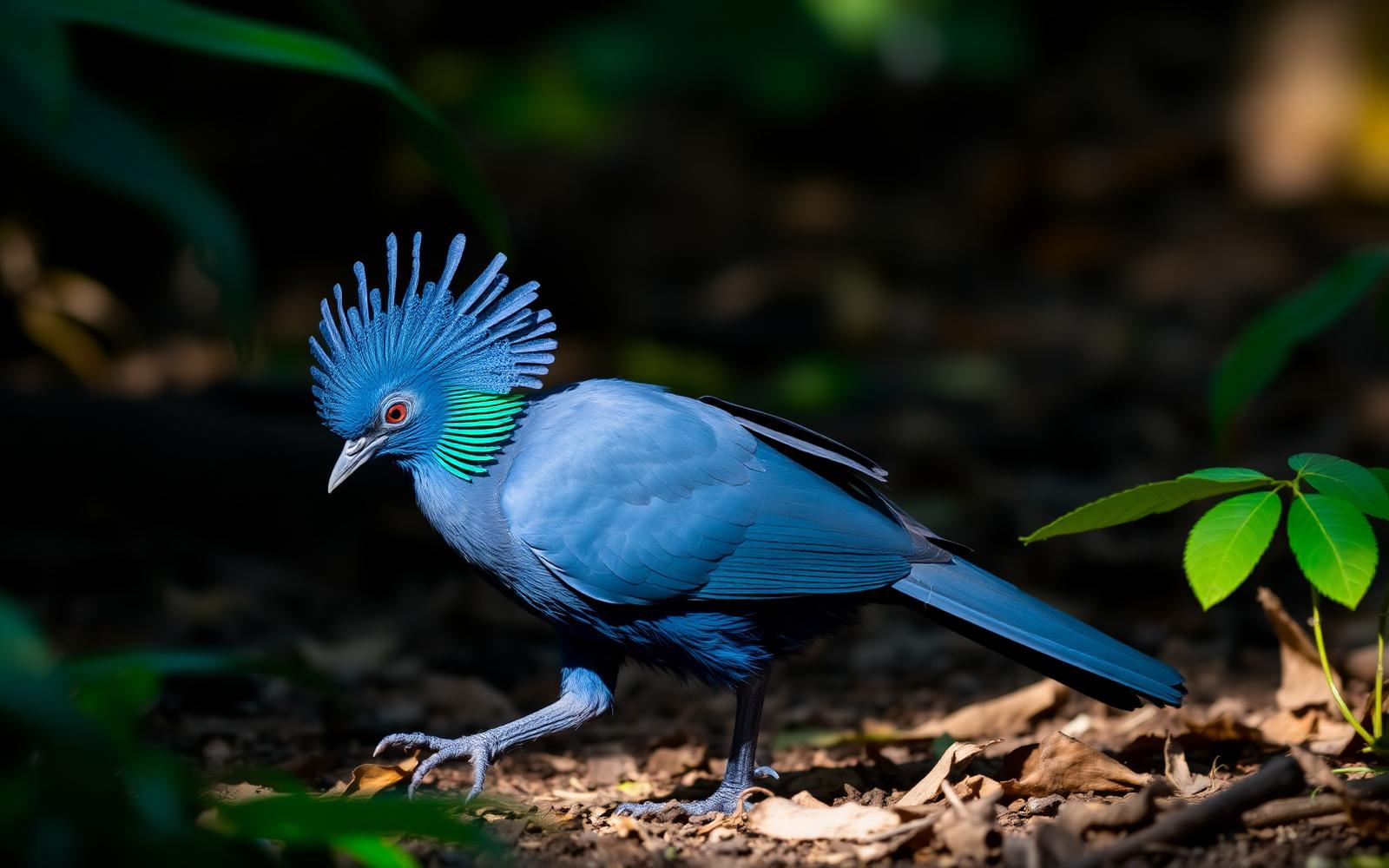
Victoria Crowned Pigeon: The Regal Ground Dweller of New Guinea
The Victoria Crowned Pigeon is the largest pigeon on Earth and carries a lace-like blue crest that looks designed rather than evolved.
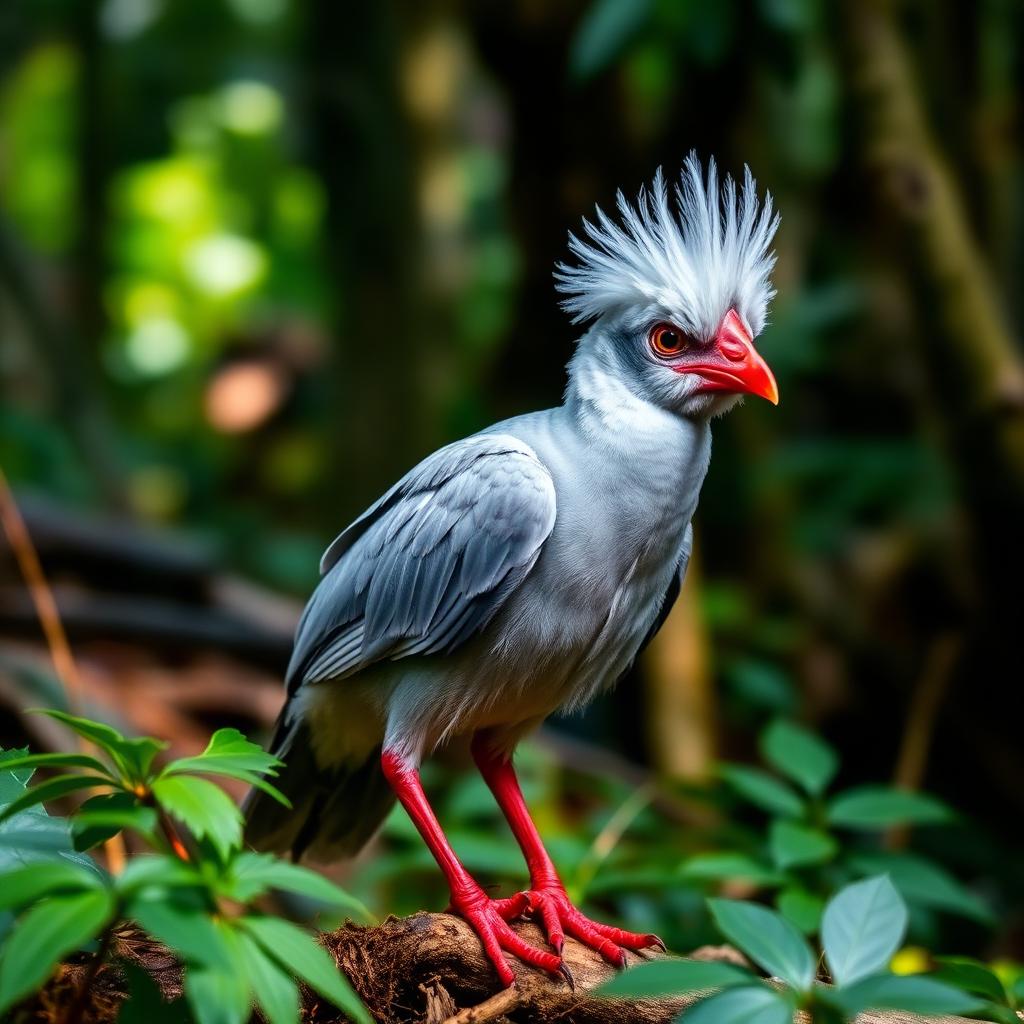
The Kagu: New Caledonia's Ghost of the Forest
The Kagu is a bird found nowhere else on Earth — a ghost-pale, flightless forest inhabitant that survives only on a single Pacific island.