Regent Honeyeater: Australia's Song-Losing Songbird
Australia's Regent Honeyeater has declined so far that young males are forgetting their own species song. Here is what field biologists are doing about it.
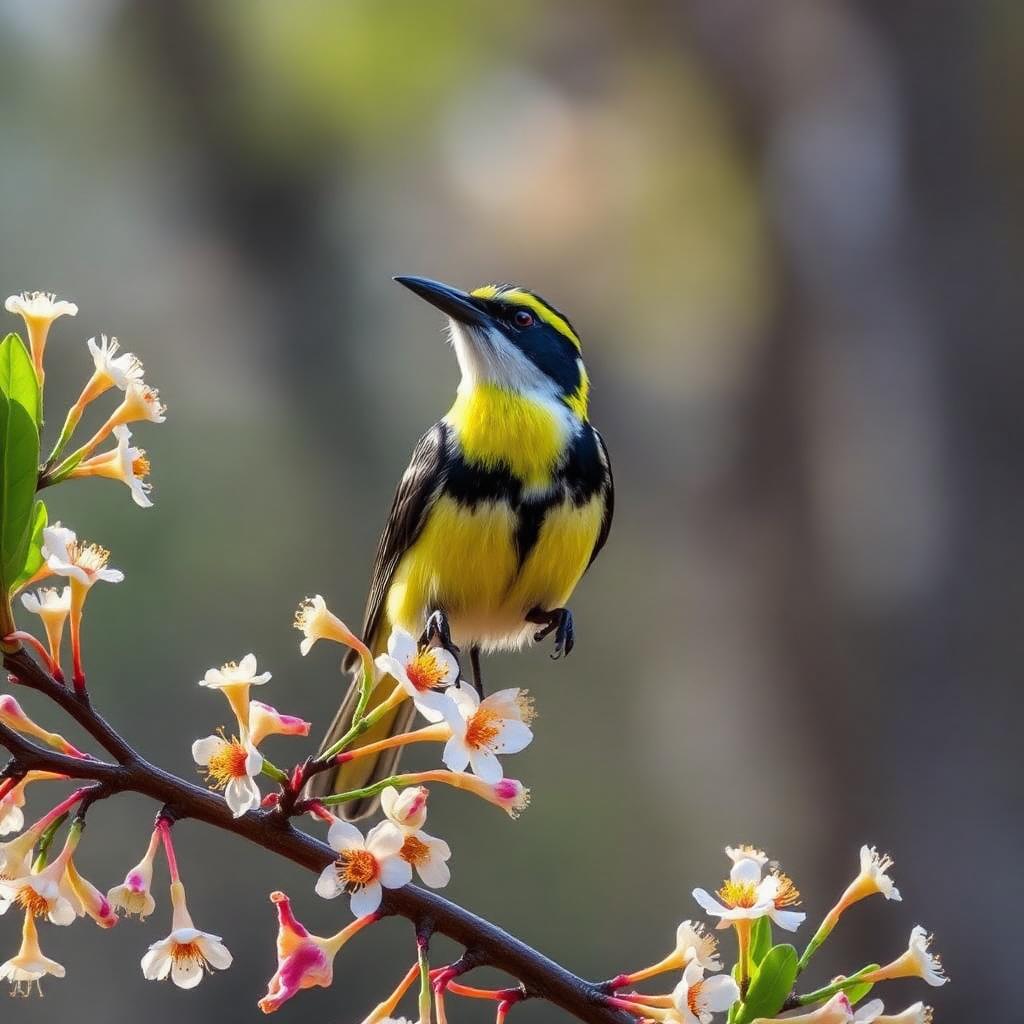
| Scientific name | Anthochaera phrygia |
|---|---|
| Length | 20–24 cm |
| Range | Fragmented, south-eastern Australia (NSW, VIC, ACT) |
| Diet | Eucalypt nectar, lerp, insects |
| Population | ≈ 250–350 mature individuals |
| IUCN status | Critically Endangered |
A songbird running out of singers
The Regent Honeyeater (Anthochaera phrygia) is a striking black-and-yellow nectar-feeder once common across the eucalypt woodlands of south-eastern Australia. Today, wild adults may number as few as 250. The decline has been so steep that in some areas young males can no longer hear enough adult tutors to learn their species song correctly.
This loss of song is not a curiosity. Females choose mates by song, and a male that sings a mimicked or garbled version is far less likely to breed. In effect, the species is losing part of its cultural inheritance in real time.
A collapsed range
Historically the Regent Honeyeater ranged from Adelaide to south-east Queensland. Today it is essentially restricted to three regions: the Bundarra–Barraba area of northern NSW, the Capertee Valley west of Sydney, and parts of north-east Victoria.
Its preferred habitat is box-ironbark and river red gum woodland — exactly the fertile-soil forests most heavily cleared for agriculture since European settlement. Only around 15% of pre-1750 box-ironbark forest remains.
A nomadic nectar specialist
Regent Honeyeaters are highly mobile. They track flowering eucalypts across hundreds of kilometres, sometimes appearing in a valley for one season and then vanishing for a decade. This nomadism makes them extremely hard to census and highly vulnerable to habitat fragmentation, because a break in the flowering network breaks their annual cycle.
Their diet is dominated by nectar from a handful of eucalypt species — mugga ironbark, yellow box, white box, swamp mahogany — supplemented with lerp (a sugary insect secretion) and small insects fed to chicks.
Why the species is disappearing
Three pressures dominate: habitat clearance (still ongoing at small scale), competition and aggression from larger, adaptable honeyeaters such as Noisy Miners in fragmented woodland, and the recent 2019–2020 megafires which destroyed swathes of habitat in NSW and the ACT.
A fourth, subtler threat is now well documented: song culture loss. A 2021 study in Current Biology showed that 12% of surveyed wild males sang songs of other species, and many others sang shortened or simplified versions of the Regent Honeyeater song.
The captive-release programme
Since 2008, Taronga Zoo has led a captive-breeding and release programme, in partnership with BirdLife Australia and state agencies. More than 400 zoo-bred birds have been released, primarily into the Chiltern–Mt Pilot region of Victoria and the Capertee Valley.
Recent releases pair birds with recorded adult song played through speakers in pre-release aviaries — an attempt to restore correct song culture before release. Post-release survival remains the biggest bottleneck, but confirmed wild breeding by released birds has been recorded every year since 2017.
A species worth fighting for
The Regent Honeyeater is one of the clearest test cases in the world for whether a critically endangered songbird can be saved by combining habitat protection, captive breeding, and cultural intervention. The answer will not be quick. But every wild fledgling from a released pair is a working proof-of-concept.
Key takeaways
- Only 250–350 wild Regent Honeyeaters remain in south-eastern Australia.
- Habitat loss and aggressive competitors like Noisy Miners are primary drivers of decline.
- Song culture is being lost, weakening mate choice and breeding success.
- A long-running captive-release programme is beginning to produce wild-born chicks.
Frequently asked questions
Where does the Regent Honeyeater live?
It survives in fragments of box-ironbark and river red gum woodland in New South Wales, Victoria and the ACT, especially the Capertee Valley and Chiltern regions.
Why is the Regent Honeyeater endangered?
Because more than 80% of its favoured box-ironbark habitat has been cleared, and remaining fragments are dominated by aggressive competitors like Noisy Miners.
Is it true they are forgetting their song?
Yes. A 2021 study found that many wild males sing simplified songs or mimic other species, because too few adult tutors remain in the wild to teach the full song.
Can you see one in the wild?
It is very difficult. Your best chance is the Capertee Valley (NSW) or Chiltern–Mt Pilot National Park (VIC) during peak eucalypt flowering years.
How is the species being saved?
Through habitat protection, targeted revegetation of ironbark woodland, and an active captive-breeding and release programme run by Taronga Zoo and BirdLife Australia.
References
Related reading
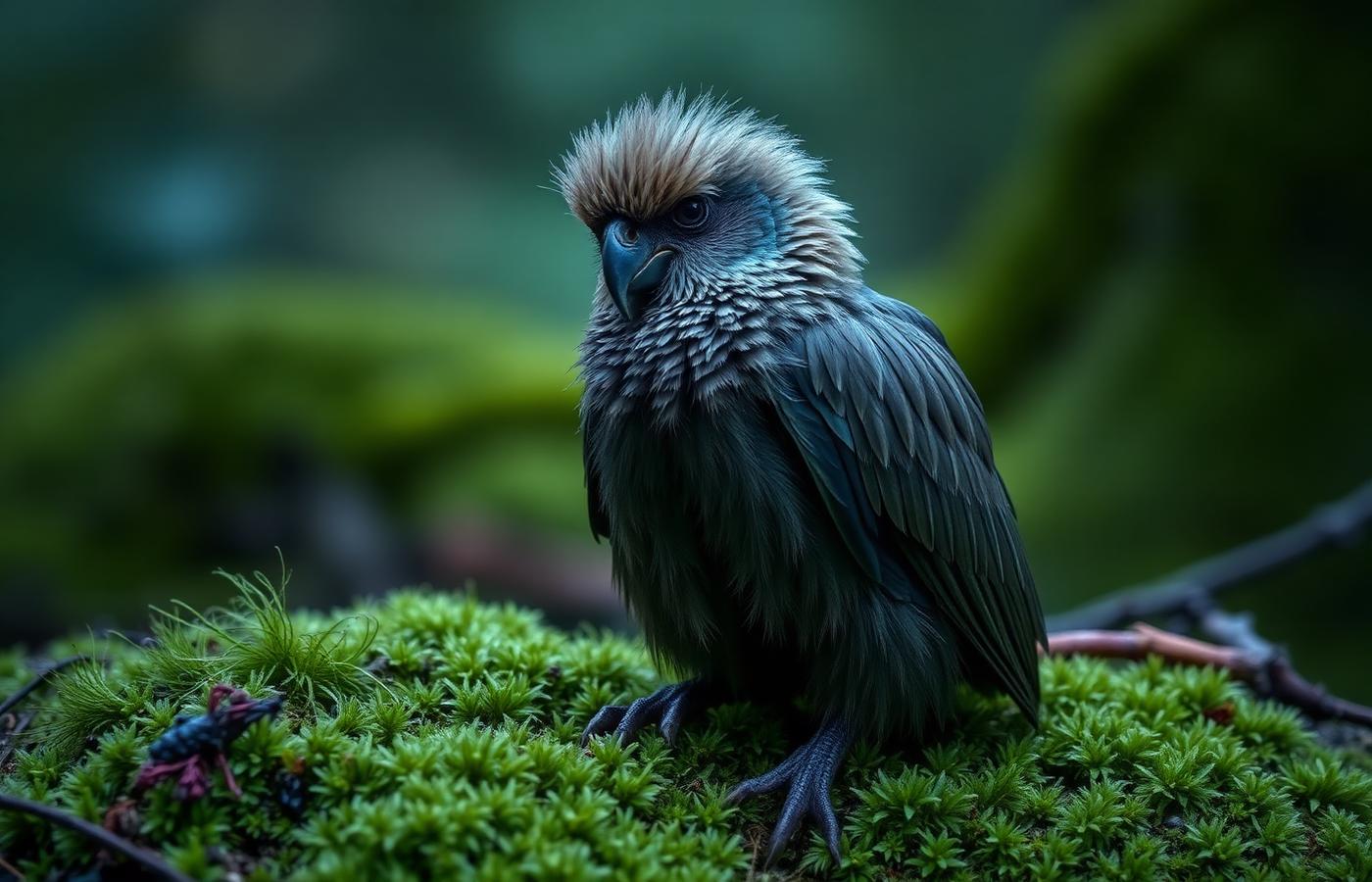
The Kakapo Recovery Programme: How New Zealand Saved a Flightless Parrot
The Kakapo went from a handful of survivors in the 1990s to more than 250 birds today. Here's how — and what still threatens the world's only flightless nocturnal parrot.
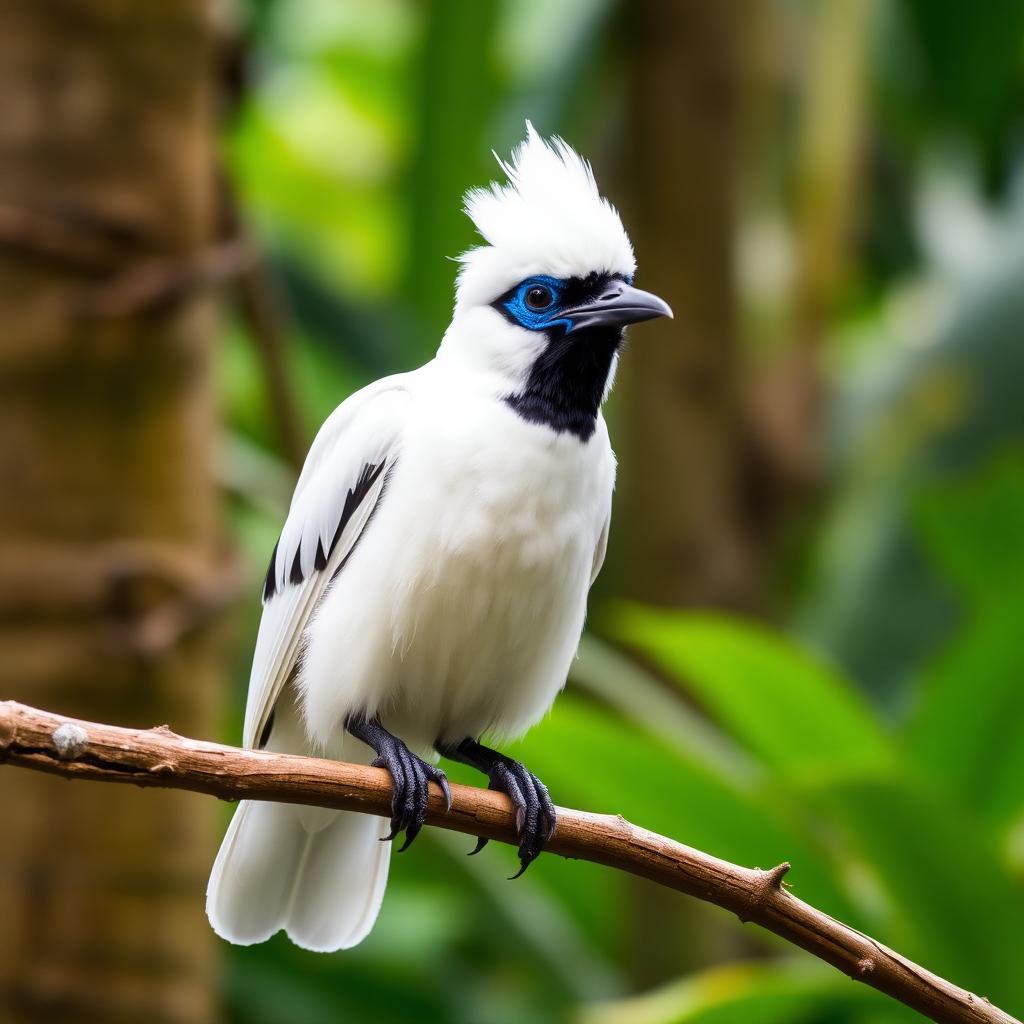
Bali Myna: Saving Indonesia's Whitest Songbird
The Bali Myna is arguably the most trafficked songbird in Southeast Asia. Its snow-white plumage and status as Bali's provincial bird made it a target — and its slow return is now a case study in island reintroduction.