The Kakapo Recovery Programme: How New Zealand Saved a Flightless Parrot
The Kakapo went from a handful of survivors in the 1990s to more than 250 birds today. Here's how — and what still threatens the world's only flightless nocturnal parrot.
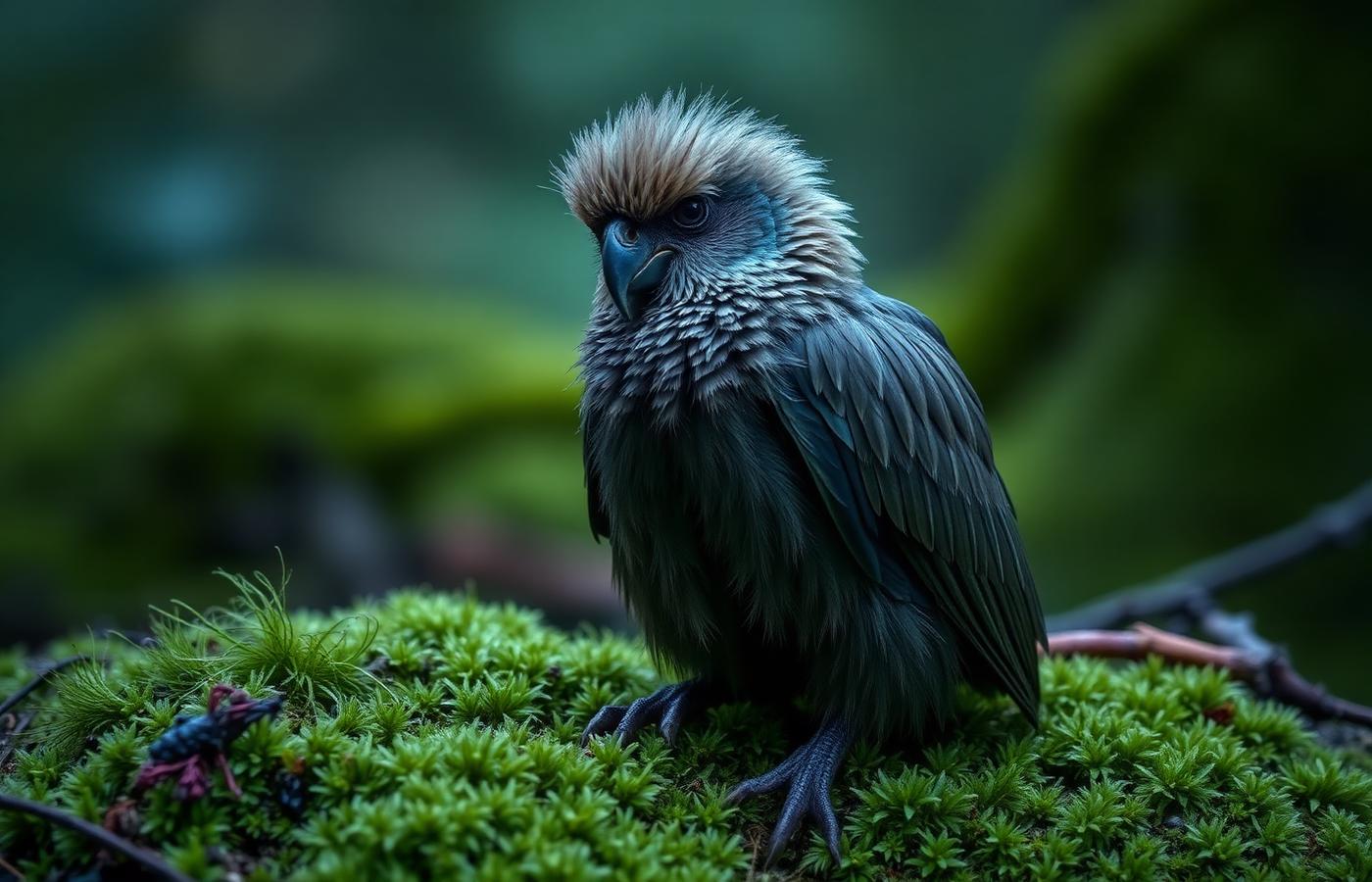
A bird that shouldn't still exist
By 1995 there were 51 known Kakapo alive. Every single one had been given a name, a transmitter and a personal history file. Three decades later, thanks to what is arguably the most intensively managed conservation programme in ornithological history, the population sits at 252 (Department of Conservation, March 2026 count).
That growth is remarkable, but it hides a fragile reality: every Kakapo alive today lives on a small number of predator-free islands, and the species is essentially extinct on the New Zealand mainland.
Why the population collapsed
Kakapo evolved for millions of years without mammalian predators. Their defensive strategy is to freeze — an excellent tactic against a hunting eagle looking for movement, and a catastrophic one against a stoat, a rat or a domestic cat.
By the time European settlers arrived with the Polynesian rat already established, the species was already retreating to remote Fiordland valleys. Introduced mustelids in the late 19th century finished the job on the mainland.
The breeding puzzle
Kakapo do not breed every year. They breed in response to mast fruiting of rimu (Dacrydium cupressinum) — an event that happens every 2 to 4 years. In non-mast years, no chicks are produced, which makes population growth punctuated and unpredictable.
The 2019 and 2022 mast events were both exceptionally productive, together adding more than 130 chicks. The 2025 season, by contrast, produced only 12 fledglings due to a partial mast failure.
How the programme actually works
Each Kakapo wears a smart transmitter that logs activity, mating events and nest visits. Nests are monitored by remote cameras and, during hatching, by human minders on 24-hour rotation. Eggs judged at risk of failure are pulled for artificial incubation and returned as chicks.
Every bird is also genetically catalogued. Managers actively translocate individuals between islands to prevent inbreeding depression — a genuine risk given how narrow the founder population was.
The next decade
The medium-term goal is a wild, self-sustaining Kakapo population on the New Zealand mainland — inside a fully fenced predator-exclusion sanctuary. Trials at Sanctuary Mountain Maungatautari are ongoing.
Aspergillosis, a fungal respiratory disease, remains the leading cause of chick mortality, and climate-driven changes in rimu masting cycles are the biggest unknown for the next two decades.
Key takeaways
- The Kakapo population has grown from 51 birds in 1995 to 252 in 2026.
- All wild Kakapo live on predator-free islands; the species is functionally extinct on the New Zealand mainland.
- Breeding is triggered by rimu masting and does not happen every year.
- Every individual is transmitter-tagged and genetically catalogued.
Frequently asked questions
How many Kakapo are left?
As of March 2026, 252 Kakapo are known to be alive, all under active management by the New Zealand Department of Conservation.
Why can't Kakapo fly?
Kakapo evolved on islands without mammalian predators. Flight was metabolically expensive and unnecessary, so the species evolved a heavier body and reduced flight muscles, becoming the world's only flightless parrot.
How often do Kakapo breed?
Kakapo breed only in years when rimu trees mast-fruit, which happens roughly every 2 to 4 years. In non-mast years no chicks are produced.
References
Related reading
The Philippine Eagle: A Complete Guide to the World's Rarest Raptor
With fewer than 400 breeding pairs remaining, the Philippine Eagle is one of the rarest raptors on Earth. Here's what field biologists have learned in three decades of recovery work.

The Resplendent Quetzal: Field Guide to Central America's Cloud-Forest Icon
Few birds are more mythologised than the Resplendent Quetzal. Behind the iridescence is a highly specialised cloud-forest species that depends on a single tree family to survive.