The Resplendent Quetzal: Field Guide to Central America's Cloud-Forest Icon
Few birds are more mythologised than the Resplendent Quetzal. Behind the iridescence is a highly specialised cloud-forest species that depends on a single tree family to survive.
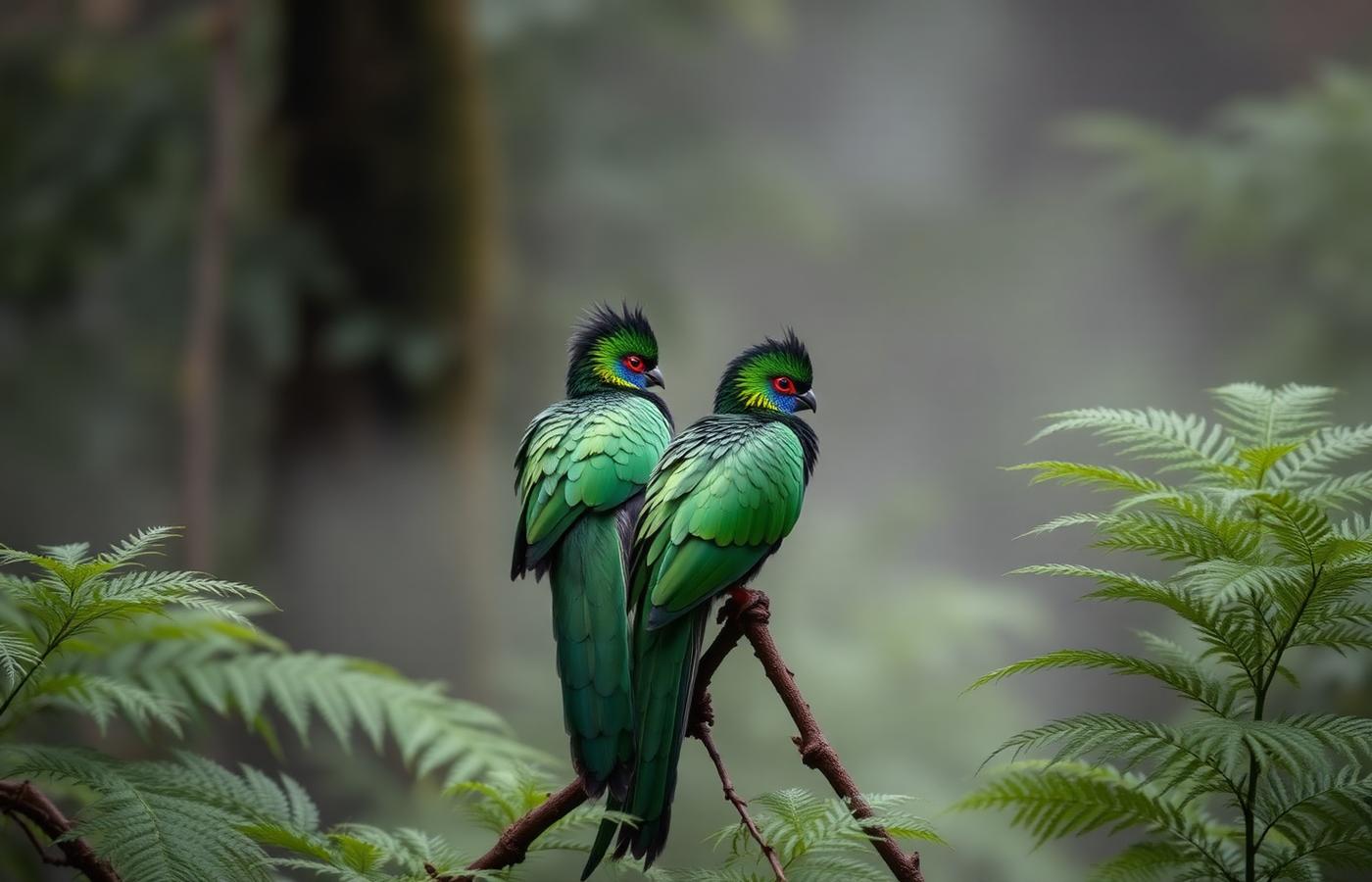
The bird of the cloud forest
The Resplendent Quetzal (Pharomachrus mocinno) inhabits a narrow altitudinal band of Central American cloud forest — typically 1,200 to 3,000 metres. Its range stretches from southern Mexico to western Panama, but genuine strongholds are limited to the Talamanca cordillera in Costa Rica, the Sierra de las Minas in Guatemala, and a shrinking patchwork elsewhere.
A species tied to a single tree family
Quetzals are specialised frugivores. Roughly 80% of their diet consists of fruits from the laurel family (Lauraceae), particularly wild avocados of the genus Ocotea. This is not a soft dependency: local Ocotea die-offs, whether from disease or clearance, correlate almost immediately with local quetzal declines.
Nesting and courtship
Pairs excavate cavities in soft, decaying tree trunks — most often dead Ocotea or Quercus. The male's famously long uppertail coverts, which can exceed 65 cm, are used in slow, undulating display flights above the forest canopy at dawn.
Nesting failure rates are high: predation by emerald toucanets and small mustelids accounts for the loss of an estimated 40% of clutches in unprotected forest, dropping to under 20% inside well-patrolled reserves.
Where to ethically observe them
Reliable, low-impact viewing is possible at Monteverde and San Gerardo de Dota in Costa Rica, and at Biotopo del Quetzal in Guatemala. The peak window is March to June, when males are in full breeding plumage and paired at nest sites.
Ethical practice: keep a minimum 30 m distance from active nests, use guides certified by local biological stations, and never use playback near breeding pairs.
Key takeaways
- The Resplendent Quetzal is a cloud-forest specialist tied to the laurel family.
- Its stronghold ranges are in Costa Rica's Talamancas and Guatemala's Sierra de las Minas.
- Nest predation is a leading cause of breeding failure outside protected reserves.
- Ethical viewing requires a 30 m distance and certified local guides.
Frequently asked questions
Where is the best place to see a Resplendent Quetzal?
San Gerardo de Dota in Costa Rica offers the most reliable dawn sightings from March to June, followed by the Biotopo del Quetzal in Guatemala.
What do quetzals eat?
Approximately 80% of the diet is wild avocados and other fruits of the laurel family (Lauraceae). Insects, small lizards and snails are taken opportunistically.
Is the Resplendent Quetzal endangered?
The IUCN currently lists the Resplendent Quetzal as Near Threatened, with a decreasing population trend driven primarily by cloud-forest loss.
References
Related reading
The Philippine Eagle: A Complete Guide to the World's Rarest Raptor
With fewer than 400 breeding pairs remaining, the Philippine Eagle is one of the rarest raptors on Earth. Here's what field biologists have learned in three decades of recovery work.
The Kakapo Recovery Programme: How New Zealand Saved a Flightless Parrot
The Kakapo went from a handful of survivors in the 1990s to more than 250 birds today. Here's how — and what still threatens the world's only flightless nocturnal parrot.