Philippine Cockatoo: Saving Palawan's Red-Vented Parrot
Once common across the Philippines, the red-vented cockatoo crashed to a few hundred birds. Paying former poachers to guard nests changed everything.
| Scientific name | Cacatua haematuropygia |
|---|---|
| Other name | Red-vented Cockatoo, katala |
| Length | About 30 cm |
| Range | Palawan and a few other Philippine islands |
| Low point | Fewer than 1,000 birds in the 1990s |
| Population now | Roughly 1,500 – 2,000 and rising |
| IUCN status | Critically Endangered |
A parrot that almost disappeared
Within living memory the Philippine Cockatoo was a bird farmers complained about. It gathered in noisy flocks over rice and corn across much of the archipelago.
By the 1990s it was gone from most of its range. Trapping for the pet trade and the loss of mature lowland and mangrove forest cut the population to a few hundred known birds.
The species survives today largely because of one blunt idea that worked: pay the people who were taking chicks to protect them instead.
Identifying the red-vented cockatoo
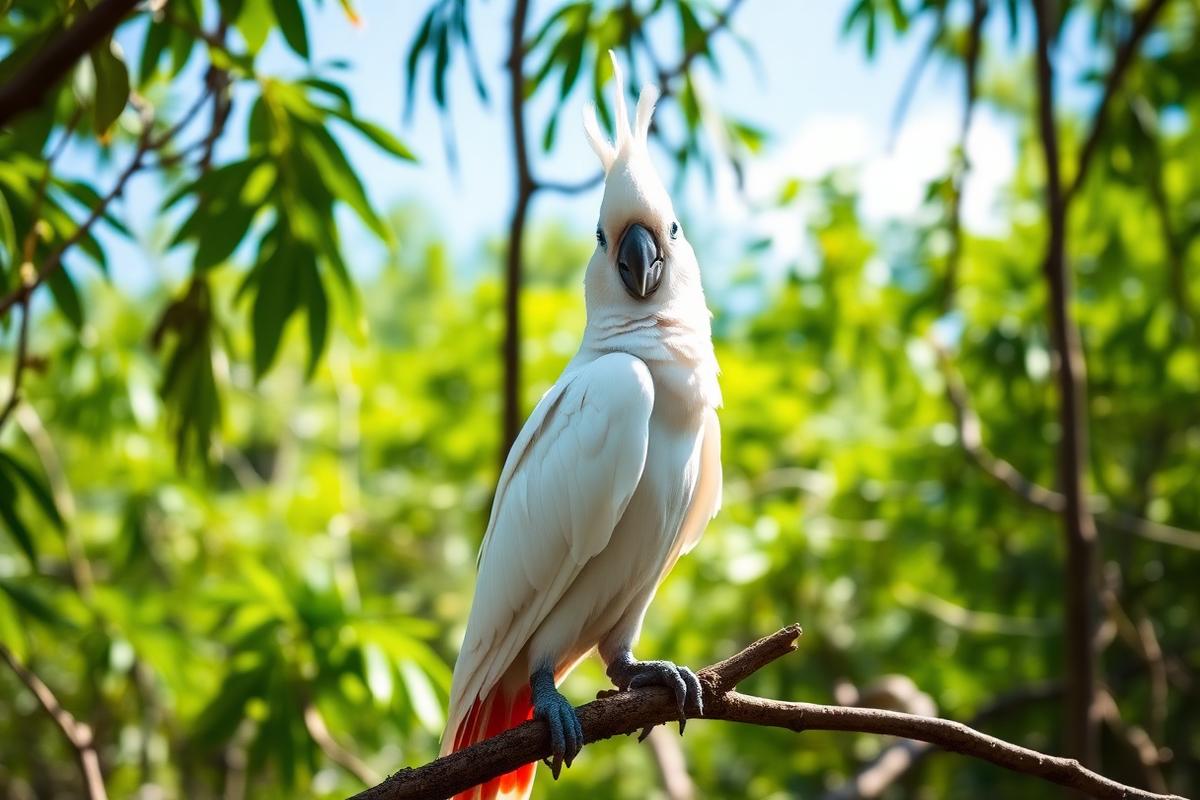
This is a small, compact white cockatoo, roughly 30 cm long — noticeably smaller than the Sulphur-crested Cockatoo often seen in captivity.
Field marks:
• White plumage with a short, rounded white crest.
• Red feathers under the tail, giving the alternative name red-vented cockatoo.
• Pale yellow wash under the wings and tail, visible in flight.
• Heavy pale grey bill and grey legs.
Flocks are loud. The contact call is a harsh, screeching note repeated in flight, and roosts can be heard well before they are seen.
Range and habitat
Historically the species occurred on most major Philippine islands. Today the stronghold is Palawan province, with the largest breeding populations on Rasa Island and around Dumaran, Narra and the Pandanan area.
Small populations persist on a handful of other islands, including parts of Mindanao and Tawi-Tawi, but many are tiny and isolated.
Birds depend on mature trees with natural cavities for nesting, and they use coastal mangrove, lowland forest and adjacent farmland for feeding.
Diet and daily rhythm
Philippine Cockatoos eat seeds, fruit, flowers, nectar and buds. Mangrove seeds are important in the coastal populations, and birds also visit cultivated crops.
The daily pattern is predictable: birds leave communal roosts at dawn, feed for a few hours, rest in shade during the hottest part of the day, feed again in late afternoon, then return noisily to roost.
That predictability made them easy to trap, and it is also what makes monitoring straightforward today.
Nesting biology
Breeding usually runs from February to June. Pairs nest in tree cavities, often in old, large trees that take decades to develop suitable holes.
Clutches are typically two to three eggs. Both parents feed the chicks, which stay in the cavity for around nine weeks.
Cavity shortage is a real constraint. Where big old trees have been cut, cockatoos cannot breed even if food and safety are adequate, which is why artificial nest boxes now supplement natural sites.
The nest warden model
The Katala Foundation, founded in 1998, built its programme around a simple exchange. Local men who had climbed to nests to take chicks for sale were hired as paid wardens for the same nests.
The logic is practical. They already know where every cavity is, they can climb, and a reliable salary through the breeding season beats an uncertain payment from a trader.
Results followed quickly. On Rasa Island the population grew from about two dozen birds in the late 1990s to several hundred, and poaching there effectively stopped.
The model has since been extended to other Palawan sites and adapted for other Philippine species.
Remaining threats
• Illegal pet trade. Demand has not vanished, and unguarded nests remain vulnerable.
• Habitat loss. Mangrove clearing for aquaculture and coastal development removes both nest trees and food.
• Small, fragmented populations. Outside Palawan, several groups are so small that they may not be viable long term.
• Invasive predators. Rats and, in places, monitor lizards take eggs and chicks from accessible cavities.
Outlook and what helps
The trend is genuinely upward, which is rare for a Critically Endangered parrot. Continued funding for wardens, mangrove protection and nest-box provision are the priorities.
Visitors can support the work directly. Community-run boat trips to view the Rasa Island roost fund local wardens and give the birds visible economic value in the town of Narra.
Never buy a cockatoo of uncertain origin. Wild-caught birds still enter the trade, and demand is the pressure that started the decline.
Proof that incentives matter
The Philippine Cockatoo's recovery is not about a breakthrough technology. It is about paying the right people to do the opposite of what they were doing, year after year, through every breeding season.
Support the Katala Foundation, choose community-run wildlife trips in Palawan, and share this story — the model works, and it deserves copying.
Key takeaways
- The Philippine Cockatoo crashed from an abundant bird to a few hundred individuals.
- Palawan, especially Rasa Island, holds the main surviving population.
- Hiring former poachers as nest wardens reversed the decline.
- Nest cavity shortage limits breeding where old trees have been cut.
- Numbers are now rising, but the species remains Critically Endangered.
Frequently asked questions
Why is it called the red-vented cockatoo?
Adults have red feathers under the tail, around the vent — the clearest way to separate it from other white cockatoos.
How many Philippine Cockatoos are left?
Roughly 1,500 to 2,000 birds, most of them in Palawan province. The trend has been upward since nest-guarding began.
Where is the best place to see one?
Rasa Island off Narra, Palawan, where community-run boat trips watch the evening roost flight.
Can you keep a Philippine Cockatoo as a pet?
No. The species is Critically Endangered and protected under Philippine law and CITES Appendix I. Trade in wild birds is illegal.
What do they eat?
Seeds, fruit, flowers, nectar and buds, including mangrove seeds and some cultivated crops.
What made the recovery work?
Paying local former poachers to guard nests through the breeding season, combined with habitat protection and nest boxes.
References
Related reading
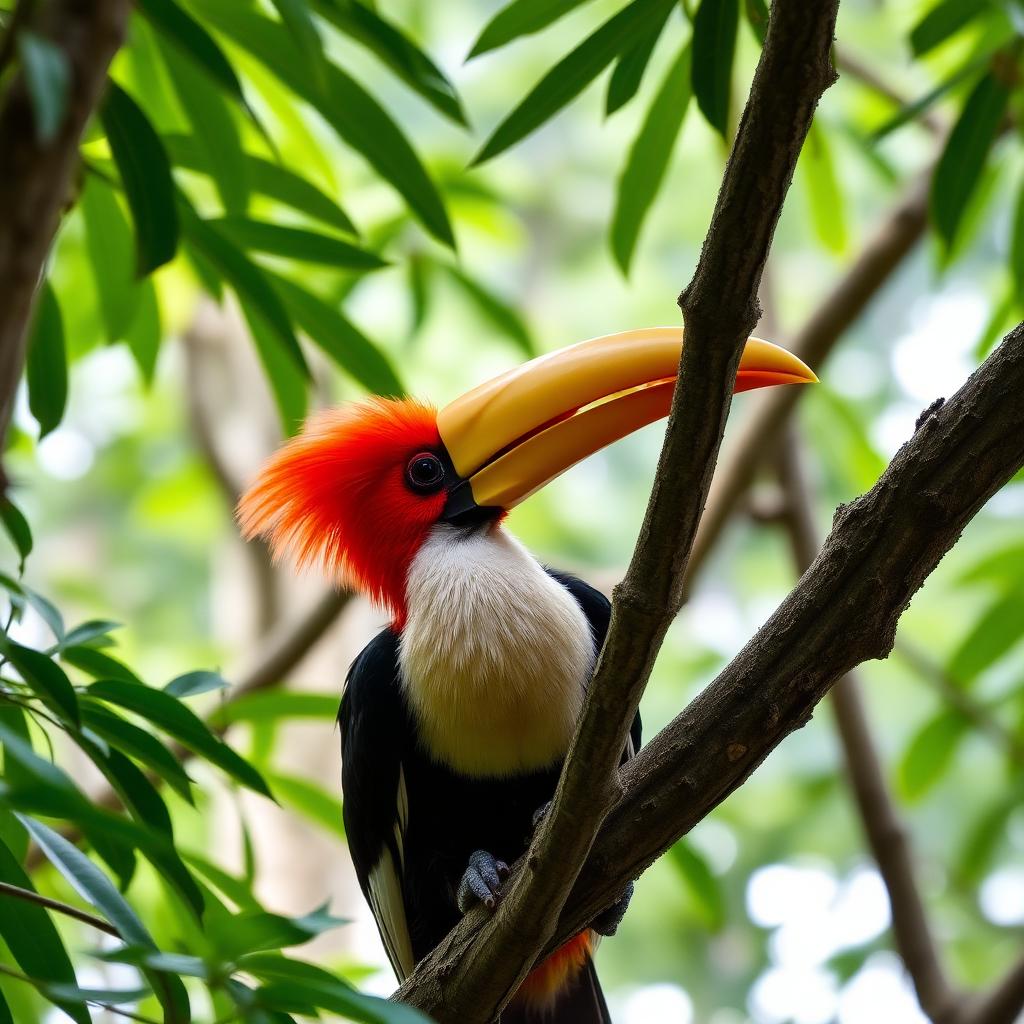
Rufous-headed Hornbill: The Panay Rainforest's Vanishing Voice
The Rufous-headed Hornbill is now one of the world's rarest hornbills, restricted to a few thousand hectares of intact rainforest on a single Philippine island.
Imperial Amazon: Dominica's National Bird on the Brink
The Imperial Amazon appears on the flag of Dominica. After Hurricane Maria, fewer than 250 are thought to remain in the wild.