Northern Rockhopper Penguin: The Cliff-Climbing Seabird in Decline
The Northern Rockhopper Penguin has lost around 90% of its population in seventy years. Here is what is happening on the remote islands where it still breeds.
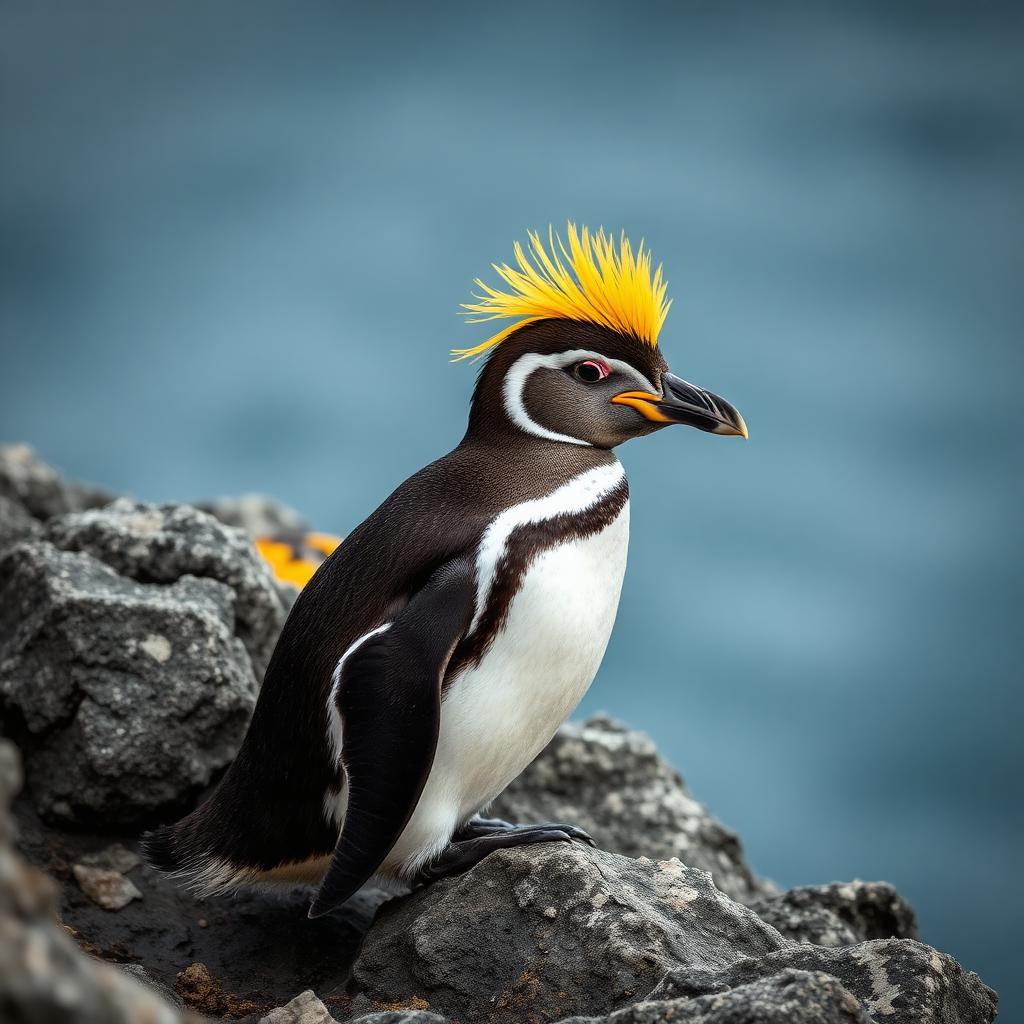
| Scientific name | Eudyptes moseleyi |
|---|---|
| Height | ≈ 55 cm |
| Range | Tristan da Cunha & Gough Islands (South Atlantic); St Paul & Amsterdam (Indian Ocean) |
| Diet | Krill, small fish, squid |
| Population | ≈ 240,000 breeding pairs (down from ~2 million) |
| IUCN status | Endangered |
The other rockhopper
The Northern Rockhopper Penguin (Eudyptes moseleyi) is a small, crested seabird of temperate South Atlantic and southern Indian Ocean islands. It was recognised as a full species distinct from the Southern Rockhopper only in 2006, based on genetics, plumage and vocal differences.
It is instantly recognisable in the field by its long, flowing yellow superciliary plumes that stream back over the head — noticeably longer and more diffuse than those of its southern relative.
Where it breeds
More than 85% of the world population breeds on just two island groups: Tristan da Cunha and Gough Island in the South Atlantic. Smaller populations exist on Amsterdam and St Paul islands in the southern Indian Ocean.
These islands are among the most remote inhabited (or formerly inhabited) places on Earth. There is no large-scale tourism and little terrestrial disturbance at the colonies — yet the species has still collapsed.
Diet and breeding behaviour
Northern Rockhoppers feed at sea on krill, small pelagic fish, and squid, diving typically to 20–50 metres. During the breeding season they forage close to their island but disperse across a much larger swath of the South Atlantic in the non-breeding months.
Colonies are packed onto rocky slopes and cliffs, sometimes hundreds of metres above the sea. The birds climb up and down with the hopping, upright gait that gives them their name. Pairs typically lay two eggs but almost always fledge only one chick.
A 90% collapse
The historic Tristan da Cunha population is thought to have been more than 2 million pairs. Today it is under 250,000 pairs — a decline of around 90%, most of it in the past seventy years.
The causes are still debated, but the strongest evidence points to changes in ocean productivity and prey availability driven by shifts in sea-surface temperature and the position of subtropical fronts. Introduced predators and past egg-harvesting also contributed historically.
The Gough Island mouse eradication
On Gough Island, the immediate priority for many seabirds is invasive house mice, which attack chicks — including large albatross chicks. The Royal Society for the Protection of Birds and Tristan da Cunha government carried out a large mouse-eradication operation in 2021, which is expected to benefit rockhopper chicks alongside better-known species.
At sea, the picture is harder to control. A 2011 oil spill from the freighter MS Oliva at Nightingale Island oiled thousands of rockhoppers and prompted the first coordinated international response for the species.
A quiet collapse in a distant ocean
The Northern Rockhopper Penguin is one of the clearest cases of a species vanishing in near-silence because it lives far from any market or media centre. It also shows that removing tourism or land-use pressure is not enough: ocean-driven declines can wipe out a species that no one has ever bothered.
Key takeaways
- The Northern Rockhopper Penguin was recognised as a distinct species only in 2006.
- More than 85% of the world population breeds on Tristan da Cunha and Gough Island.
- The species has declined by around 90% in the past seventy years.
- Ocean change, invasive mice on Gough, and past oil spills are among the key threats.
Frequently asked questions
How is it different from the Southern Rockhopper Penguin?
It has longer, more flowing yellow head plumes, a different call structure, and breeds on more temperate islands in the South Atlantic and southern Indian Ocean.
How many Northern Rockhopper Penguins are left?
Approximately 240,000 breeding pairs globally, down from an estimated 2 million pairs a few generations ago.
Where can I see one?
It is extremely difficult. The best access is via expedition ships visiting Tristan da Cunha, which happen a handful of times per year.
Why did the population crash if the islands are remote?
Most of the decline appears to be driven by changes at sea — ocean warming, prey shifts and past oil spills — rather than direct disturbance on land.
Are they still hunted?
Egg harvesting for local consumption occurred historically on Tristan and now is very limited and regulated. Direct hunting is not currently a major threat.
References
Related reading
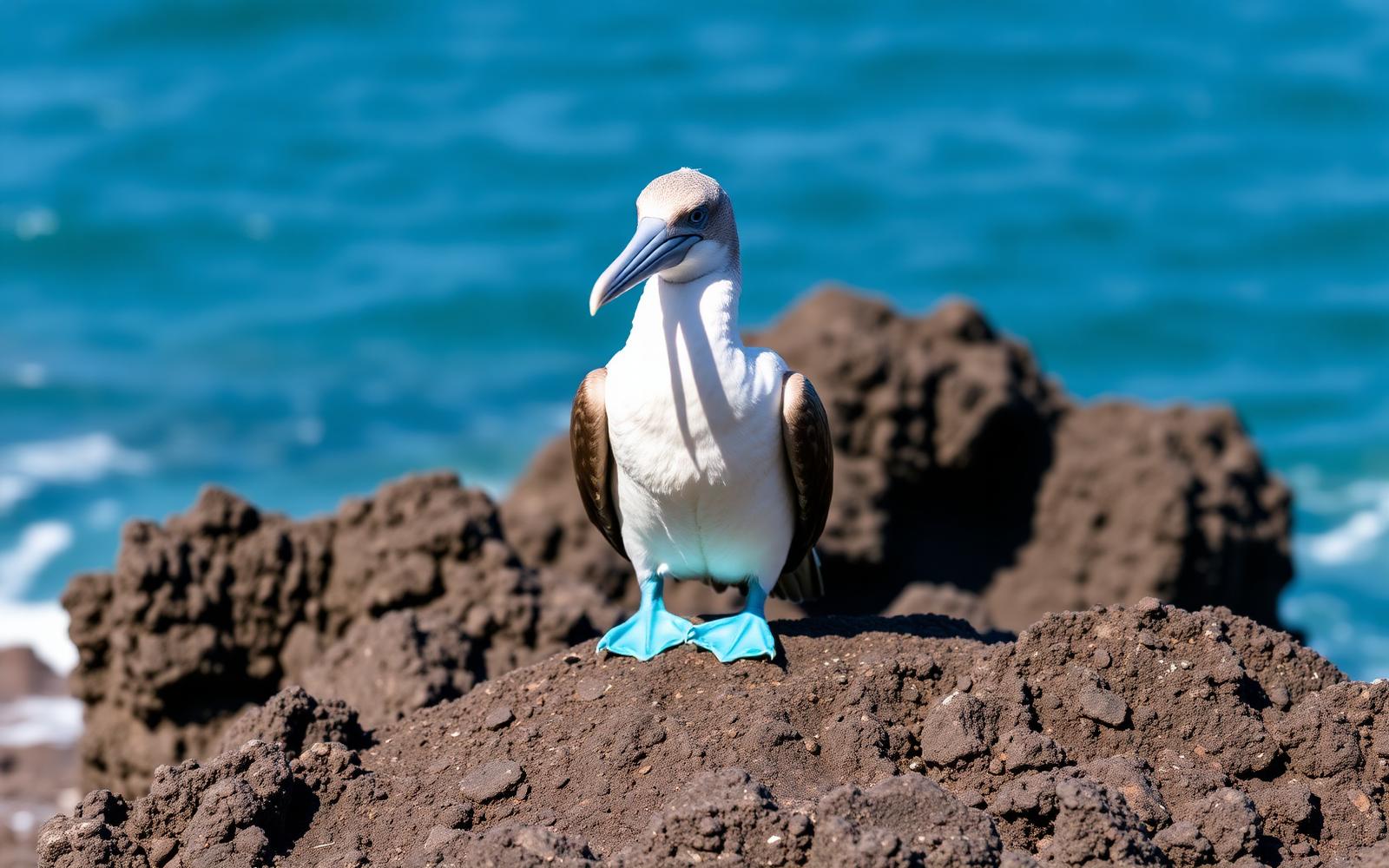
Blue-footed Booby: The Galápagos Seabird Whose Feet Tell the Truth
The Blue-footed Booby's feet are not just decorative. Their exact shade of blue is a live readout of the bird's diet and current health.
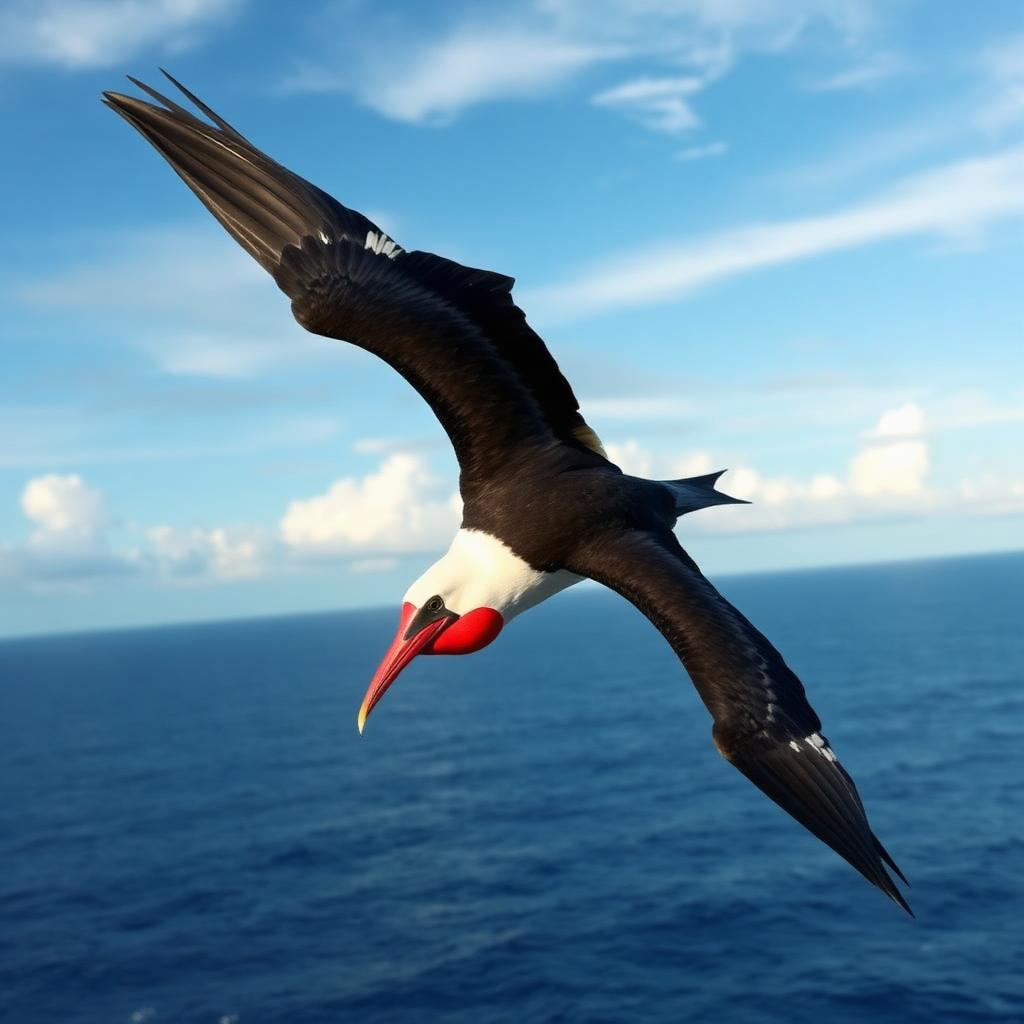
Christmas Frigatebird: The Rarest Seabird of the Indian Ocean
The Christmas Frigatebird breeds on a single island. Every one of the world's roughly 2,400 adults nests within a few square kilometres of Indian Ocean rainforest.