Christmas Frigatebird: The Rarest Seabird of the Indian Ocean
The Christmas Frigatebird breeds on a single island. Every one of the world's roughly 2,400 adults nests within a few square kilometres of Indian Ocean rainforest.
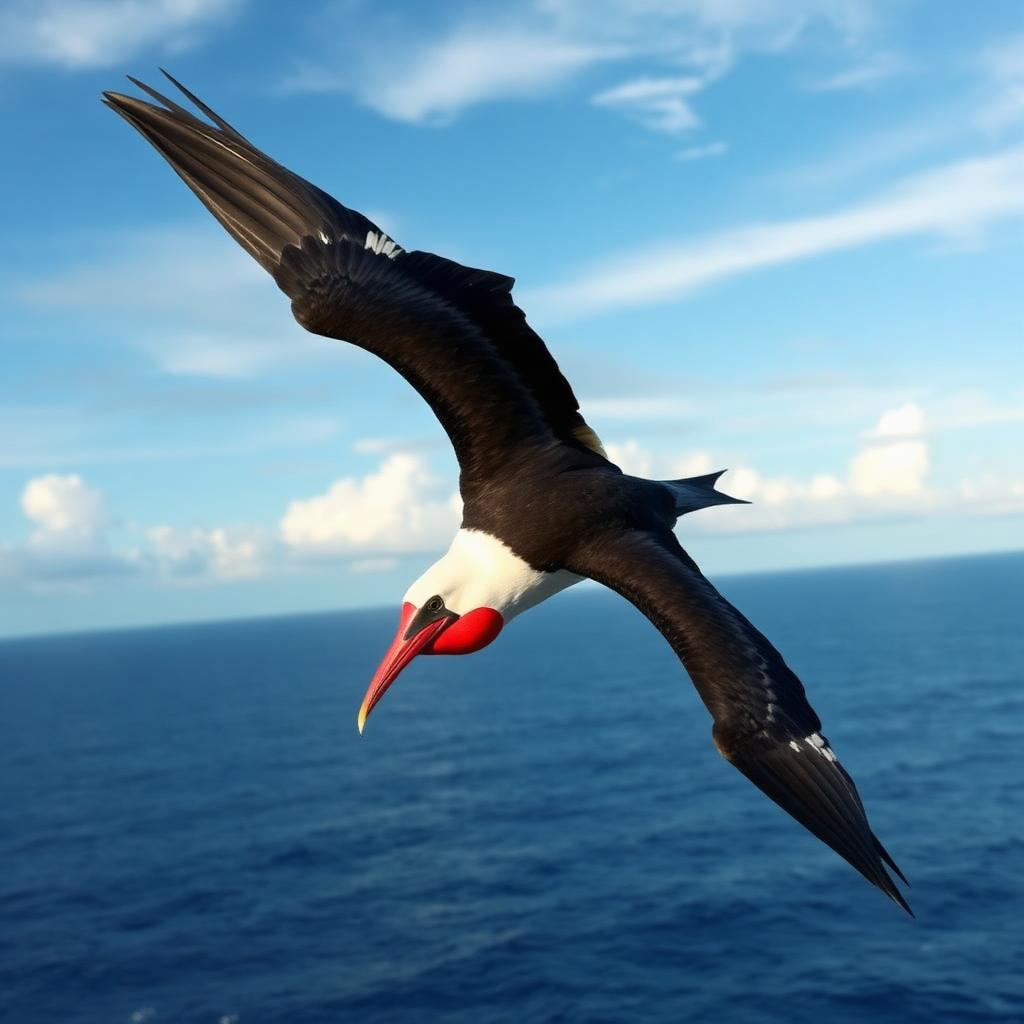
| Scientific name | Fregata andrewsi |
|---|---|
| Wingspan | ≈ 220 cm |
| Breeding range | Christmas Island (Indian Ocean) only |
| Foraging range | Indian Ocean and Java Sea |
| Population | ≈ 2,400–4,800 |
| IUCN status | Critically Endangered |
| Main threats | Nest-site loss, marine debris, phosphate mining legacy |
A seabird tied to one island
The Christmas Frigatebird (Fregata andrewsi) is a large, black-and-white seabird that breeds only on Christmas Island, an Australian territory in the Indian Ocean roughly 350 kilometres south of Java. It is one of only two frigatebirds — alongside the Ascension Frigatebird — whose entire global breeding population is confined to a single island.
Males are glossy black with a bright red throat pouch that inflates like a heart-shaped balloon during display. Females are larger, with a white belly and dark hood. Both sexes carry the long, deeply forked tail that is a trademark of the frigatebird family.
Purpose-built for the wind
Frigatebirds have the highest wing-area-to-body-mass ratio of any bird. This gives them extraordinary staying power in the air — Christmas Frigatebirds tagged by BirdLife Australia have logged uninterrupted flights of more than a week over open ocean.
The trade-off is that they cannot rest on water. Their plumage is not waterproof, and their small feet cannot swim. If a bird is forced down onto the sea, it will usually drown.
Feeding by piracy and skimming
Christmas Frigatebirds catch flying fish and squid pushed to the surface by tuna and dolphins, plucking them from the air or from just below the waterline without landing. They also famously practise kleptoparasitism — chasing tropicbirds and boobies to force them to disgorge their catch.
Foraging tracks reveal that individual birds range across a vast triangle of the eastern Indian Ocean and Java Sea, sometimes travelling more than 4,000 km round-trip from a single nest.
Why the numbers are so low
Only about 1,200–1,500 breeding pairs remain, all nesting in the forest canopy at a handful of sites in the north-east of Christmas Island. Decades of phosphate mining removed part of the historic nesting habitat, and dust from active mining still affects some breeding areas.
Marine debris — particularly discarded fishing gear and plastic that adult birds mistake for prey and feed to chicks — is now a leading cause of chick mortality. Yellow crazy ants, an introduced species that dominates parts of the island's forest floor, threaten nest tree health.
What is being done
Parks Australia manages the Christmas Island National Park, where all major frigatebird colonies sit. A long-term program of yellow crazy ant baiting, dust suppression at mining sites, and marine debris removal has arrested — but not yet reversed — the long decline.
International cooperation matters too. Because these birds forage across the exclusive economic zones of Indonesia, Malaysia and Australia, fisheries bycatch and plastic waste at sea can only be reduced through cross-border agreements.
A single-island species with an ocean-sized footprint
The Christmas Frigatebird is a reminder that some species need both a specific breeding island and an entire ocean-scale foraging area to persist. Protecting it means holding both together at once — a small forest patch on Christmas Island, and a functioning food web across the eastern Indian Ocean.
Key takeaways
- The Christmas Frigatebird breeds only on Christmas Island in the Indian Ocean.
- Fewer than 1,500 breeding pairs remain — IUCN status Critically Endangered.
- Feeding tracks span thousands of kilometres over open ocean.
- Marine debris and habitat legacy from phosphate mining are the primary current threats.
Frequently asked questions
Where do Christmas Frigatebirds nest?
Only on Christmas Island, an Australian territory in the Indian Ocean. All known breeding colonies are inside the Christmas Island National Park.
How many Christmas Frigatebirds are left?
The most recent estimates put the population at 2,400–4,800 mature individuals, with about 1,200–1,500 breeding pairs.
Why is it Critically Endangered?
The combination of a single, tiny breeding range, historic habitat loss from phosphate mining, invasive species and marine debris means even small extra losses have a large impact.
Can Christmas Frigatebirds swim?
No. Their feathers are not waterproof. If they land on the sea, they usually cannot take off again and often drown.
What is the red throat pouch for?
It is a male display structure. During courtship, males inflate the pouch to advertise their fitness to females circling overhead.
References
Related reading
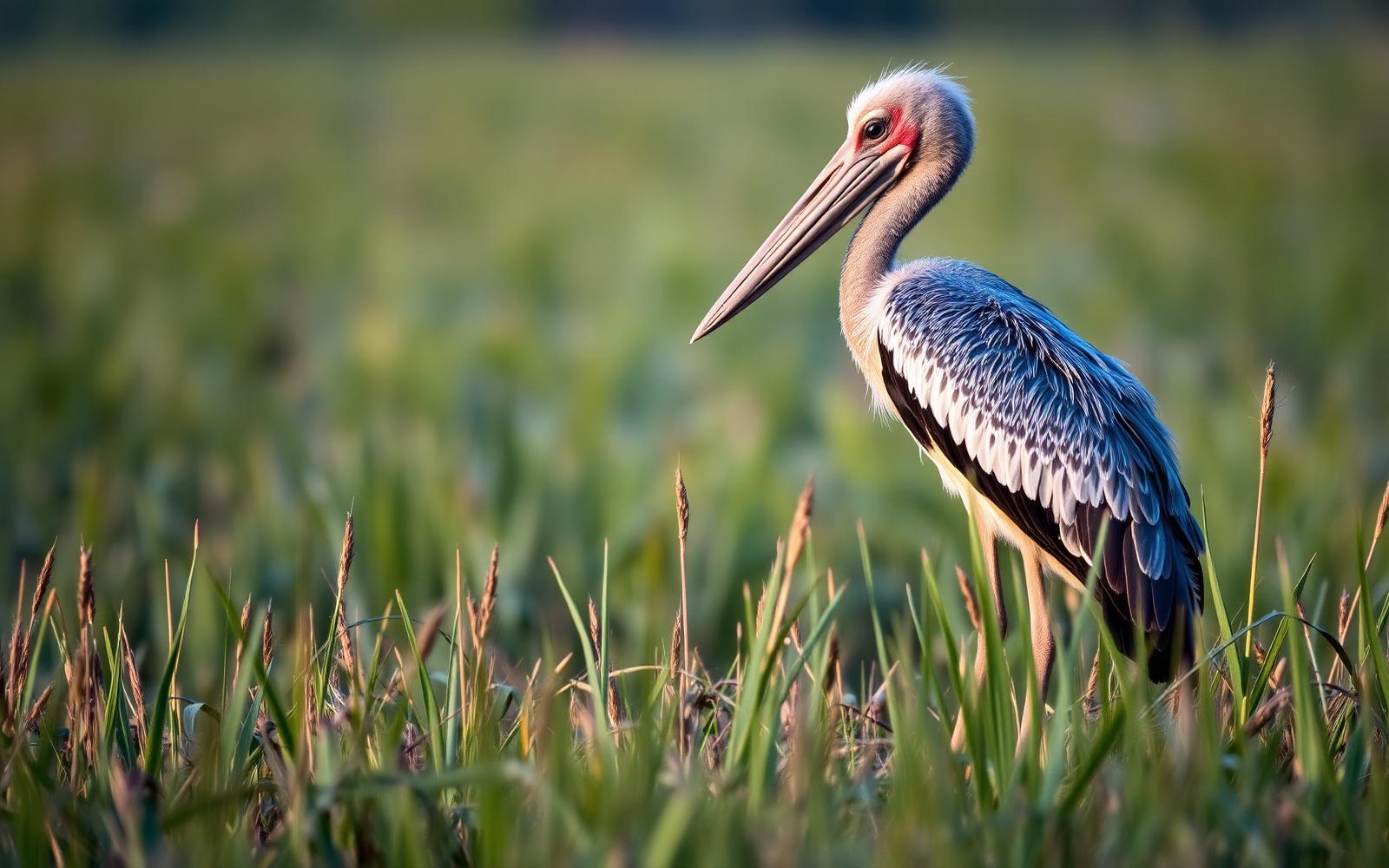
The Shoebill Stork: Africa's Prehistoric Wetland Hunter
With a bill shaped like a wooden clog and the patience of a heron, the Shoebill has become the most requested bird in African birding tourism. Here is the biology behind the icon.
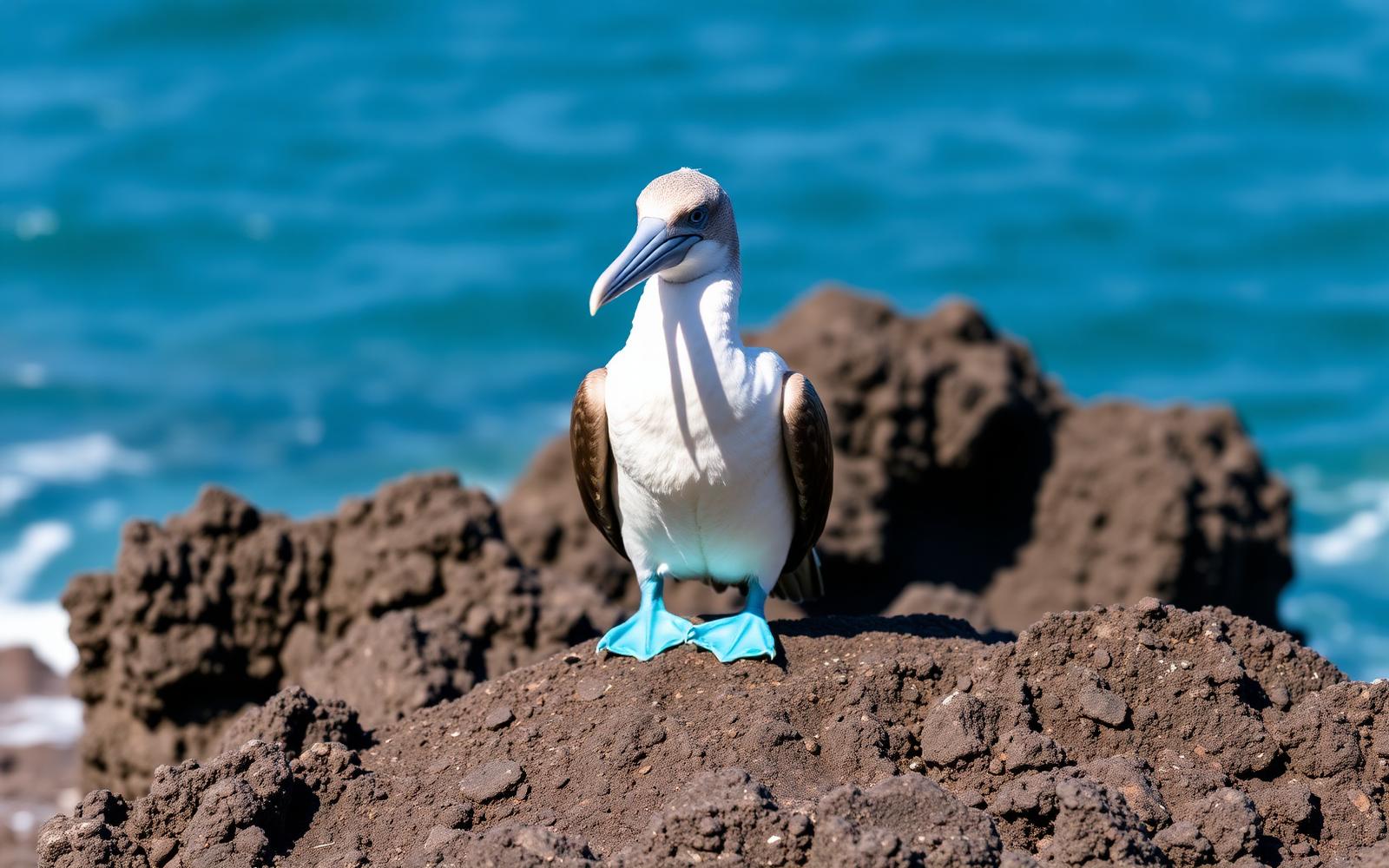
Blue-footed Booby: The Galápagos Seabird Whose Feet Tell the Truth
The Blue-footed Booby's feet are not just decorative. Their exact shade of blue is a live readout of the bird's diet and current health.