Mandarin Duck: The World's Most Ornate Waterfowl Explained
The male Mandarin Duck is arguably the most extravagantly patterned waterfowl on Earth — a walking colour chart that has fascinated painters, poets and biologists for a thousand years.

| Scientific name | Aix galericulata |
|---|---|
| Length | 41–49 cm |
| Wingspan | ≈ 70 cm |
| Native range | East Asia (China, Japan, Korea, Russian Far East) |
| Introduced range | UK, mainland Europe, parts of North America |
| Diet | Seeds, acorns, aquatic invertebrates |
| IUCN status | Least Concern (declining natively) |
A duck that looks painted
The Mandarin Duck (Aix galericulata) is a small, perching duck native to East Asia. The male in breeding plumage is one of the most improbable-looking birds on Earth — a compact body wrapped in a swirl of chestnut sail-fin feathers, a purple breast, white eye-line, orange 'whiskers' and a pinkish-red bill. The female is quieter: soft grey with a pale eye ring and delicate spotting.
For more than a thousand years, Mandarin Ducks have been a fixture of Chinese and Japanese painting, poetry and wedding iconography. Their tight pair bond made them a symbol of marital devotion.
Native range and habitat
Native populations breed in the Russian Far East, north-east China, Korea and Japan, then migrate south for winter to central and southern China. They prefer wooded rivers, lakes and slow streams with overhanging trees — habitat that also provides the tree cavities they need for nesting.
The species has declined significantly in mainland China due to logging of riparian woodland and the drainage of wetlands. Japan, by contrast, still holds a stable resident population of perhaps 50,000 birds.
The unexpected European population
In the 1930s, ornamental Mandarin Ducks escaped from private collections in southern England. The feral population now exceeds 7,000 birds and has spread across the UK, Ireland, the Netherlands and Belgium. Small feral flocks also exist in California and the Great Lakes.
British ornithologists sometimes note that the UK now holds around 10% of the world's total Mandarin Ducks, an accidental but genuinely important insurance population.
Tree cavities and daring chicks
Mandarin Ducks nest in tree hollows up to 15 metres above the ground. The female incubates 9–12 eggs alone. When the ducklings hatch, they must jump — a controlled, fluttering fall to the forest floor — often within 24 hours of leaving the shell.
This behaviour is why Mandarin Ducks readily accept nest boxes placed on trunks near quiet waterways. Well-designed boxes have been decisive for the UK feral population.
Diet and daily rhythm
Mandarins forage at dawn and dusk. In autumn and winter they specialise in acorns and beech mast, dabbling on the shore or in shallows. In spring, aquatic insects and snails dominate. This flexible, mixed diet is one reason the introduced European population has done so well in oak woodland.
Outside the breeding season the birds gather in small flocks of 20–60 birds. Pairs often re-form each autumn on wintering waters — one reason the species is associated with fidelity in East Asian culture.
Ornament and indicator
The Mandarin Duck is more than a decorative curiosity. Its steep decline in China is a real signal of what is happening to that country's riparian woodland, and the flourishing UK feral population is a reminder that carefully managed introduced species can, occasionally, serve as a genuine conservation backstop.
Key takeaways
- The Mandarin Duck is native to East Asia but has established feral populations in Europe.
- It is a cavity nester and requires mature riparian woodland.
- The UK feral population may now hold about 10% of the global total.
- It has been a symbol of marital devotion in Chinese and Japanese culture for over a millennium.
Frequently asked questions
Are Mandarin Ducks endangered?
The global IUCN status is Least Concern, but native East Asian populations have declined sharply in mainland China. Japan and the introduced European population are currently stable.
Can Mandarin Ducks fly?
Yes. They are strong, agile fliers and manoeuvre well through wooded canopy — an adaptation to their forested-river habitat.
Do Mandarin Ducks mate for life?
Pairs bond strongly during a breeding season and often re-pair with the same partner in following years, but lifetime monogamy is not guaranteed. The cultural symbolism overstates the biology slightly.
Why do Mandarin Duck chicks jump from trees?
Because females nest in tree cavities up to 15 m above the ground. Chicks must reach water quickly, so they leap and their light body mass and downy feathers cushion the fall.
Where can I see wild Mandarin Ducks in the UK?
Reliable sites include Virginia Water in Surrey, the National Trust's Cotehele estate, and several ponds in London's Royal Parks, especially in autumn.
References
Related reading
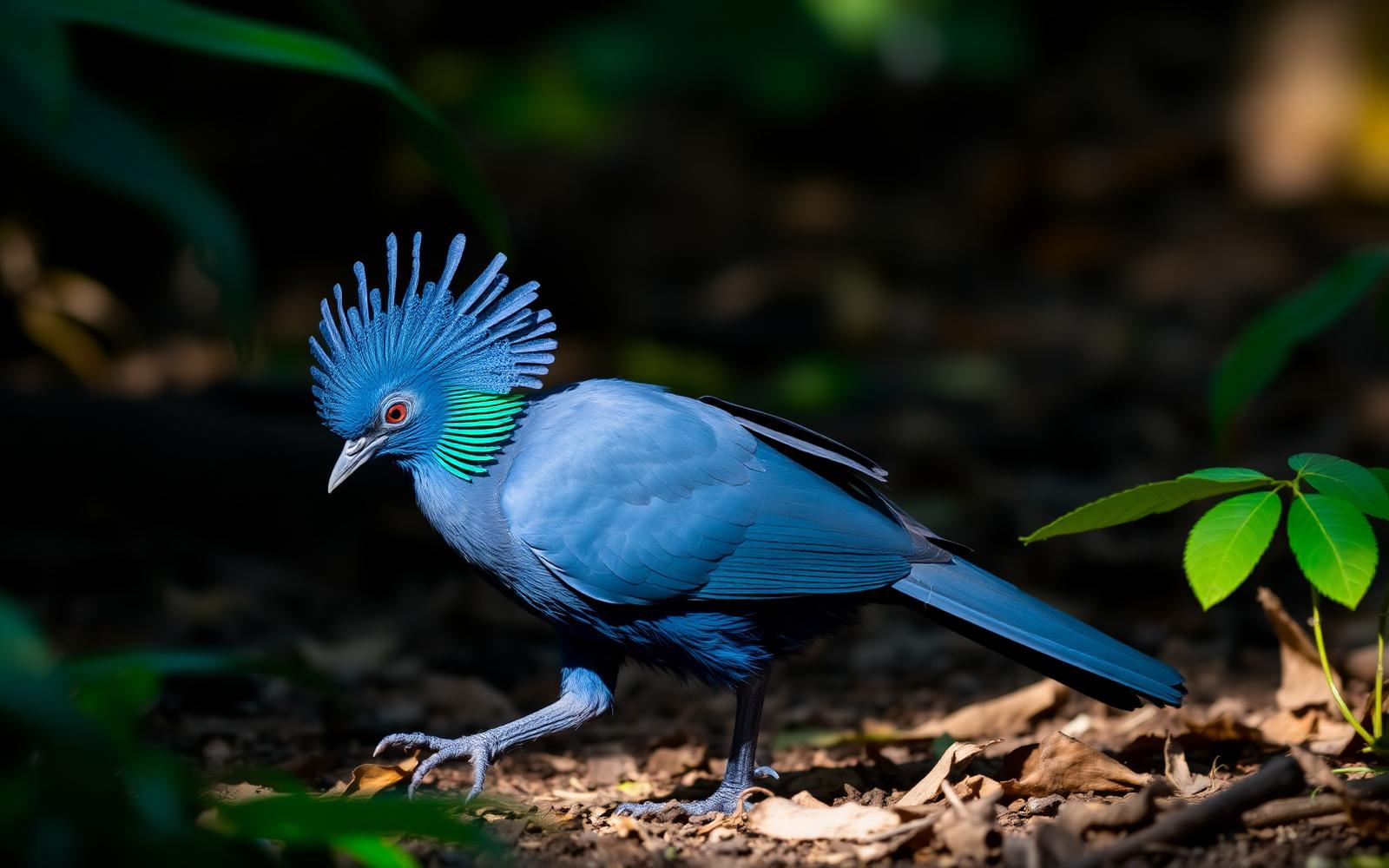
Victoria Crowned Pigeon: The Regal Ground Dweller of New Guinea
The Victoria Crowned Pigeon is the largest pigeon on Earth and carries a lace-like blue crest that looks designed rather than evolved.
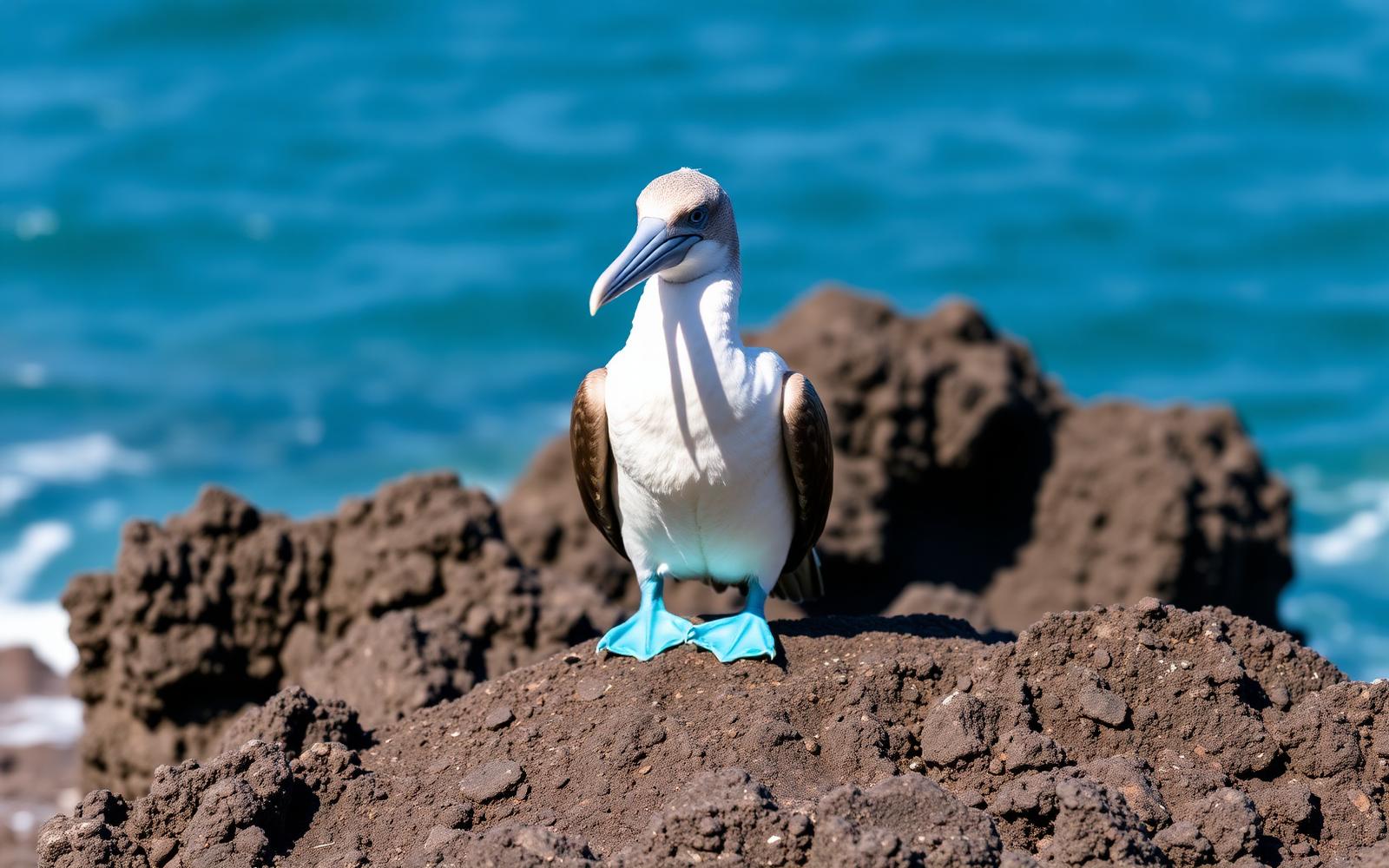
Blue-footed Booby: The Galápagos Seabird Whose Feet Tell the Truth
The Blue-footed Booby's feet are not just decorative. Their exact shade of blue is a live readout of the bird's diet and current health.