Long-wattled Umbrellabird: The Cloud Forest's Strangest Cotinga
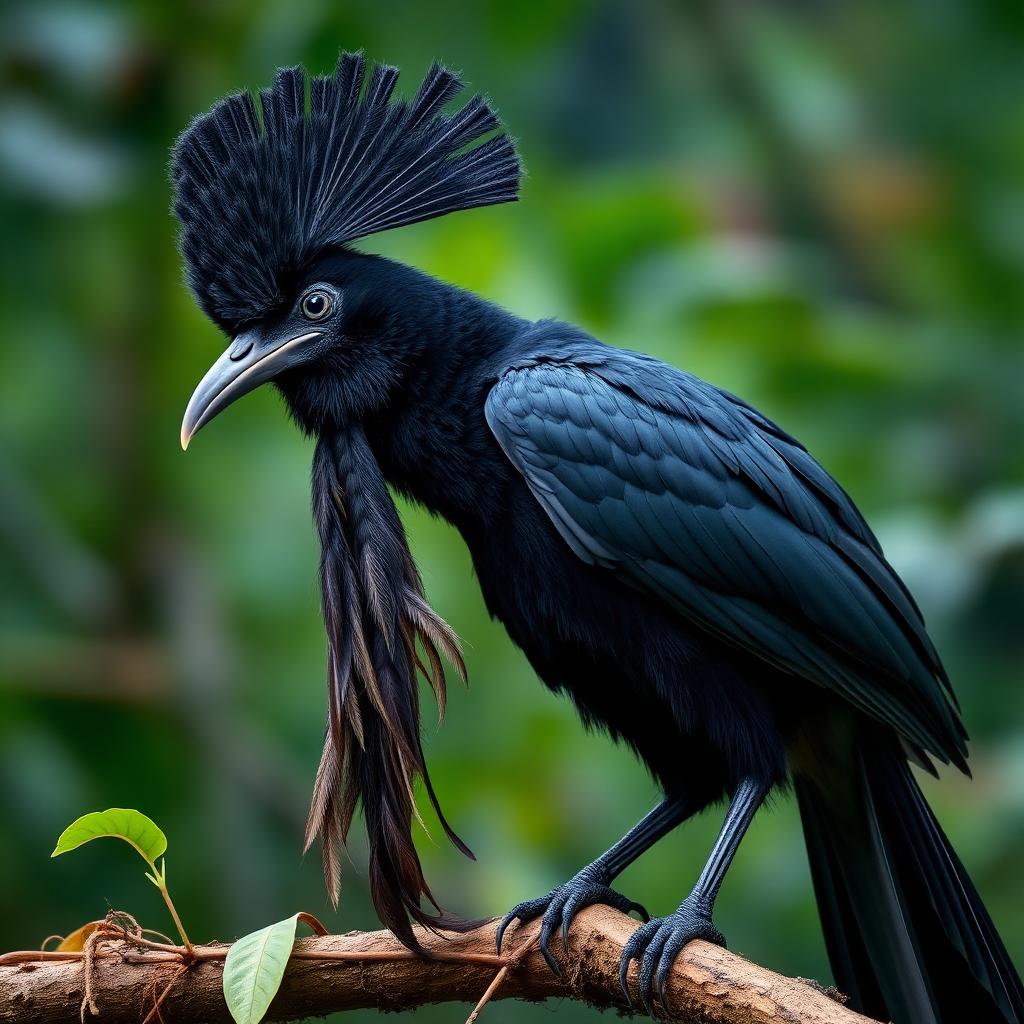
The male Long-wattled Umbrellabird looks less like a cotinga than an eccentric priest — jet black, with a pompadour crest and a feathered wattle that hangs a third of a metre from his throat.
| Scientific name | Cephalopterus penduliger |
|---|---|
| Length | ≈ 41 cm |
| Range | Chocó bioregion — western Colombia and Ecuador |
| Wattle length (male) | up to 35 cm |
| Diet | Palm fruit, large insects, small lizards |
| Population | ≈ 10,000–20,000 (declining) |
| IUCN status | Vulnerable |
A bird that shouldn't quite work
The Long-wattled Umbrellabird (Cephalopterus penduliger) is a jet-black cotinga that lives only in the wet Chocó forests of western Colombia and Ecuador. Males wear an umbrella-shaped crest of forward-curving feathers and a long, feathered wattle that hangs from the throat — sometimes 35 centimetres long, longer than the bird's own body.
The whole assembly is deployed in a display so unusual it takes a moment to process. It should not fly well; and yet it does.
The Chocó cloud forest
Long-wattled Umbrellabirds live in humid premontane and lower montane forest between about 80 and 1,800 metres above sea level. Their entire range sits inside the Chocó bioregion — one of the wettest places on the planet, and among the most biologically dense.
Males occupy stable song perches on ridge tops. Females and juveniles range more widely, following seasonal fruit crops down and up the slope.
The lek and the boom
In the breeding season, males gather at traditional lek sites — small clusters of perches within earshot of each other — and produce a deep booming call. The sound is startlingly low, closer to a distant cow than to a typical songbird, and it can carry more than 400 metres through dense forest.
As he calls, the male inflates and swings his wattle, fans the crest forward over the bill, and bows deeply. Females visit the lek, watch several males in succession, and choose one to mate with. Males play no role in raising the single chick.
Diet and role in the forest
Long-wattled Umbrellabirds eat a wide range of large fruits, particularly palm nuts, and supplement with big insects, small lizards and the occasional frog. Because they swallow palm nuts whole and regurgitate the seeds intact away from the parent tree, they are one of the most important large-seed dispersers in the Chocó.
Losing them is not just a loss of a species — it degrades the forest's ability to regenerate specific palm and fruit trees.
A specialist under pressure
The Chocó has lost more than half of its original forest cover to logging, gold mining, oil palm and pasture. Long-wattled Umbrellabirds are patchy inside what remains — they need large, unbroken tracts of mid-elevation forest, and are among the first cotingas to disappear from fragmented patches.
Community-run reserves in Ecuador's Mache-Chindul and Ecuadorian Chocó regions have created targeted protected areas for umbrellabird leks, and eco-tourism revenue from lek viewing is now a small but real economic argument for keeping the forest standing.
Strange, specific, essential
The Long-wattled Umbrellabird is a species you cannot easily replace. It is a specialist of one specific forest type, in one specific mountain range, with one very peculiar breeding system. Protecting the Chocó at scale is the only serious way to protect it.
Key takeaways
- The Long-wattled Umbrellabird is a Chocó endemic found only in western Colombia and Ecuador.
- Males display at traditional leks with a deep booming call.
- It is a key disperser of large palm seeds.
- IUCN status is Vulnerable due to Chocó forest loss.
Frequently asked questions
Why is it called an umbrellabird?
Because the male's crest of forward-curving feathers can be raised into an umbrella-like canopy over the head and bill during display.
What is the wattle for?
It is a sexual display structure. Males use it, along with the crest and a deep booming call, to attract females at lek sites.
Where can I see a Long-wattled Umbrellabird?
Reliable sites include Ecuador's Mashpi and Bilsa reserves and Buenaventura Reserve. Local guides can take visitors to active leks during the display season.
Is the Long-wattled Umbrellabird endangered?
It is currently classed as Vulnerable by the IUCN, with a population trend that is declining alongside ongoing Chocó forest loss.
How deep is the umbrellabird's call?
Very deep for a passerine — the fundamental frequency is close to 50 Hz, which is why it carries so far through dense cloud forest.
References
Related reading
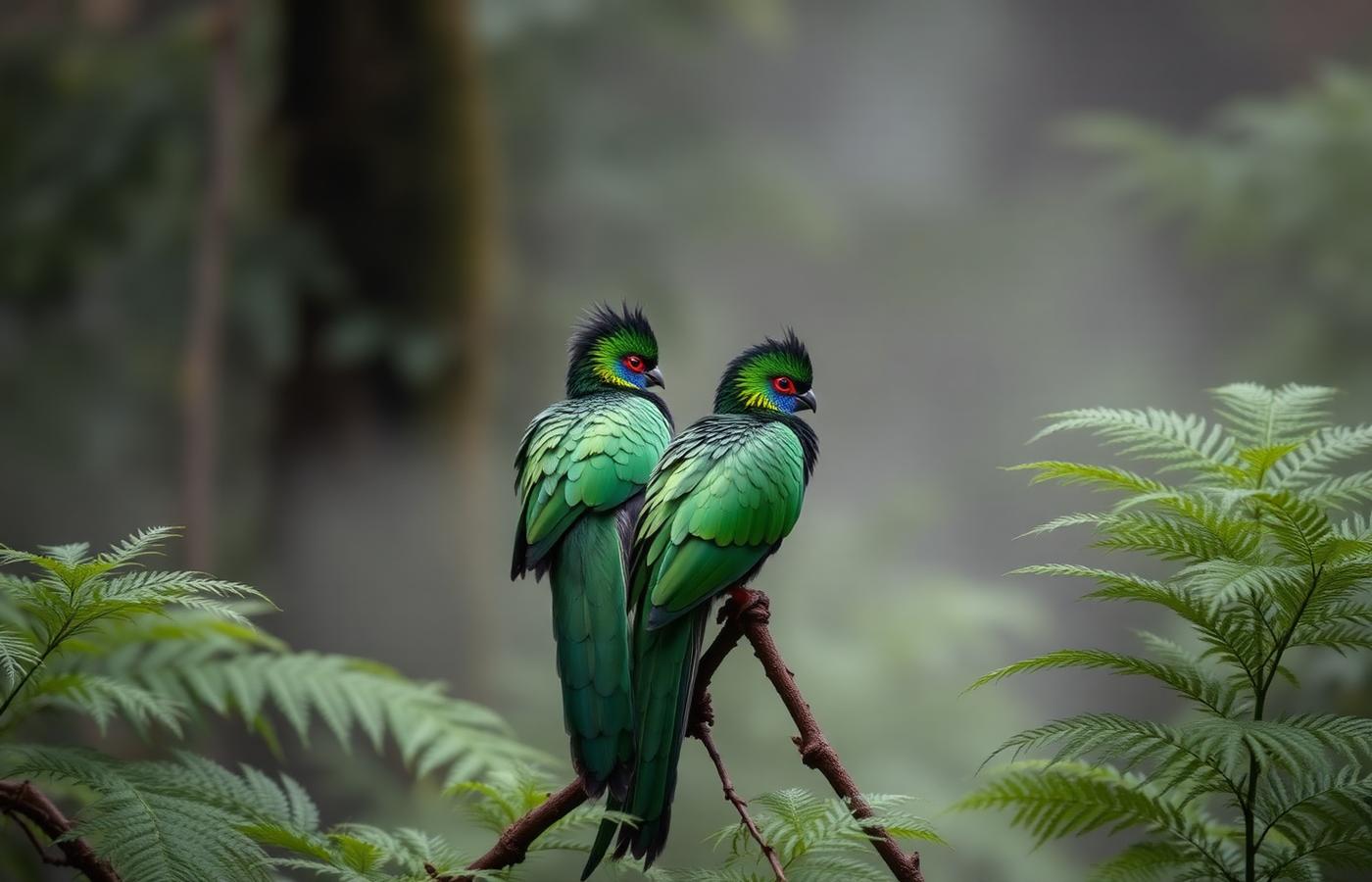
The Resplendent Quetzal: Field Guide to Central America's Cloud-Forest Icon
Few birds are more mythologised than the Resplendent Quetzal. Behind the iridescence is a highly specialised cloud-forest species that depends on a single tree family to survive.
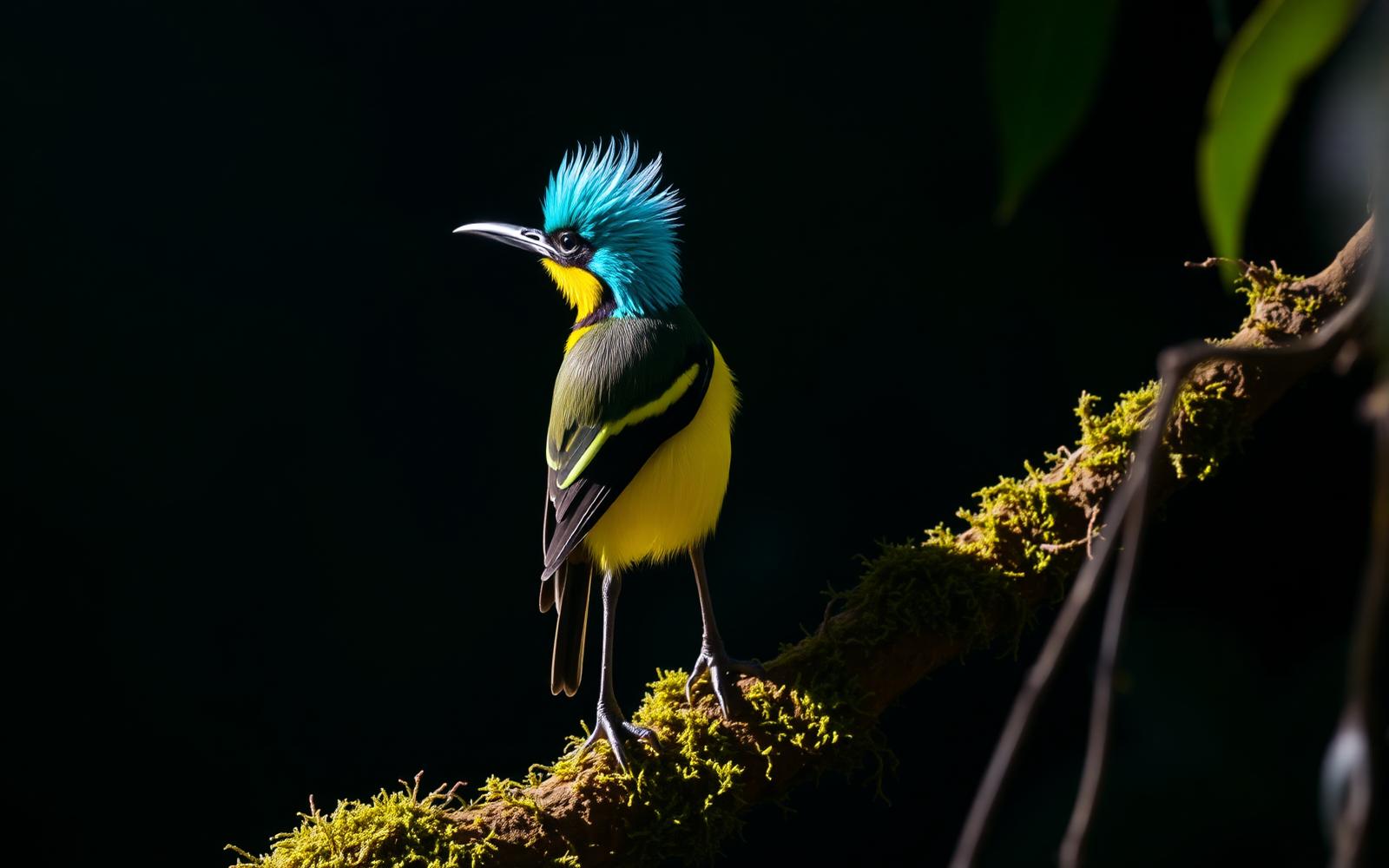
Wilson's Bird-of-Paradise: The Neon Dancer of Waigeo
Only two islands on Earth host Wilson's Bird-of-Paradise. Its neon head and choreographed display have made it a bucket-list species — with real access consequences.