Hyacinth Macaw: The Cobalt Giant of the Brazilian Pantanal
The Hyacinth Macaw is the world's largest flying parrot and one of conservation's more hopeful stories — a species pulled back from the brink of collapse by a single, focused Brazilian project.
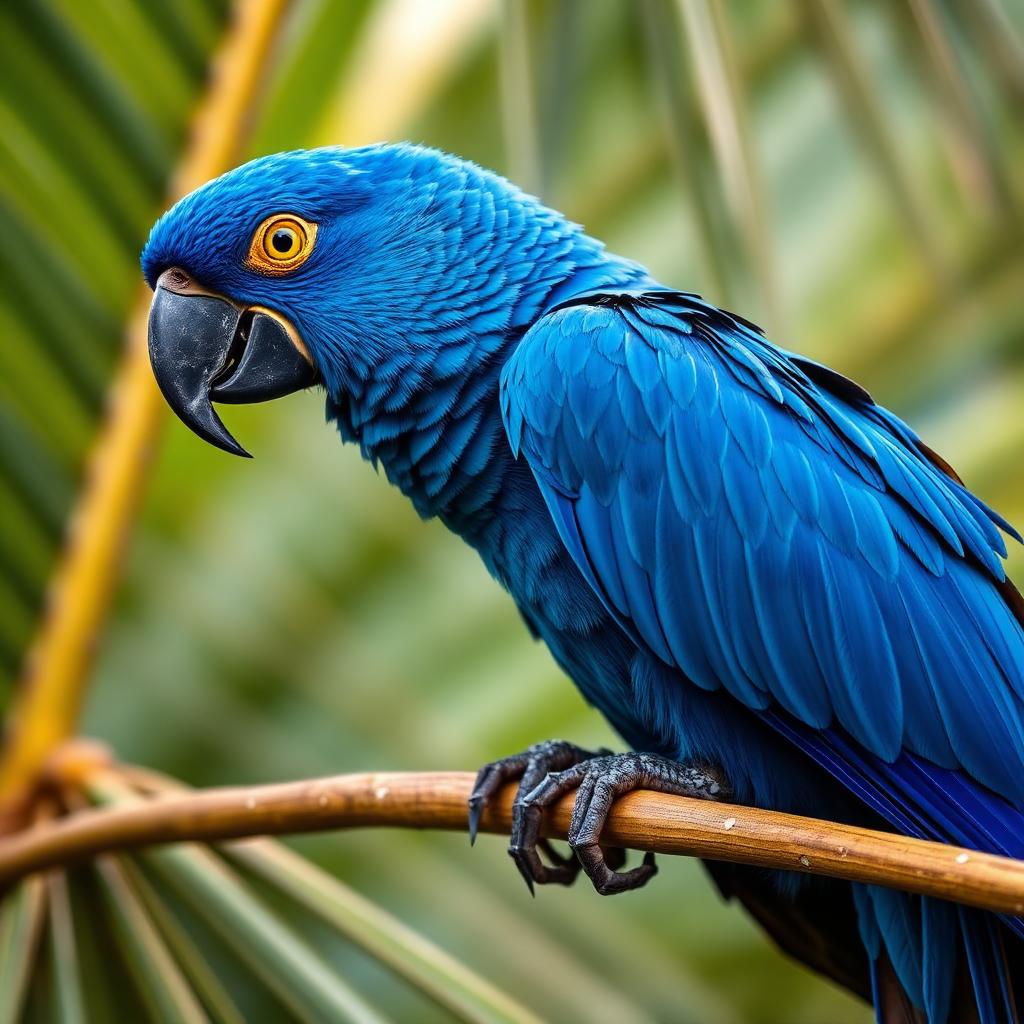
| Scientific name | Anodorhynchus hyacinthinus |
|---|---|
| Length | ≈ 100 cm |
| Wingspan | ≈ 130 cm |
| Range | Central-southern Brazil, small areas of Bolivia and Paraguay |
| Diet | Palm nuts (mainly acuri and bocaiuva) |
| Population | ≈ 6,500 (recovered from ≈ 1,500 in the 1990s) |
| IUCN status | Vulnerable |
The largest parrot that still flies
The Hyacinth Macaw (Anodorhynchus hyacinthinus) is the largest flying parrot on Earth. From beak to tail-tip an adult measures one metre, and its wingspan approaches 1.3 metres. The plumage is a single, uniform shade of deep cobalt blue, broken only by a bright ring of yellow bare skin around the eye and at the base of the lower bill.
Forty years ago, this species was in freefall. By 1990, fewer than 1,500 birds remained in the wild. Today, thanks largely to the Hyacinth Macaw Project run from the Brazilian Pantanal since 1990, the wild population has climbed back above 6,500.
A patchy range in three countries
Hyacinth Macaws live in three separated blocks across central-southern Brazil, with tiny outlier populations in Bolivia and Paraguay. The largest is in the Pantanal wetland, which today holds around 5,000 birds. Two smaller populations survive in the Cerrado of southern Piauí and the eastern Amazon at Gerais de Balsas.
Between these blocks the species is functionally absent. Long-distance dispersal is rare, so each population must be managed as a distinct unit.
A bird that lives on two palm species
Hyacinth Macaws are extreme dietary specialists. Roughly 95% of their food comes from the nuts of just two palms: the acuri (Attalea phalerata) and the bocaiuva (Acrocomia aculeata). The bill is one of the most powerful in the bird world — capable of crushing coconuts — and is specifically shaped for these two nuts.
In the Pantanal, the birds also exploit an unusual ecological chain: acuri palm nuts pass whole through the digestive tract of cattle. The softened, partially digested nuts are then easier for the macaws to open. Cattle ranching, ironically, has become part of the food web that sustains the species.
Nest hollows and artificial boxes
Hyacinth Macaws nest almost exclusively in tree hollows in mature manduvi trees (Sterculia apetala). A single suitable hollow may take a manduvi 60 years to develop, which makes nest-site availability the single tightest constraint on the population.
The Hyacinth Macaw Project has installed and monitored more than 700 artificial wooden nest boxes across the Pantanal since 1993. In some sub-regions, over half of all successful chicks now fledge from these boxes.
One of Brazil's clearest recoveries
Two decades of coordinated action — artificial nest boxes, anti-poaching enforcement, rancher engagement and international demand pressure through CITES — have moved the Hyacinth Macaw from Endangered to Vulnerable on the IUCN Red List. The 2020 devastating Pantanal wildfires briefly threatened this progress, but 2023 census figures showed the population had absorbed the shock.
Threats have not disappeared. Illegal capture for the pet trade continues at a low level, the Cerrado population is under acute pressure from soy expansion, and long-term climate drying of the Pantanal remains an open concern.
A blue benchmark
The Hyacinth Macaw is now cited routinely in conservation biology as an example of what focused, long-running, locally embedded projects can achieve for a single species. It also stands as a warning: dietary and nesting specialists can recover, but only if their specific requirements are protected in detail.
Key takeaways
- The Hyacinth Macaw is the world's largest flying parrot.
- It depends on two palm species and one type of tree cavity — extreme specialisation.
- A single sustained conservation project has quadrupled the wild population since 1990.
- IUCN status has improved from Endangered to Vulnerable.
Frequently asked questions
Where do Hyacinth Macaws live?
Three separated regions of central-southern Brazil — mainly the Pantanal wetland — with small outlier populations in eastern Bolivia and northern Paraguay.
Are Hyacinth Macaws endangered?
They are currently listed as Vulnerable on the IUCN Red List, upgraded from Endangered following the recovery driven by the Hyacinth Macaw Project.
What do Hyacinth Macaws eat?
Almost exclusively the nuts of two palm species — acuri and bocaiuva — which they crack open with their enormous bill.
How strong is a Hyacinth Macaw's bite?
The bill is one of the most powerful in the avian world. It can crack Brazil nuts and even small coconuts, and can generate around 200 kg per square inch of pressure.
Can I keep a Hyacinth Macaw as a pet?
International trade is tightly restricted under CITES Appendix I, and legal ownership requires proof of captive-bred origin and country-specific permits. The species has complex welfare needs and is not suitable for most private owners.
References
Related reading
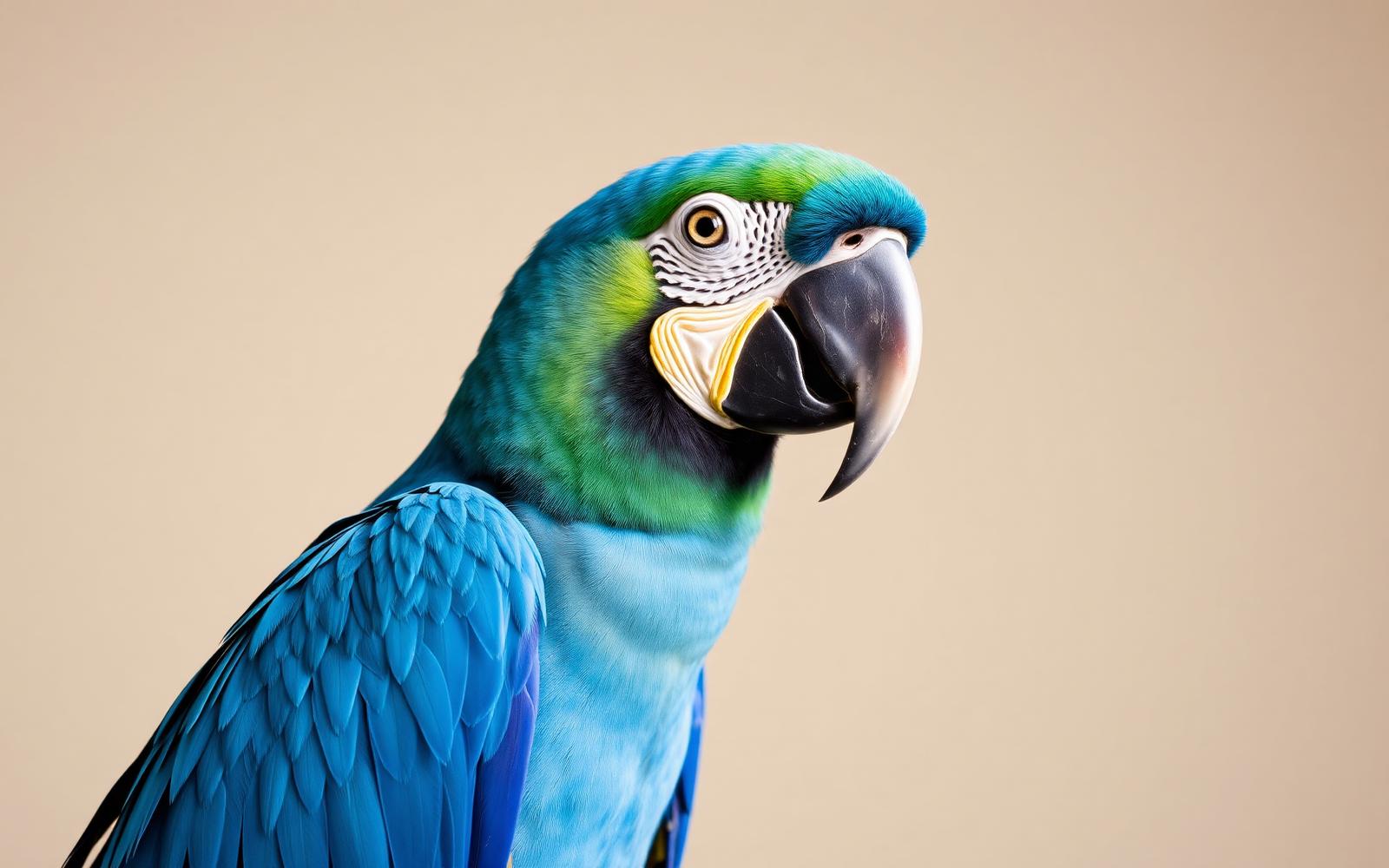
Spix's Macaw: Bringing an Extinct-in-the-Wild Parrot Home
For twenty years, Spix's Macaw existed only in cages. Its 2022 release into Brazilian caatinga is the most ambitious parrot reintroduction ever attempted.
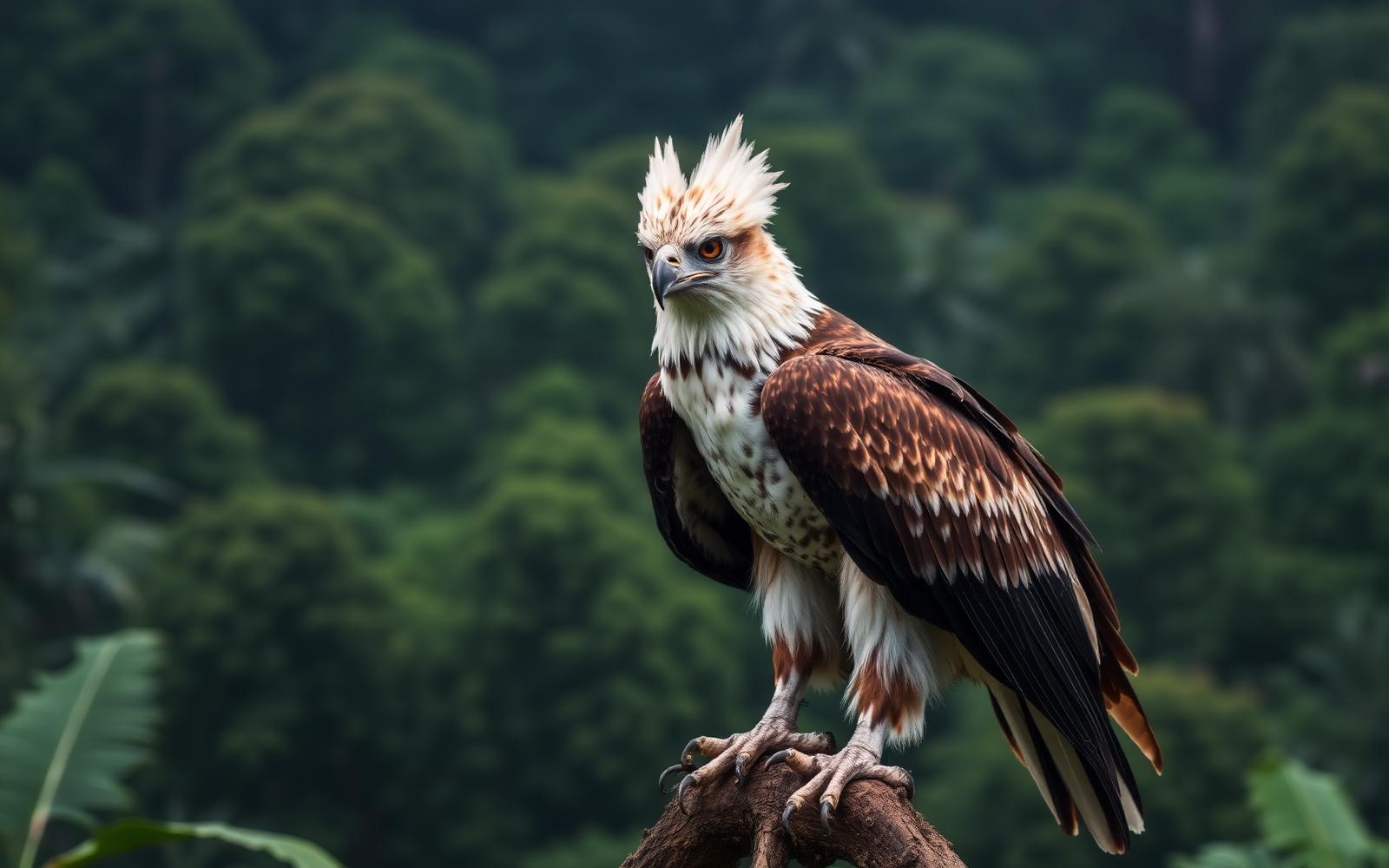
Harpy Eagle: The Apex Predator of the Neotropical Rainforest
The Harpy Eagle takes monkeys and sloths from the canopy with talons the size of a grizzly bear's. Yet across most of its range, it is now functionally rare.