Harpy Eagle: The Apex Predator of the Neotropical Rainforest
The Harpy Eagle takes monkeys and sloths from the canopy with talons the size of a grizzly bear's. Yet across most of its range, it is now functionally rare.
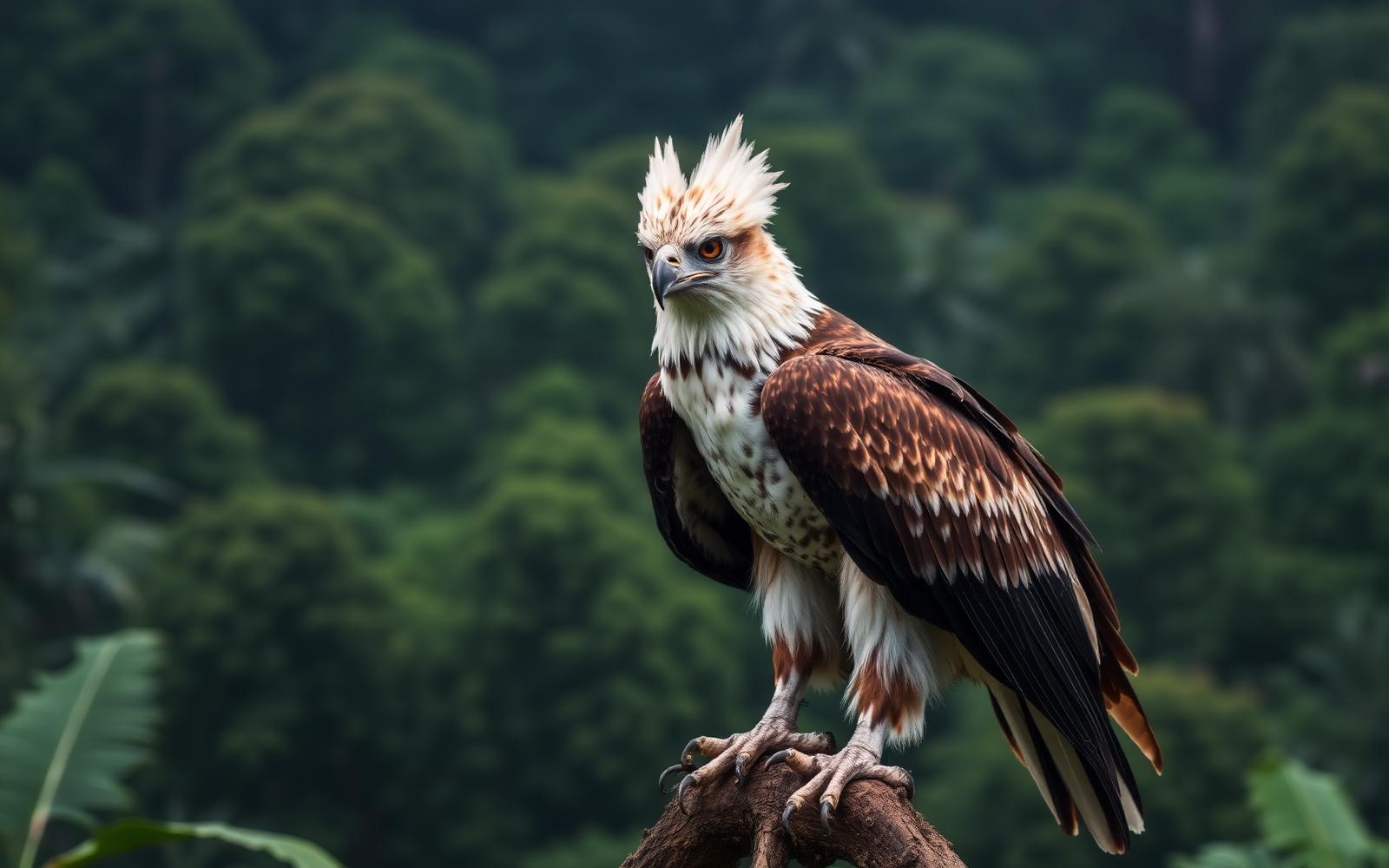
| Scientific name | Harpia harpyja |
|---|---|
| Weight (female) | 7 – 9 kg |
| Wingspan | up to 2.2 m |
| Talon length | up to 13 cm — rear claw |
| Range | Southern Mexico to northern Argentina |
| Preferred habitat | Undisturbed lowland rainforest |
| IUCN status | Vulnerable |
| Population trend | Decreasing |
A bird built for the canopy
The Harpy Eagle (Harpia harpyja) is the most powerful raptor in the Americas and, by most measures, the most powerful eagle in the world. Females weigh 7 to 9 kg and carry rear talons up to 13 cm long — larger than those of a grizzly bear. Wingspan tops out around 2.2 metres, kept relatively short to allow flight between forest trunks.
Everything about the Harpy Eagle is engineered for hunting inside intact tropical rainforest canopy. That specialisation is also its greatest vulnerability.
Where Harpy Eagles still live
Historically, the Harpy Eagle ranged from southern Mexico through Central America and across most of Amazonia to northern Argentina. Today, viable populations are concentrated in Amazonian Brazil, Peru, Ecuador, Colombia, Guyana, Suriname and eastern Panama. Central American populations north of Panama are largely fragmented and functionally extinct in some countries.
The species requires undisturbed lowland rainforest with tall emergent trees for nesting — most often Ceiba pentandra, brazil-nut trees, or comparable giants. A single nest site is often reused for decades.
Diet and hunting strategy
The Harpy Eagle is a canopy specialist. Prey studies from Panama, Guyana and Brazilian Amazonia show that sloths (typically two-toed and three-toed) and monkeys (howler, capuchin, spider) make up 70 – 80% of the diet by biomass. Iguanas, coatis, opossums and porcupines fill the remainder.
Hunting rarely involves long chases. A Harpy Eagle waits on a perch inside the canopy — sometimes for hours — and takes prey in a single explosive strike. Kill-to-attempt ratios in radio-telemetry studies are extremely high compared with open-country raptors.
The slowest breeding cycle of any American raptor
Pairs mate for life and raise a single chick every 2 to 3 years. Incubation is 55 to 60 days. The chick fledges at around 6 months but remains dependent on adults for another 12 to 18 months. The extended dependency period is one of the longest documented in any bird of prey.
This reproductive rate means a Harpy Eagle population cannot absorb much adult mortality. Even modest levels of shooting or nest disturbance produce steep local declines.
Threats and status
Deforestation is the primary threat. Harpy Eagles do not use secondary or heavily fragmented forest for breeding. Even where individual birds cross degraded landscapes, nests are almost always found in extensive intact blocks.
The IUCN currently classifies the Harpy Eagle as Vulnerable, with a decreasing population trend. Shooting — usually opportunistic — remains a documented cause of adult mortality across much of the range.
Where to see a Harpy Eagle
Realistic wild viewing is best in the Darién of Panama, the Guianas, and specific research nests in Peruvian and Brazilian Amazonia. Costa Rican sightings are rare enough that any confirmed nest becomes news. Ethical viewing means fixed hides at least 200 metres from active nests, no playback, and short session times.
A species that measures rainforest health
A rainforest that still holds Harpy Eagles is a rainforest that still works. Protecting the eagle, in practical terms, means protecting the block of intact forest around its nest tree — which protects everything else inside it.
Key takeaways
- Harpy Eagles are the most powerful raptors in the Americas.
- Sloths and primates make up most of their diet in Amazonia.
- Pairs raise only one chick every 2 – 3 years.
- Populations cannot survive without large blocks of intact lowland rainforest.
Frequently asked questions
How big is a Harpy Eagle?
Females weigh 7 to 9 kg with a wingspan up to 2.2 metres and talons up to 13 cm long. Males are considerably smaller, typically 4 to 5 kg.
What do Harpy Eagles eat?
The diet is dominated by canopy mammals — mainly sloths and monkeys — with reptiles, opossums and porcupines taken opportunistically.
Is the Harpy Eagle endangered?
The IUCN lists the Harpy Eagle as Vulnerable with a decreasing population trend, driven mainly by deforestation and opportunistic shooting.
Where can I see a Harpy Eagle in the wild?
The most reliable public destinations are the Darién of Panama and the Guianas, though ethical viewing usually requires a booked research-nest hide.
How often do Harpy Eagles breed?
A pair raises a single chick every 2 to 3 years, one of the slowest reproductive cycles of any raptor in the Americas.
References
Related reading

The Philippine Eagle: A Complete Guide to the World's Rarest Raptor
With fewer than 400 breeding pairs remaining, the Philippine Eagle is one of the rarest raptors on Earth. Here's what field biologists have learned in three decades of recovery work.
The Shoebill Stork: Africa's Prehistoric Wetland Hunter
With a bill shaped like a wooden clog and the patience of a heron, the Shoebill has become the most requested bird in African birding tourism. Here is the biology behind the icon.