Helmeted Hornbill: The Bornean Bird Hunted for Its Skull
The Helmeted Hornbill is the only bird on Earth with a solid keratin casque. That casque, sold on the black market as 'red ivory', is driving the species toward extinction.
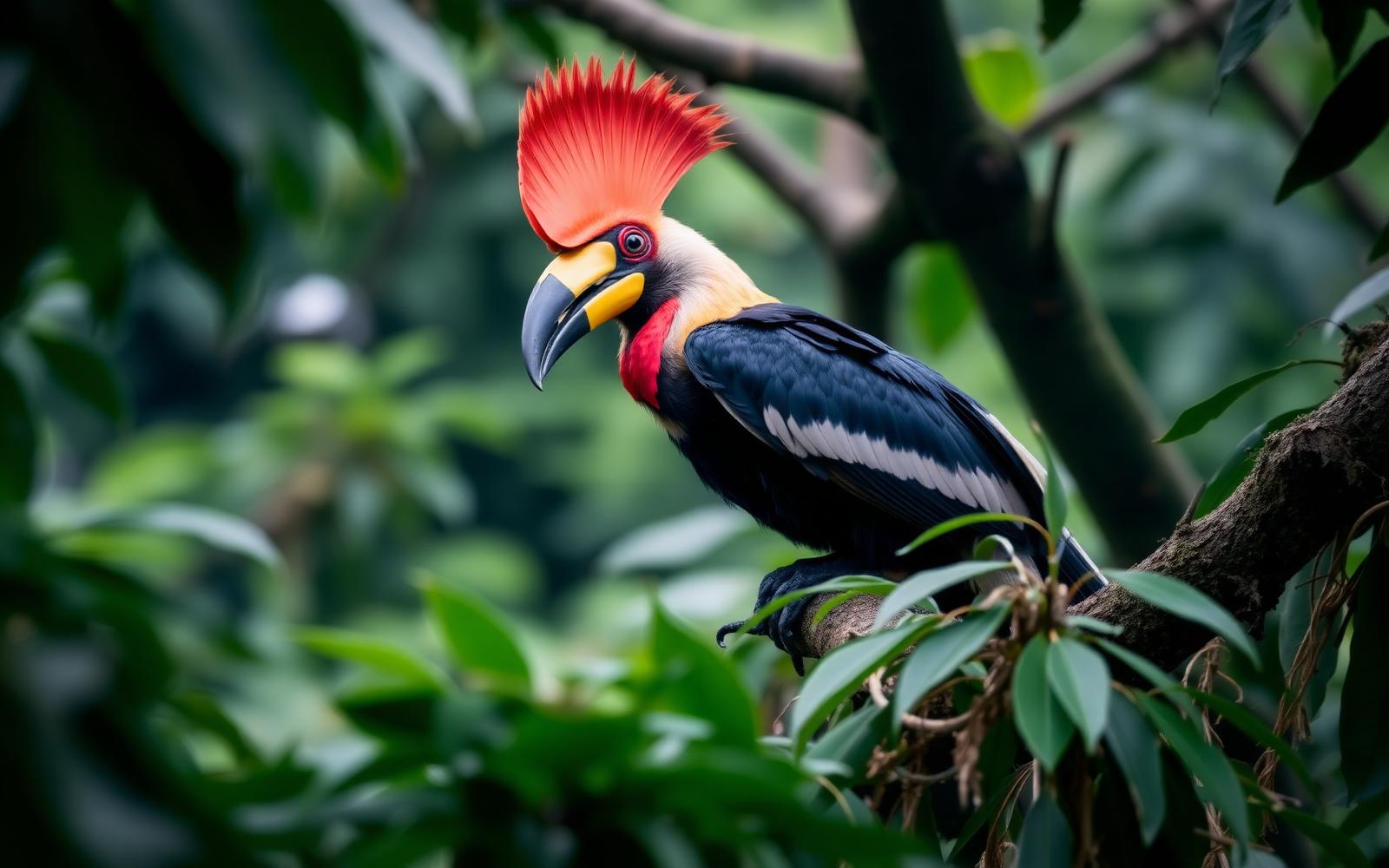
| Scientific name | Rhinoplax vigil |
|---|---|
| Length | ≈ 120 cm inc. tail |
| Range | Myanmar, Thailand, Malaysia, Sumatra, Borneo |
| Habitat | Primary lowland rainforest |
| Unique feature | Solid keratin casque |
| IUCN status | Critically Endangered |
| Primary threat | Poaching for casque ivory |
A bird unlike any other
The Helmeted Hornbill (Rhinoplax vigil) is a large forest hornbill of Southeast Asia's lowland rainforests. Adults reach around 120 cm in length. Their most extraordinary feature is a solid keratin casque on top of the bill — the only known example of a solid casque in any bird species.
This anatomical quirk is also, tragically, the reason the Helmeted Hornbill has been driven to the edge of extinction in less than two decades.
The 'red ivory' trade
In the early 2010s, demand from carving markets — particularly in parts of East Asia — for the hornbill's dense red-tinted casque, marketed as 'hornbill ivory' or 'red ivory', exploded. Poaching pressure on Bornean and Sumatran populations became severe. Field surveys from 2013 – 2018 documented sharp declines in local abundance across previously stable sites.
In 2015, the IUCN uplisted the species from Near Threatened directly to Critically Endangered, skipping intermediate categories — a rare and unambiguous signal of collapse.
The bird's role in the forest
Helmeted Hornbills are keystone dispersers of large-seeded fruiting trees. Very few animals in Southeast Asian rainforest can swallow the seeds of trees like Aglaia and larger figs whole and move them significant distances. Local Helmeted Hornbill loss correlates with measurable declines in recruitment of these tree species.
This is one of the more well-supported cases of a single-species extinction quietly reshaping a rainforest's tree composition.
Slow breeders in a fast crisis
Like other Asian hornbills, Helmeted Hornbills nest in natural tree cavities. The female seals herself inside for the incubation and early nestling period, receiving food from the male through a narrow slit. Pairs typically fledge one chick a year, and cavities in trees large enough are increasingly rare.
Slow reproductive rate + high adult targeting by poachers is the classic combination that collapses populations quickly.
The conservation response
Enforcement has strengthened significantly since 2015. Indonesia and Malaysia have both prosecuted casque-trafficking cases, and CITES continues to prioritise Rhinoplax vigil in illegal-wildlife-trade action plans. Community anti-poaching patrols in the Leuser Ecosystem of Sumatra have documented recovery of local nest activity.
Long-term recovery, however, depends on both stopping the trade at source and protecting the mature lowland forest the species requires. Neither problem is close to solved.
A species we can still save
The Helmeted Hornbill crisis is not old, and it is not irreversible. But the runway is short. Continued enforcement, sustained pressure on end-market demand, and the protection of remaining primary lowland forest are the only paths that keep this species in existence.
Key takeaways
- The Helmeted Hornbill is the only bird species with a solid keratin casque.
- Demand for 'red ivory' carvings drove an uplisting to Critically Endangered in 2015.
- It is a keystone disperser of large-seeded rainforest trees.
- Recovery depends on stopping the trade and protecting lowland primary forest.
Frequently asked questions
Why is the Helmeted Hornbill hunted?
Its uniquely solid casque, marketed on the illegal wildlife market as 'hornbill ivory' or 'red ivory', is carved into ornaments and jewellery sold primarily in parts of East Asia.
How endangered is the Helmeted Hornbill?
It was uplisted by the IUCN directly from Near Threatened to Critically Endangered in 2015, skipping intermediate categories, following steep documented declines from poaching.
Where does the Helmeted Hornbill live?
Its range covers primary lowland rainforests of southern Myanmar, southern Thailand, peninsular Malaysia, Sumatra and Borneo.
What does the Helmeted Hornbill eat?
It is primarily frugivorous, favouring figs and other large rainforest fruits, and is a critical seed disperser for several large-seeded tree species.
Is buying hornbill ivory legal?
No. All international trade in Helmeted Hornbill parts is prohibited under CITES Appendix I, and buying, selling or transporting casques is a criminal offence in most jurisdictions.
References
Related reading
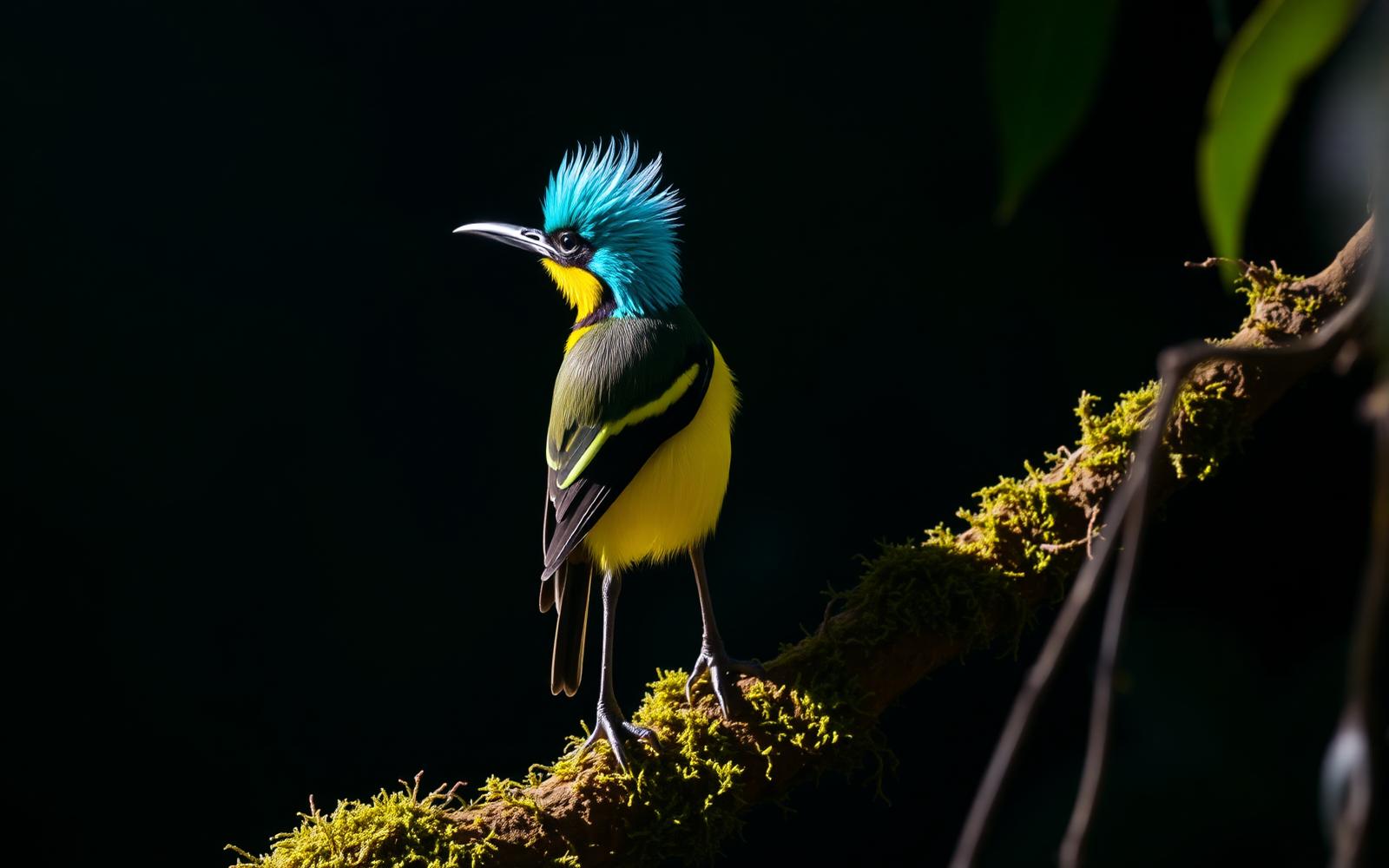
Wilson's Bird-of-Paradise: The Neon Dancer of Waigeo
Only two islands on Earth host Wilson's Bird-of-Paradise. Its neon head and choreographed display have made it a bucket-list species — with real access consequences.
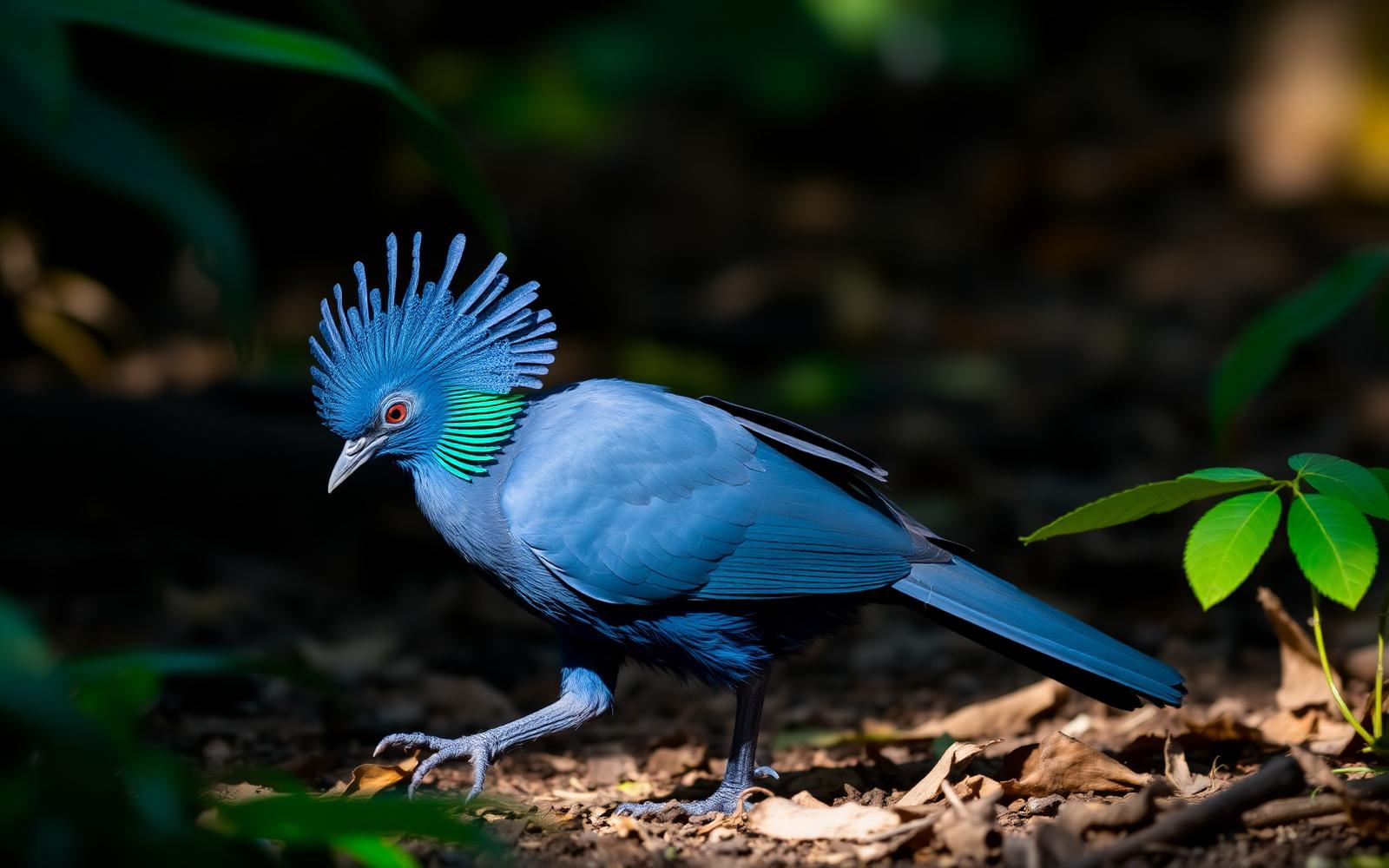
Victoria Crowned Pigeon: The Regal Ground Dweller of New Guinea
The Victoria Crowned Pigeon is the largest pigeon on Earth and carries a lace-like blue crest that looks designed rather than evolved.