Bornean Bristlehead: The Bald-Headed Enigma of Borneo
The Bornean Bristlehead is the only species in its family — a black, bald-headed rainforest bird that few birders ever see well.
| Scientific name | Pityriasis gymnocephala |
|---|---|
| Family | Pityriaseidae (only member) |
| Length | 25 cm |
| Range | Borneo (endemic) |
| Habitat | Lowland and hill dipterocarp rainforest |
| IUCN status | Near Threatened |
A bird in a family of one
The Bornean Bristlehead (Pityriasis gymnocephala) is one of the strangest birds in Southeast Asia. It is the only member of its entire family, Pityriaseidae. That means every other bird on Earth has closer living relatives than this species does.
It lives only on the island of Borneo, where it moves through the mid-storey of primary rainforest in small, noisy parties that are surprisingly hard to see well.
What it looks like
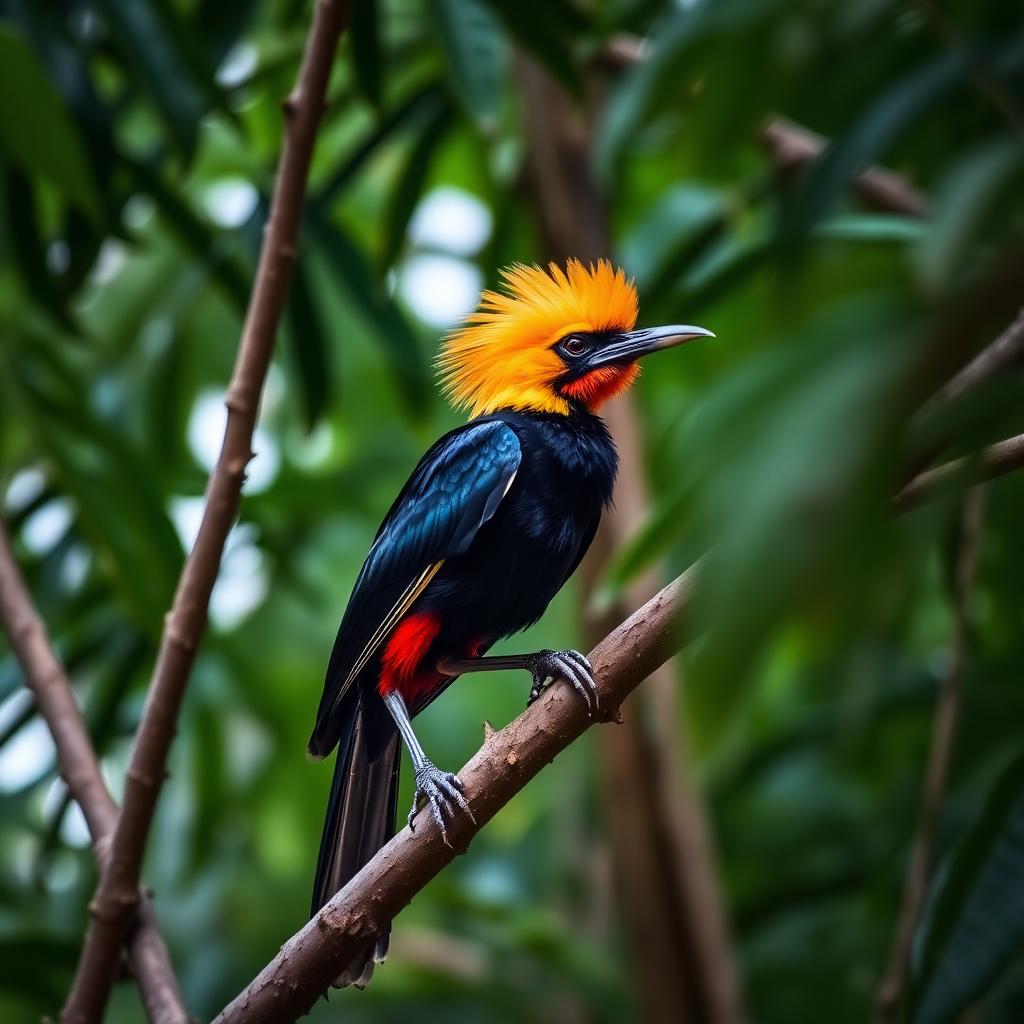
Adults are around 25 centimetres long, mostly matte black, with a bald head that ranges from bright yellow-orange to deep red. The skin of the head is covered in short, stiff bristles that give the species its English name.
The thighs are a vivid crimson, and the bill is heavy and hooked like a shrike's. Females carry small red spots along the flanks.
Where it lives
The Bornean Bristlehead is endemic to Borneo and has been recorded across Sabah, Sarawak, Brunei and Indonesian Kalimantan. It favours undisturbed lowland and hill dipterocarp forest up to around 1,200 metres.
It is now largely absent from heavily logged or converted areas, so most reliable sightings come from protected reserves such as Danum Valley, Deramakot, Maliau Basin, and parts of Kalimantan's national parks.
Behaviour and voice
Bristleheads travel in loose parties of three to ten birds, often joining mixed-species flocks with drongos and malkohas. They forage slowly through the mid-storey and understory, probing epiphytes and tearing at bark for insects and small vertebrates.
Their calls are loud, rasping and highly varied — sometimes compared to a scratchy toy trumpet. Once you know the call, it is often the first sign that a party is moving through the canopy above.
Diet
The species eats large arthropods including cicadas, mantises, katydids and beetle larvae, along with the occasional small lizard or frog. The heavy hooked bill lets it deal with hard-shelled prey most similar-sized songbirds cannot.
Foraging observations suggest cooperative behaviour: birds within a party frequently pass food to one another, and juveniles beg from several adults, not just parents.
Breeding — still a mystery
Remarkably, very little is known about how the Bornean Bristlehead breeds. Only a handful of nests have been described in the scientific literature.
Available evidence suggests cooperative breeding, with helpers assisting a breeding pair, but the timing, clutch size and incubation period are still poorly documented.
Conservation status
The species is listed as Near Threatened by the IUCN. Its range is limited to Borneo, and it depends on mature rainforest that continues to shrink due to oil-palm expansion, industrial logging and forest fires.
Protecting large blocks of contiguous lowland forest — not just fragments — is the single most important step for its future.
Where to see one
Danum Valley Conservation Area in Sabah is the most reliable modern site. Deramakot Forest Reserve and the lower slopes around Kinabalu are also worth trying.
Serious birders schedule multi-day visits, keep a sharp ear open, and follow experienced local guides who track roving mixed flocks.
A one-of-a-kind bird worth protecting
If Borneo lost the Bristlehead, science would lose an entire branch of the avian tree. Every square kilometre of primary rainforest that stays standing is a direct investment in this bird — and in the many other endemics that share its home. Support certified sustainable palm oil, back rainforest NGOs working in Sabah and Kalimantan, and if you visit, book with operators who fund local conservation.
Key takeaways
- The Bornean Bristlehead is the only species in its family.
- It is endemic to Borneo's lowland and hill rainforest.
- It travels in noisy small parties that often join mixed flocks.
- Breeding biology is still poorly known.
- Its future depends on protecting large blocks of primary forest.
Frequently asked questions
Where can I see a Bornean Bristlehead?
The most reliable sites are Danum Valley and Deramakot Forest Reserve in Sabah, Malaysia, with experienced local guides.
Why is it in its own family?
Genetic and anatomical studies show it does not fit cleanly with any other songbird group, so it is placed in the monotypic family Pityriaseidae.
Is the Bornean Bristlehead endangered?
It is currently Near Threatened. Habitat loss from logging and oil-palm expansion is the main long-term risk.
What does it sound like?
Loud, scratchy, trumpet-like calls, often given as a group chorus while moving through the canopy.
Does it live outside Borneo?
No. It is strictly endemic to the island and is not found in Sumatra, Peninsular Malaysia or Palawan.
Can it be kept in captivity?
There is essentially no captive population and no legitimate reason to trade it. Any bird offered for sale is almost certainly illegally caught.
References
Related reading
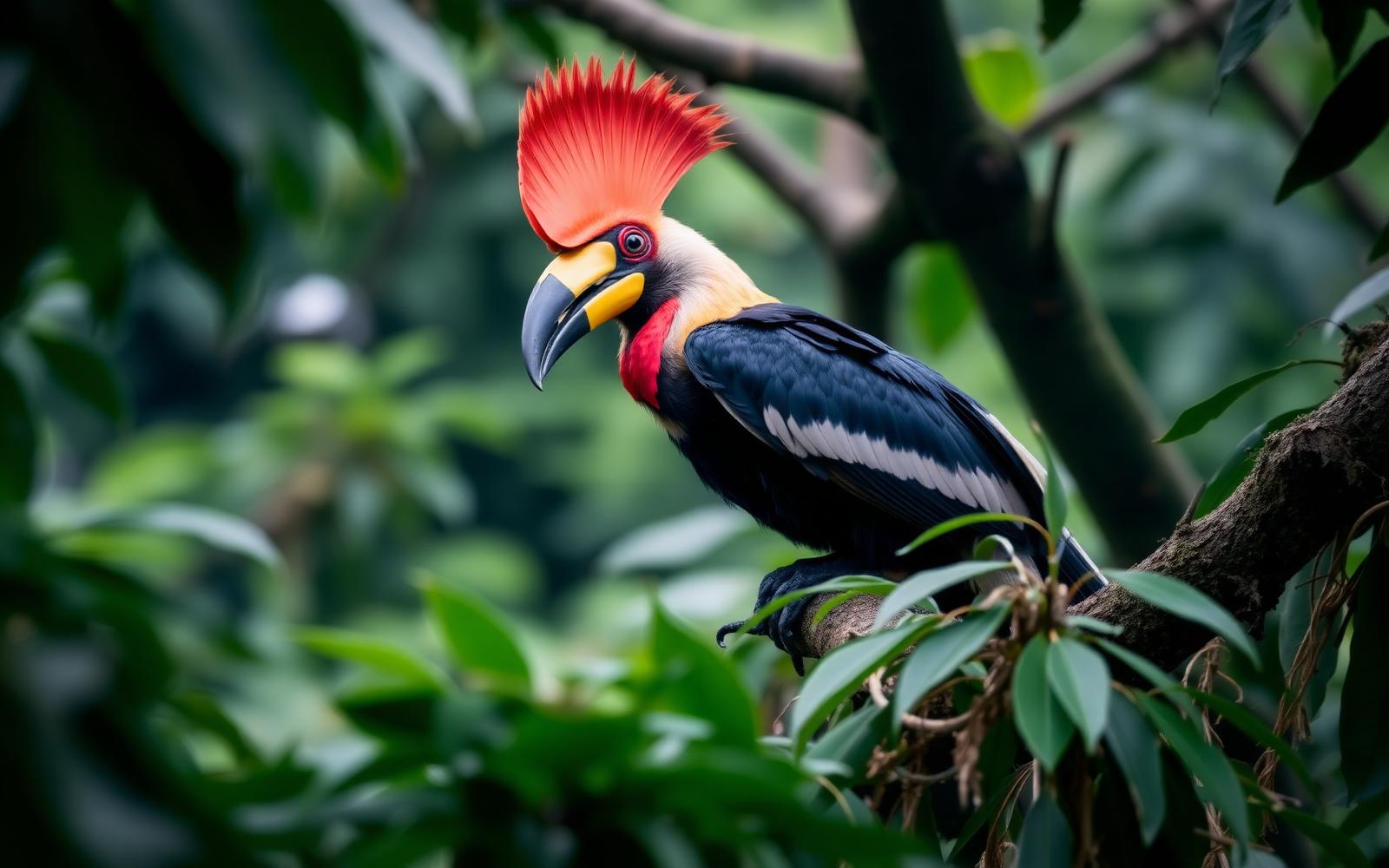
Helmeted Hornbill: The Bornean Bird Hunted for Its Skull
The Helmeted Hornbill is the only bird on Earth with a solid keratin casque. That casque, sold on the black market as 'red ivory', is driving the species toward extinction.
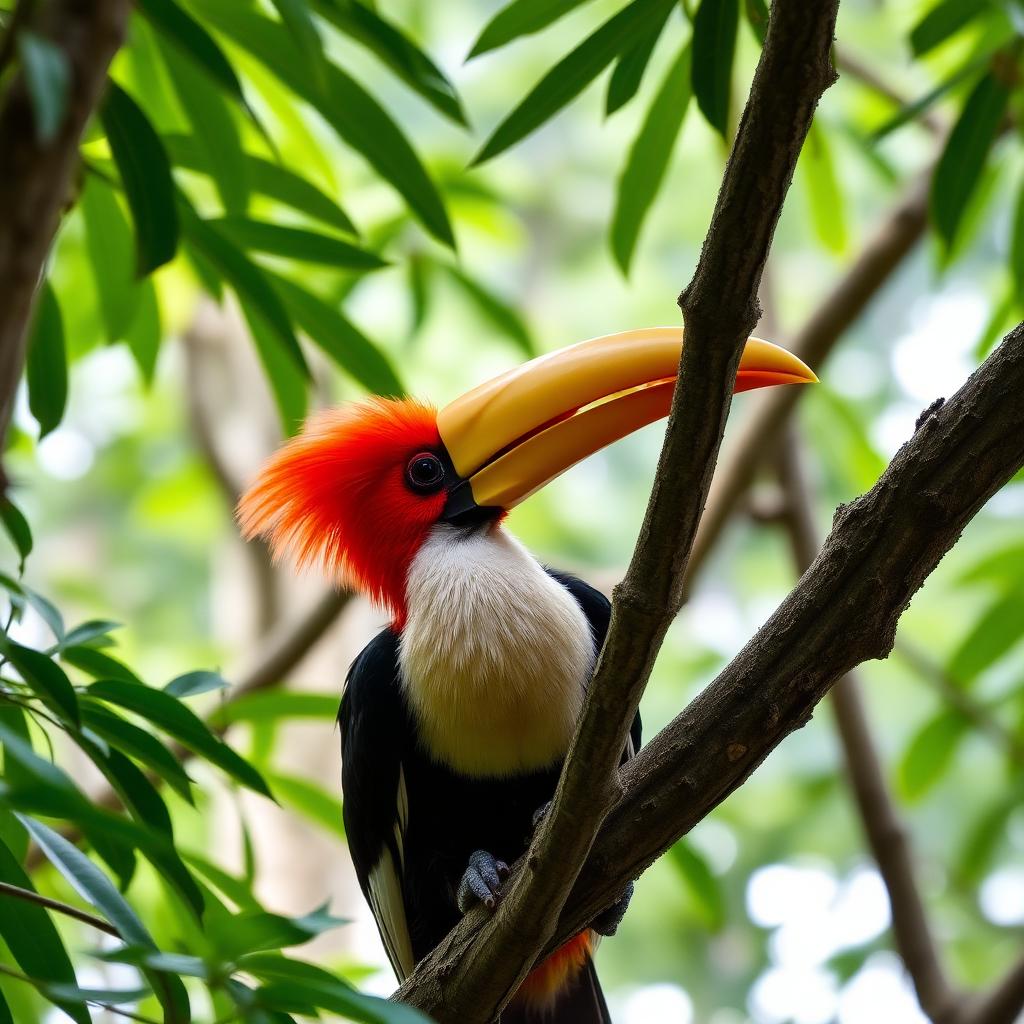
Rufous-headed Hornbill: The Panay Rainforest's Vanishing Voice
The Rufous-headed Hornbill is now one of the world's rarest hornbills, restricted to a few thousand hectares of intact rainforest on a single Philippine island.