Blue-eyed Ground-Dove: Lost for 75 Years, Found Again
Missing since 1941, Brazil's Blue-eyed Ground-Dove reappeared in a patch of cerrado grassland in 2015. Fewer than 30 birds may remain.
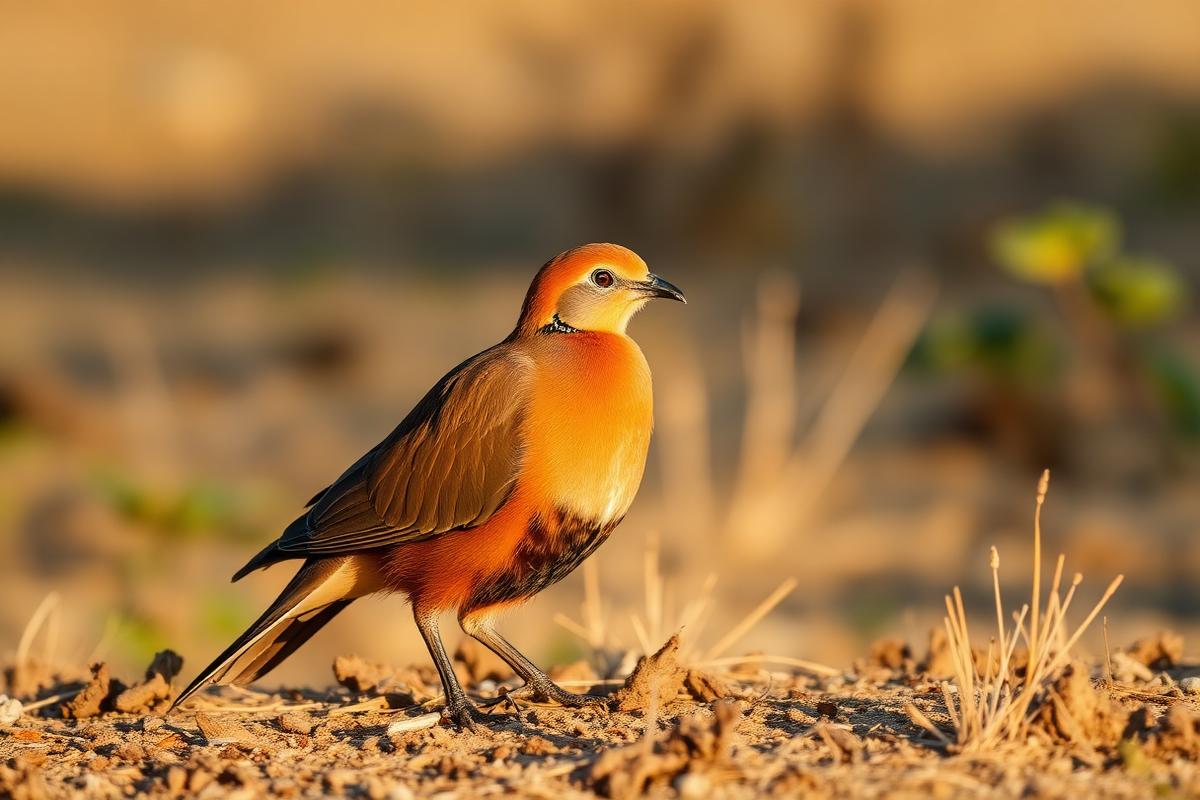
| Scientific name | Columbina cyanopis |
|---|---|
| Length | About 15 – 16 cm |
| Range | Cerrado grasslands, Minas Gerais, Brazil |
| Rediscovered | June 2015, after 75 years |
| Population | Estimated 11 – 30 mature birds |
| IUCN status | Critically Endangered |
A song nobody had heard in a lifetime
In June 2015, Brazilian naturalist Rafael Bessa was working in dry grassland in northern Minas Gerais when he heard a song he could not place. He recorded it, followed it, and photographed a small rusty dove with startling blue eyes.
The last confirmed record of the Blue-eyed Ground-Dove had been in 1941. For 75 years it had been treated as one of South America's most likely extinctions.
The rediscovery was immediately significant, but it came with a hard number: the site held only about a dozen birds.
What the bird looks like
The Blue-eyed Ground-Dove is small — about the size of a sparrow with a longer body — and mostly warm cinnamon-rufous.
Its two diagnostic features are hard to mistake once seen:
• Deep sapphire-blue irises, unusual in any dove.
• Rows of glossy blue-black spots across the folded wing.
Females are duller and browner than males. In flight, the bird looks fast and low, disappearing into grass within seconds.
The song is a series of soft, evenly spaced hoots that carries surprisingly well across open ground — the clue that led to its rediscovery.
A grassland specialist, not a forest bird
Most rare Brazilian birds are associated with rainforest. This one is not. The Blue-eyed Ground-Dove needs open, native cerrado grassland — specifically the campo limpo and campo sujo formations, with scattered shrubs and termite mounds.
That habitat has fared badly. Cerrado grassland is easily converted to soy, eucalyptus plantation and cattle pasture, and it burns differently once invasive African grasses take hold.
Roughly half of the Brazilian cerrado has already been converted. Grassland formations, unlike forest, attract little public sympathy when cleared.
What happened after 2015
News of the find moved quickly. SAVE Brasil, BirdLife's Brazilian partner, worked with the American Bird Conservancy and Rainforest Trust to secure the land.
In 2018, the Botumirim Natural Heritage Private Reserve was created — roughly 600 hectares of the exact grassland where the doves were found, later expanded with surrounding areas.
Surveys since then have located a small number of additional birds at nearby sites, but the total known population remains tiny, likely between 11 and 30 mature individuals.
What researchers have learned
Basic biology was almost unknown before 2015. Field teams have since documented nesting for the first time: low nests in shrubs or grass tussocks, usually with two white eggs.
Birds appear to be sedentary, holding small territories and feeding on seeds picked directly from the ground.
Camera traps and nest monitoring have identified snakes, small mammals and fire as the main causes of nest failure.
Current threats
1. Habitat conversion. Grassland outside the reserve is still being ploughed or planted.
2. Fire regime change. Cerrado evolved with fire, but the timing and intensity have shifted, and hot late-season fires can destroy nests and seed supplies.
3. Tiny population size. With so few birds, a single bad season, disease outbreak or fire could remove a large share of the species at once.
What is being done
The reserve is actively managed, with firebreaks, controlled early-season burns and grazing controls designed to keep grassland structure right for the doves.
Local rangers monitor nests through the breeding season. Landowners nearby have been brought into agreements to keep adjacent grassland intact.
Discussion continues about whether a conservation breeding programme should be attempted. With numbers this low, taking eggs or birds is a serious risk — but so is doing nothing.
Why this small dove matters
The Blue-eyed Ground-Dove is a test case for grassland conservation in South America. Protecting it means protecting a habitat type that is disappearing faster than Amazon rainforest and receives a fraction of the attention.
It also proves something useful: species written off as extinct are sometimes still out there, in unglamorous habitat, waiting for someone to recognise an unfamiliar song.
A second chance worth defending
Seventy-five years of silence ended because one naturalist paid attention to a sound that did not fit. Whether the Blue-eyed Ground-Dove survives the next 75 depends on how much native cerrado stays unploughed.
Support SAVE Brasil and the Botumirim reserve, learn to recognise cerrado as a habitat worth saving, and pass this story on.
Key takeaways
- The Blue-eyed Ground-Dove was unrecorded from 1941 until June 2015.
- It depends on native cerrado grassland, not forest.
- The Botumirim reserve in Minas Gerais protects its core site.
- Only about 11 – 30 mature birds are thought to remain.
- Fire management and grassland loss are the deciding factors for its survival.
Frequently asked questions
How was the Blue-eyed Ground-Dove rediscovered?
Brazilian naturalist Rafael Bessa heard and recorded an unfamiliar song in Minas Gerais in June 2015, then photographed the bird — the first confirmed record since 1941.
How many Blue-eyed Ground-Doves are left?
Current estimates put the mature population at roughly 11 to 30 birds, making it one of the rarest birds in the Americas.
Where does it live?
In open native cerrado grassland in northern Minas Gerais, Brazil, mainly within and around the Botumirim reserve.
Why are its eyes blue?
The deep blue iris is a natural pigment feature of the species. It is the clearest field mark separating it from other small ground-doves.
Can I visit to see it?
Access is tightly controlled to avoid disturbance. Visits are arranged only through SAVE Brasil and the reserve managers.
Is it being bred in captivity?
Not currently. With so few wild birds, conservationists have so far prioritised habitat protection and nest monitoring.
References
Related reading
Bengal Florican: The Grassland Bustard on the Brink
Fewer than 1,000 Bengal Floricans remain across two continents. Here is what makes this small bustard extraordinary, and why its grasslands must be saved.
Cebu Flowerpecker: The Bird That Came Back From the Dead
For most of the twentieth century, the Cebu Flowerpecker was considered extinct. Its rediscovery in 1992 changed how we think about small, forgotten forests.