The Andean Condor: Master of the World's Longest Mountain Range
The Andean Condor's ten-foot wingspan is only half the story. Its slow reproduction and long life make it both a marvel of soaring flight and an early warning system for the Andes.
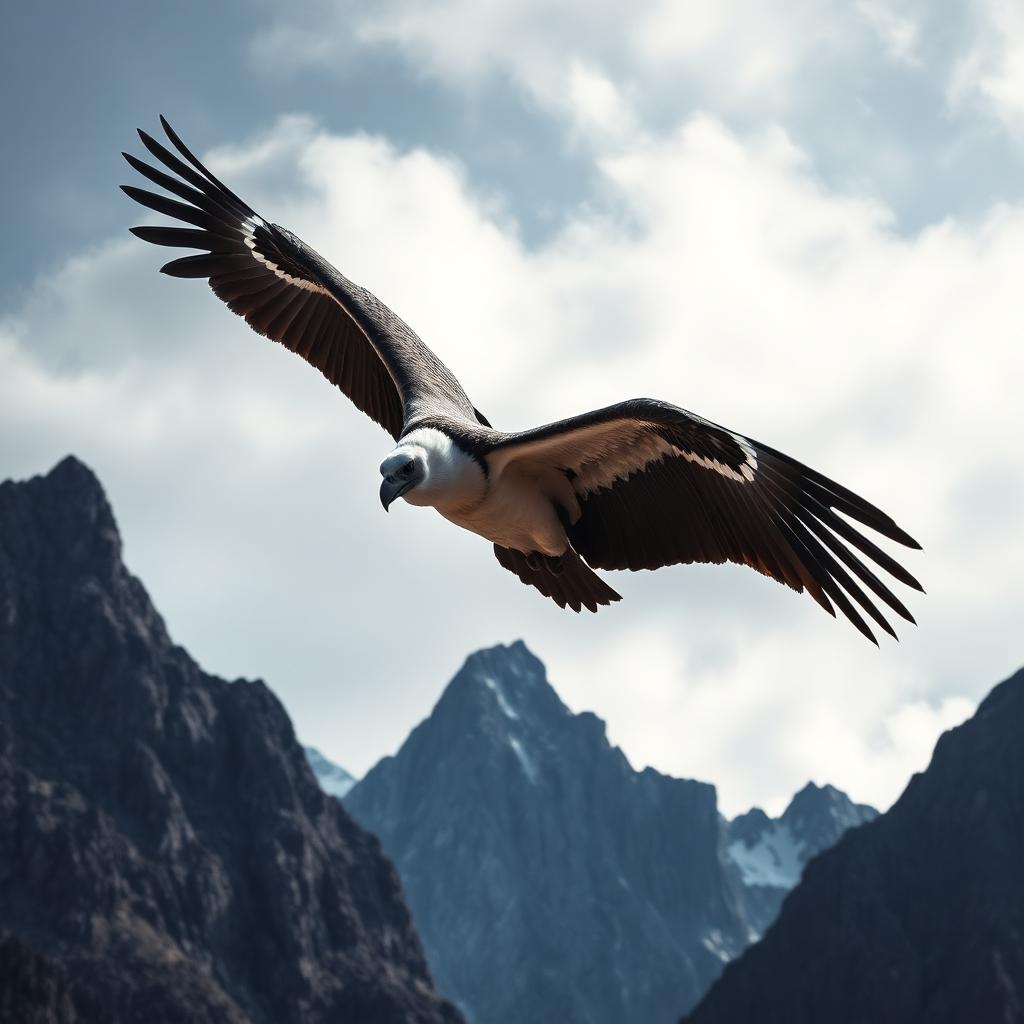
| Scientific name | Vultur gryphus |
|---|---|
| Wingspan | up to 3.3 m |
| Weight | up to 15 kg |
| Range | Andes from Venezuela to Tierra del Fuego |
| Diet | Carrion (large mammals) |
| Lifespan | 50+ years in the wild |
| IUCN status | Vulnerable |
A bird built for the mountains
The Andean Condor (Vultur gryphus) is a giant New World vulture that patrols the entire length of the Andes, from Venezuela in the north to Tierra del Fuego in the south. Its wingspan of up to 3.3 metres is the longest of any land bird on Earth, and it is one of the heaviest flying birds still in existence.
For the peoples of the Andes — Inca, Quechua, Aymara — the condor has been sacred for centuries. It represents the upper world in Andean cosmology and features on the coat of arms of four South American countries.
Almost flapless flight
Andean Condors are masters of soaring. GPS-tracked birds in Patagonia have been recorded flying for more than five hours without a single wingbeat, covering 170 kilometres by riding thermals and slope-lift along mountain ridges. They actively flap only about 1% of the time in the air.
This makes them exquisitely efficient — but also dependent on predictable wind conditions. On overcast, still days condors often stay grounded on cliff-edge perches, waiting for the sun to rebuild rising columns of air.
A cleaner of the high country
As obligate scavengers, Andean Condors feed almost entirely on large-mammal carrion. Wild vicuñas and guanacos, and domestic cattle, sheep and llamas make up most of the diet in the interior. In coastal Peru and Patagonia, dead sea lions and beached whales are seasonally important.
A single carcass can attract dozens of condors. They typically wait for smaller scavengers to open the carcass, then use their powerful bills to strip muscle from bone. A well-fed adult may not need to eat again for up to a week.
Slow, careful reproduction
Condors do not breed until they are 6–8 years old. Pairs lay a single egg on a bare cliff ledge, incubate for around 58 days, and raise the chick for almost two years before the following breeding attempt. This means each pair typically fledges one chick every two years at best.
That slow tempo is why any additional mortality — from poisoned carcasses laid out for pumas, from lead ammunition fragments in hunter-shot carcasses, or from powerline collisions — cuts into the population much more sharply than in fast-breeding raptors.
A vulnerable species under real pressure
The IUCN listed the Andean Condor as Vulnerable in 2020 after regional assessments showed steep declines in Venezuela, Colombia and Ecuador. Argentina and Chile still hold the strongest populations, but even there, secondary lead poisoning and deliberate poisoning aimed at pumas kill dozens of birds each year.
Reintroduction programmes in Colombia and Venezuela have released captive-bred condors into former range, with mixed results. Where local communities have been actively involved — as with the Fundación Bioandina programme in Argentina — survival rates have been notably higher.
Watching the mountains from above
The Andean Condor is not just a scavenger; it is a moving thermometer of the Andes. Where condors still glide in numbers, mountain ecosystems are still delivering the large carcasses they need. Where they thin out, something is wrong on the ground below.
Key takeaways
- The Andean Condor has the longest wingspan of any land bird — up to 3.3 metres.
- It scavenges large-mammal carrion across the entire Andean range.
- Slow reproduction (one chick every two years) makes it acutely vulnerable to extra mortality.
- Northern Andean populations have declined sharply enough to change the IUCN status to Vulnerable.
Frequently asked questions
How big is an Andean Condor's wingspan?
Up to 3.3 metres — the longest of any land bird. Only some albatrosses have wider wings, and they are ocean-going seabirds.
Is the Andean Condor endangered?
The IUCN currently lists it as Vulnerable. Populations are stable or slowly recovering in the far south (Argentina, Chile) but declining sharply in the northern Andes.
What do Andean Condors eat?
Almost exclusively large-mammal carrion — wild vicuñas and guanacos, domestic livestock, and coastal marine mammals in some regions.
How long do Andean Condors live?
Wild birds regularly live past 50 years. The oldest confirmed captive condor died aged 79.
Where can I see wild Andean Condors?
The most reliable site is Colca Canyon in Peru's Cruz del Cóndor viewpoint. Other strong sites include Argentina's Quebrada del Condorito National Park and Chile's Torres del Paine.
References
Related reading
The California Condor: North America's Largest Bird Fights Back
In 1987, every California Condor left on Earth was pulled into captivity. The species is back — barely — thanks to one of the most expensive recovery programmes in history.
Harpy Eagle: The Apex Predator of the Neotropical Rainforest
The Harpy Eagle takes monkeys and sloths from the canopy with talons the size of a grizzly bear's. Yet across most of its range, it is now functionally rare.