Javan Hawk-Eagle: Indonesia's Crested National Bird
The Javan Hawk-Eagle is a slim, high-crested rainforest raptor and one of the world's rarest tropical eagles.
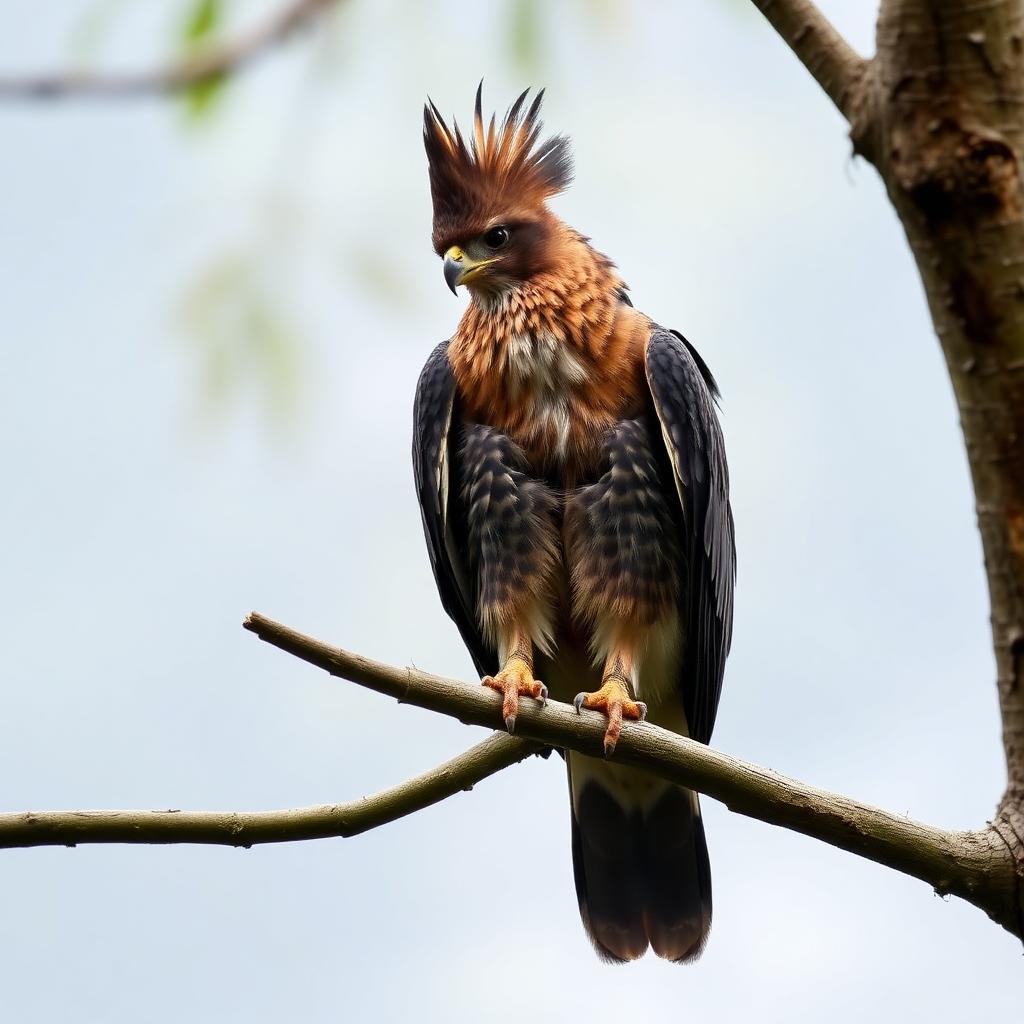
| Scientific name | Nisaetus bartelsi |
|---|---|
| Length | ≈ 55–60 cm |
| Range | Forested mountains of Java, Indonesia |
| Diet | Lizards, bats, birds, small mammals |
| Population | ≈ 300–500 pairs |
| IUCN status | Endangered |
A tall-crested rainforest raptor
The Javan Hawk-Eagle (Nisaetus bartelsi) is a medium-sized eagle endemic to the Indonesian island of Java. Adults show a tall dark crest of two or three feathers, chestnut-brown streaked underparts, and long broad wings with dark barring.
It is closely associated in Indonesian popular culture with the Garuda, the mythical bird on the national coat of arms. That symbolic link has driven repeated calls for stronger legal protection.
Where it survives on Java
The species is restricted to mid- and upper-elevation forests, generally between 500 and 2,000 metres, across the mountainous spine of Java. Strongholds include Gunung Halimun-Salak, Gunung Gede-Pangrango and Meru Betiri national parks.
Because Java is one of the most densely populated islands on Earth, remaining forest is scattered and often surrounded by intensive agriculture.
Diet and hunting behaviour
Javan Hawk-Eagles hunt from an exposed perch inside the forest canopy, dropping onto lizards, bats, birds, tree shrews and other small mammals. They also take arboreal snakes.
Pairs occupy large home ranges. A single pair typically needs at least several thousand hectares of intact forest to breed successfully.
Slow reproduction
The species builds a large stick nest high in an emergent tree and lays a single egg. Nests are often reused across years.
Chicks take three months to fledge and remain dependent on the adults for many more months. Successful breeding is essentially biennial, which places a hard ceiling on population recovery rates.
Forest loss and the pet trade
Habitat loss remains the single biggest driver of decline. Even inside national parks, encroachment for coffee plantations and small-scale agriculture continues to nibble at the edges of core breeding areas.
Illegal capture of chicks for the pet trade also persists, driven in part by the eagle's symbolic status. Every chick taken from a wild nest removes a scarce future breeder.
National parks and legal status
The Javan Hawk-Eagle was declared a Rare Animal of Indonesia in 1993 and is protected under national law. National parks in the western and central mountain chains form the backbone of on-the-ground protection.
NGOs including Raptor Indonesia and Burung Indonesia (the local BirdLife partner) work on nest monitoring, community outreach around park boundaries, and confiscation of trafficked chicks.
A symbolic species that still needs its habitat
The Javan Hawk-Eagle sits at the intersection of ecology and national identity. Protecting it requires more than a symbolic gesture — it requires holding, and where possible expanding, mid-elevation forest in one of the most human-crowded landscapes on Earth.
Key takeaways
- The Javan Hawk-Eagle is endemic to Java and Endangered on the IUCN Red List.
- Only about 300–500 pairs remain, mostly in mid-elevation national parks.
- Pairs typically raise a single chick every two years.
- Habitat loss and illegal pet-trade capture are the main threats.
Frequently asked questions
Is the Javan Hawk-Eagle the Garuda?
It is widely associated in Indonesian popular culture with the Garuda, though the Garuda is a mythical composite bird rather than a specific real species.
Where can I see one?
Gunung Halimun-Salak, Gunung Gede-Pangrango and Meru Betiri national parks are the most reliable sites, best visited with a local raptor guide.
How many are left?
Best current estimates place the global population at around 300 to 500 breeding pairs.
Is it legally protected?
Yes. It has been protected under Indonesian law since 1993 and its capture, trade or killing is illegal.
What is the difference between hawk-eagles and true eagles?
Hawk-eagles (genus Nisaetus and relatives) are slimmer, longer-tailed forest raptors than the heavier open-country true eagles of genus Aquila.
References
Related reading
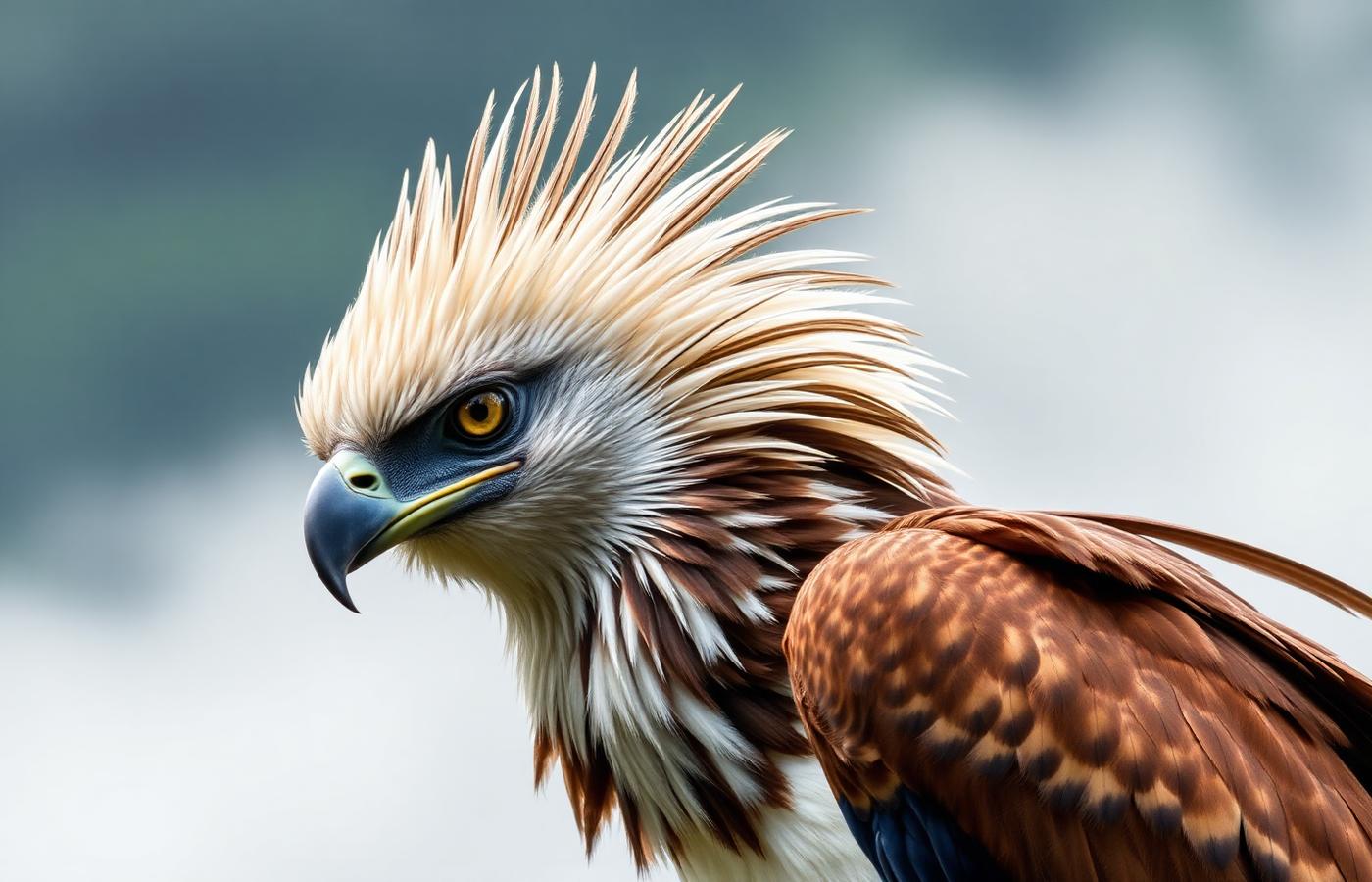
The Philippine Eagle: A Complete Guide to the World's Rarest Raptor
With fewer than 400 breeding pairs remaining, the Philippine Eagle is one of the rarest raptors on Earth. Here's what field biologists have learned in three decades of recovery work.
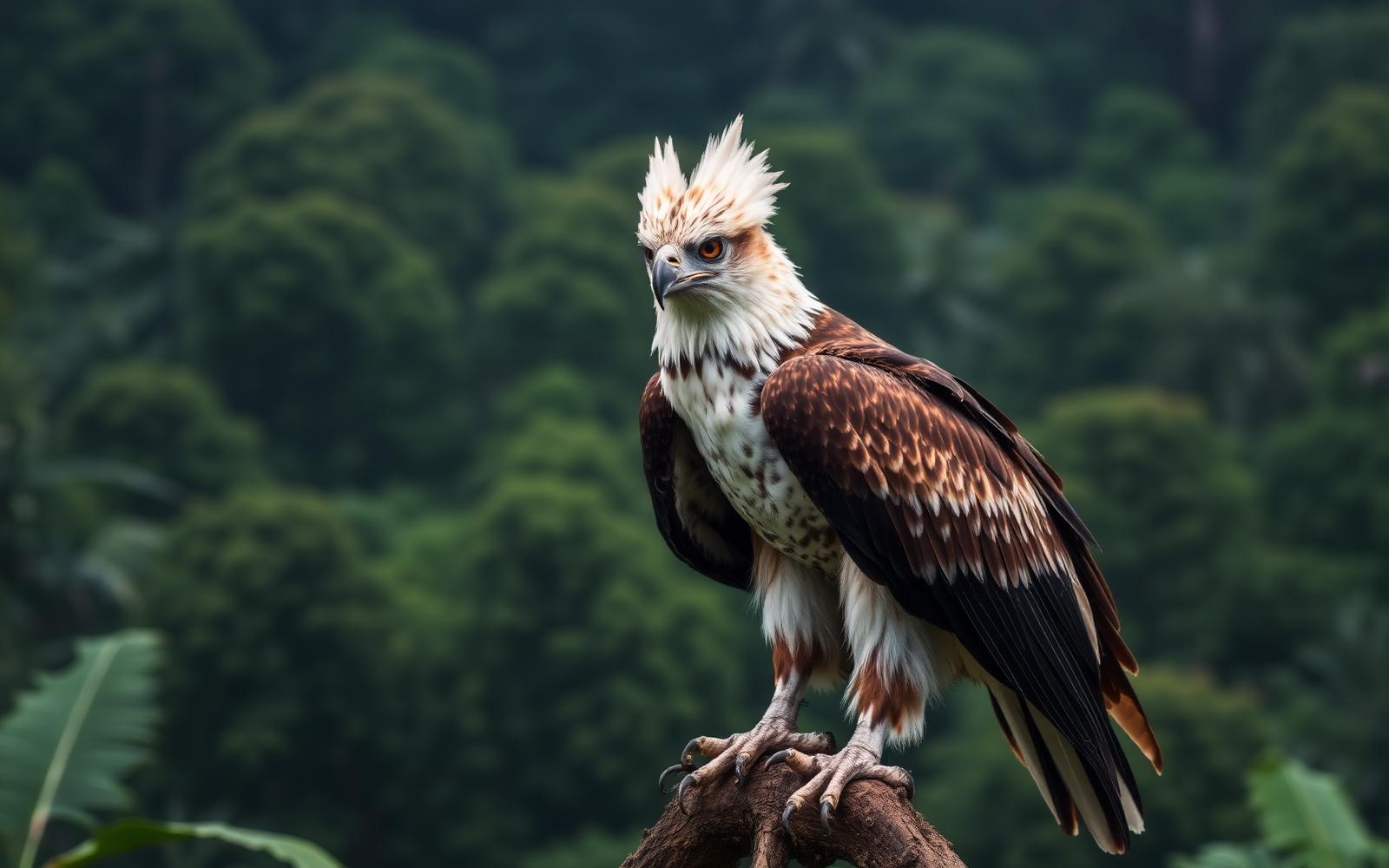
Harpy Eagle: The Apex Predator of the Neotropical Rainforest
The Harpy Eagle takes monkeys and sloths from the canopy with talons the size of a grizzly bear's. Yet across most of its range, it is now functionally rare.